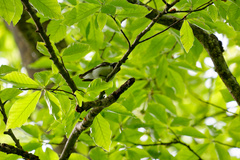
Semicollared Flycatcher

Semicollared Flycatcher

Ficedula semitorquata

Silhouette: Rachael Joakim · PhyloPic

LCLeast ConcernNTVUENCR
Daily sighting probability <5% · Rare
at Dubai

In 3 days <5%

12 Verified sightings at Dubai
March Best month

About the Semicollared Flycatcher

The semicollared flycatcher (Ficedula semitorquata) is a small passerine bird in the Old World flycatcher family, one of the four species of Western Palearctic black-and-white flycatchers. It breeds in montane forests of the southeastern corner of Europe (Balkan Peninsula) to Northwest Iran. It is migratory, wintering in Central and Eastern Africa. It is a rare vagrant in western Europe. Tracking studies using geolocators have revealed that weather conditions during spring migration can have a large impact on the timing of semicollared flycatcher migration and survival of adult birds.

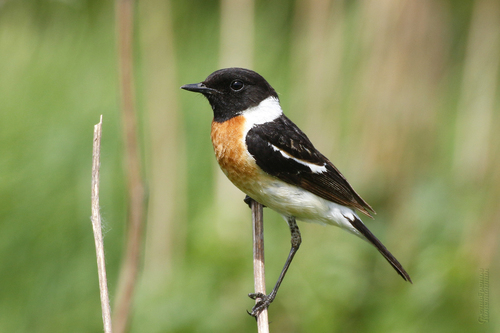
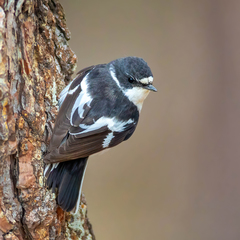
This is a 12–13.5 cm long bird, intermediate in appearance between collared flycatcher and European pied flycatcher. It has often been classed as a subspecies of collared flycatcher. The breeding male is mainly black above and white below, with a white half-collar (usually extending further back than in European pied), large white wing patch, a white bar on median coverts (absent in European Pied and collared), extensively white tail sides and a large white forehead patch. It often has a pale grey rump. The bill is black and has the broad but pointed shape typical of aerial insectivores. It mainly takes insects in flight, rarely hunting caterpillars amongst the tree foliage like pied flycatcher.

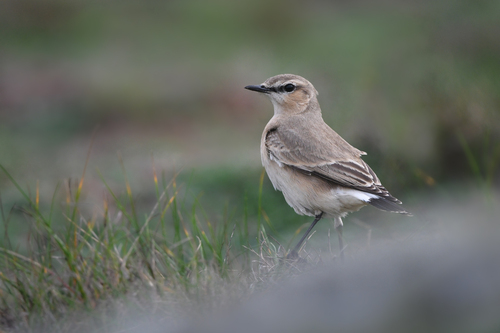
Non-breeding male, females and juvenile semi-collared flycatchers have the black replaced by a pale brown, and may be very difficult to distinguish from other Ficedula flycatchers, particularly the collared flycatcher. A distinction is that semicollared in these plumages often show narrower white edges to tertials. A white bar on median coverts is also typical of female-type plumages, though first winters of European pied and collared flycatchers may also show this feature.

Semicollared flycatchers are birds of belts of deciduous woodlands, especially oak and hornbeam, in mountainous areas. They build an open nest in a native tree-holes and old nests of woodpeckers, also the species can occupy nest-boxes. The clutch size is 4-7 eggs. The song is again intermediate between collared and pied flycatchers, with slow strained whistles, but some rhythmic elements. Wikipedia →

Sounds

Call0:08

Azerbaijan · 2024

© Teet Sirotkin · XC903214 · CC BY-NC-SA 4.0

Alarm call1:27

Georgia · 2019

© Lars Lachmann · XC482910 · CC BY-NC-SA 4.0

Song1:21

Armenia · 2017

© Vasil Ananian · XC437529 · CC BY-NC-SA 4.0

Global Distribution

Parks Where Found

# Park Country Daily sighting probability

More parks will be added in future updates.

Cities Where Found

# City Country Daily sighting probability
1 Tehran 🇮🇷 Iran
~10%
2 Kuwait City 🇰🇼 Kuwait
<5%
3 Abu Dhabi 🇦🇪 United Arab Emirates
<5%
4 Sofia 🇧🇬 Bulgaria
<5%
5 Dubai 🇦🇪 United Arab Emirates
<5%
6 Jerusalem 🇮🇱 Israel
<5%
7 Istanbul 🇹🇷 Turkey
<5%

Before you go

What are the chances of seeing a Semicollared Flycatcher in Dubai?

Rare

Under 5% of wildlife watchers report a Semicollared Flycatcher sighting in Dubai on a given day, based on 12 verified sightings from GBIF citizen-science data. It is the 128th most-seen of the 170 birds we can rate there. Over three days the chance rises to under 5%, if each day is a fresh chance.

When is the best time to see a Semicollared Flycatcher in Dubai?

March

In that month about 10% of wildlife watchers report a Semicollared Flycatcher in Dubai on a given day, against under 5% in April to February, the lowest months.

Is Dubai the best place to see a Semicollared Flycatcher?

5th of 7

Of the 7 cities where we can rate Semicollared Flycatcher sightings, Dubai ranks 5th at under 5%. The best odds are in Tehran (Iran, about 10%), Kuwait City (Kuwait, under 5%) and Abu Dhabi (United Arab Emirates, under 5%).

Where does the Semicollared Flycatcher sighting chance come from?

GBIF citizen-science records

It is estimated from how often the Semicollared Flycatcher is recorded against all the birds logged in Dubai (12 verified sightings), calibrated against known sighting rates. Figures are rounded to the nearest 10% because citizen-science data supports honest approximations, not decimals, and months with records from fewer than five people show "—". How it works.

← Back to Dubai