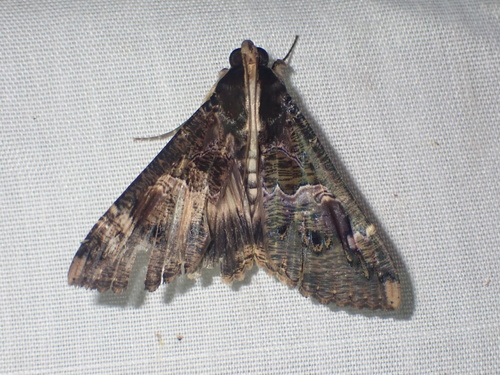
Specious Tiger

Specious Tiger

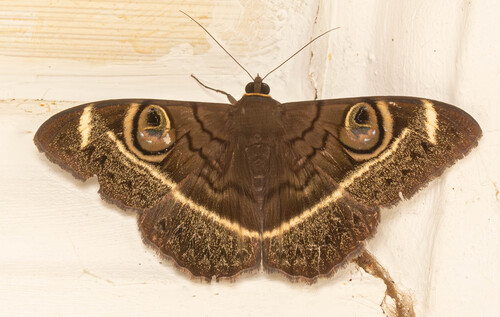
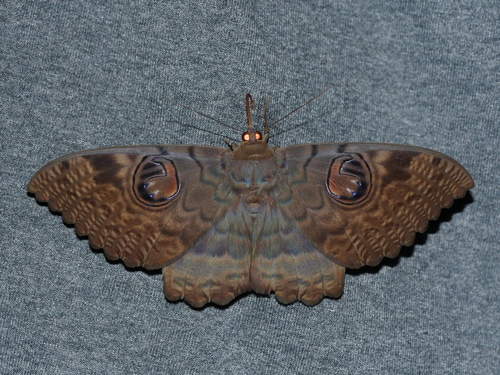
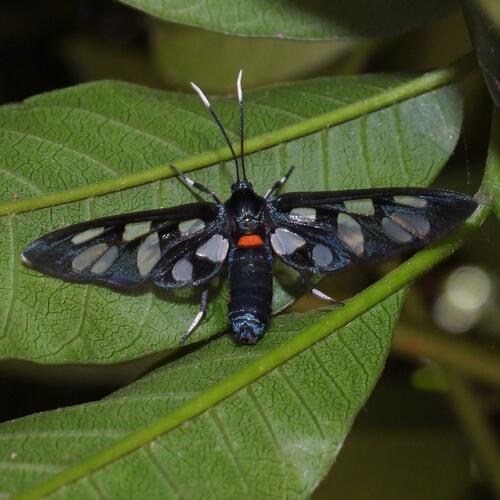
Asota speciosa

Daily sighting probability ~10% · With luck
at Durban

In 3 days ~20% in a week ~30%

16 Verified sightings at Durban
141 In all 5 parks From 2019 to 2026
January Best month
☀️🌙 Day & Night When it's spotted

About the Specious Tiger

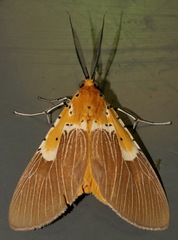
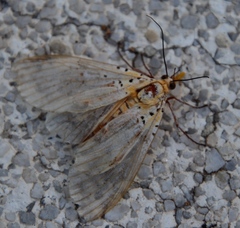
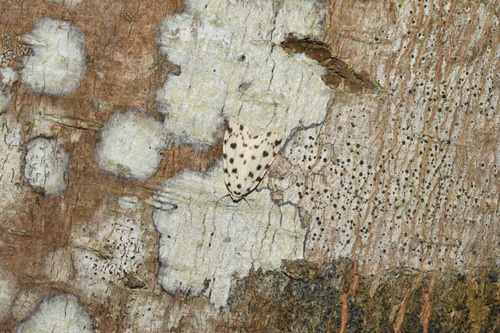
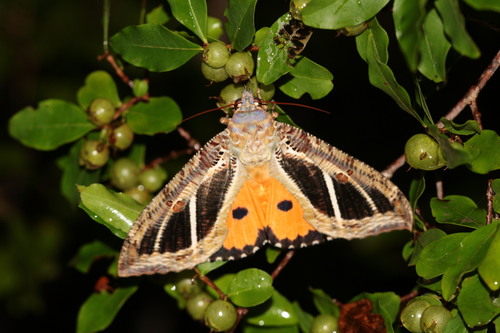
Asota speciosa, the specious tiger, formerly Aganais speciosa, is a moth of the subfamily Aganainae, now regarded as part of the family Erebidae. Formerly it was regarded variously as a member of the Arctiidae, the Hypsidae, and subsequently the family Aganaidae, which was formerly regarded as a family by some authorities. The species is widespread in sub-Saharan Africa, such as in Sierra Leone, Togo, Nigeria, Cameroon, Mozambique and South Africa.

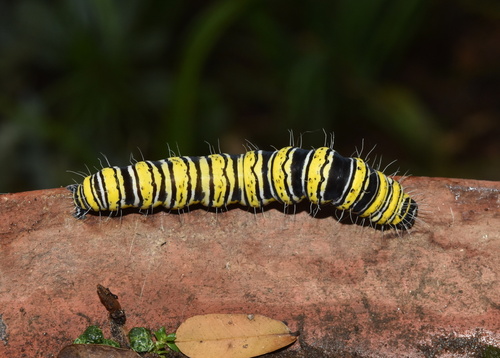
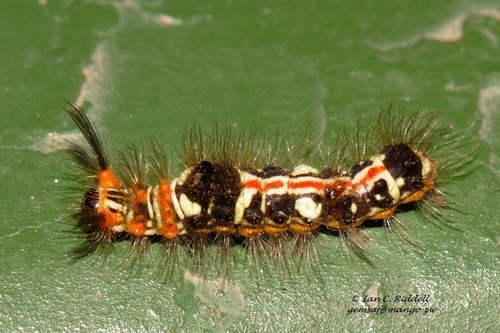
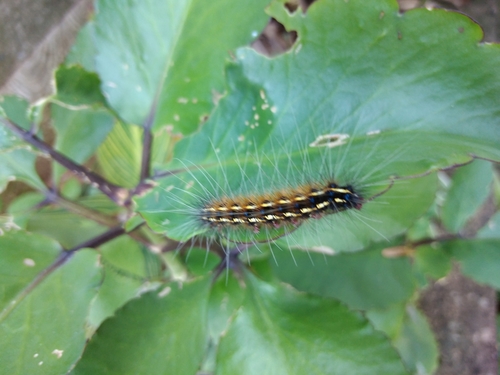
The larvae feed on certain latex-rich plants, mainly Ficus species (fig trees), both indigenous and domestic, but also on poisonous Acokanthera species. They sabotage the latex defences of their host plants by biting partway through the midrib, severing the latex vessels before proceeding to feed on the portion of the leaf blade distal to the sabotage, which is no longer supplied with latex. Wikipedia →
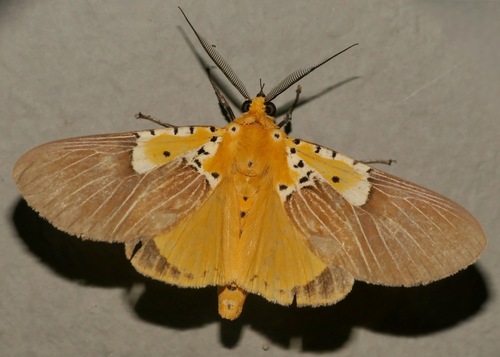
Global Distribution

Parks Where Found

# Park Country Daily sighting probability
1 Table Mountain National Park 🇿🇦 South Africa
~10%
2 Addo Elephant National Park 🇿🇦 South Africa
~10%
3 Kruger National Park 🇿🇦 South Africa
~10%
4 Garden Route National Park 🇿🇦 South Africa
~10%
5 iSimangaliso Wetland Park 🇿🇦 South Africa
~10%

Cities Where Found

# City Country Daily sighting probability
1 Cape Town 🇿🇦 South Africa
~10%
2 Nairobi 🇰🇪 Kenya
~10%
3 Johannesburg 🇿🇦 South Africa
~10%
4 Durban 🇿🇦 South Africa
~10%
5 Pretoria 🇿🇦 South Africa
~10%

Before you go

What are the chances of seeing a Specious Tiger in Durban?

With luck

About 10% of wildlife watchers report a Specious Tiger sighting in Durban on a given day, based on 16 verified sightings from GBIF citizen-science data. It is the 140th most-seen of the 401 insects we can rate there. Over three days the chance rises to about 20%, and over a week to about 30%, if each day is a fresh chance.

When is the best time to see a Specious Tiger in Durban?

January–March and September–November

In those months about 10% of wildlife watchers report a Specious Tiger in Durban on a given day, against under 5% in April–August and December, the lowest months.

What time of day is best to see a Specious Tiger?

Between 7 and 10 pm

Across all the parks we cover, that three-hour window holds the most Specious Tiger sightings with a recorded time, and about 6 in 10 of them come between 6 am and 6 pm: it is seen both by day and at night.

Is Durban the best place to see a Specious Tiger?

Among the best

Of the 5 cities where we can rate Specious Tiger sightings, Durban ranks 4th at about 10%, level with the leaders once rounded. The best odds are in Cape Town (South Africa, about 10%), Nairobi (Kenya, about 10%) and Johannesburg (South Africa, about 10%).

Which relatives of the Specious Tiger live in Durban?

Same family: Erebidae

The closest relatives of the Specious Tiger that you can see in Durban (family Erebidae, Underwing, Tiger, Tussock, and Allied Moths) are Lienard's Achaea (about 10%), African Peach Moth (about 10%) and Creamstriped Owl (about 10%), with each one's daily chance of a sighting.

Where does the Specious Tiger sighting chance come from?

GBIF citizen-science records

It is estimated from how often the Specious Tiger is recorded against all the insects logged in Durban (16 verified sightings), calibrated against known sighting rates. Figures are rounded to the nearest 10% because citizen-science data supports honest approximations, not decimals, and months with records from fewer than five people show "—". How it works.

← Back to Durban