Face Fly

Face Fly

Musca autumnalis

Daily sighting probability <5% · Rare
at Essen

In 3 days ~10% in a week ~20%

11 Verified sightings at Essen
May Best month

About the Face Fly

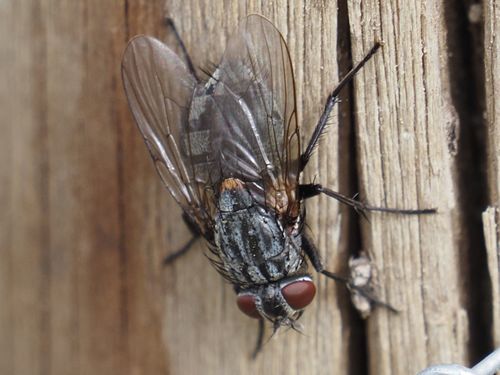
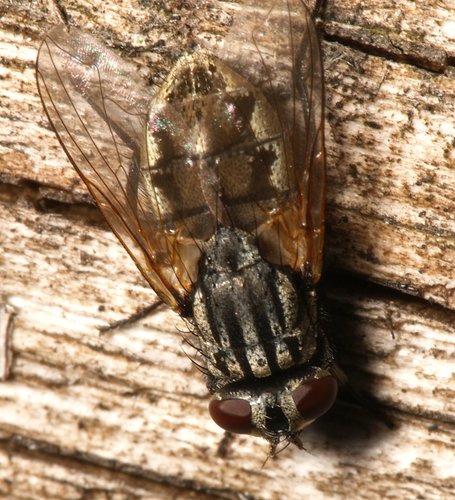
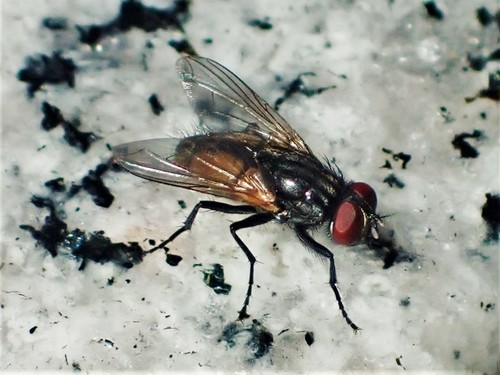
Musca autumnalis, the face fly or autumn housefly, is a pest of cattle and horses. The face fly is similar to the closely related housefly but is slightly larger, averaging about 7–8 mm long and grey in colour with four dark stripes on the thorax, with a grey-black patterned abdomen. Like many true flies, in the males, the eyes almost touch when viewed from above.

Musca autumnalis is widespread throughout most of Europe, Central Asia, northern India, Pakistan, China and some parts of North Africa. It was introduced into North America around the 1940s and has now occupies a territory from southern Canada into most temperate parts of the United States. It was also introduced to St. Helena Island in the South Atlantic.

Adult face flies will emerge from winter hibernation around March to early April. During the daytime, they feed on manure juices and plant sugars. On cattle and horses, they feed on secretions around the eyes, mouth and nostrils. The adult flies will also feed on the hosts' blood through wounds such as horse-fly bites. A larger proportion of face flies on the host will be females, as they have a higher need for protein... Wikipedia →
Global Distribution

Parks Where Found

# Park Country Daily sighting probability

More parks will be added in future updates.

Cities Where Found

# City Country Daily sighting probability
1 London 🇬🇧 United Kingdom
<5%
2 Essen 🇩🇪 Germany
<5%

Before you go

What are the chances of seeing a Face Fly in Essen?

Rare

Under 5% of wildlife watchers report a Face Fly sighting in Essen on a given day, based on 11 verified sightings from GBIF citizen-science data. It is the 381st most-seen of the 434 insects we can rate there. Over three days the chance rises to about 10%, and over a week to about 20%, if each day is a fresh chance.

When is the best time to see a Face Fly in Essen?

May

In that month about 10% of wildlife watchers report a Face Fly in Essen on a given day, against under 5% in June to April, the lowest months.

Is Essen the best place to see a Face Fly?

Among the best

Of the 2 cities where we can rate Face Fly sightings, Essen ranks 2nd at under 5%, level with the leaders once rounded. The best odds are in London (United Kingdom, under 5%).

Where does the Face Fly sighting chance come from?

GBIF citizen-science records

It is estimated from how often the Face Fly is recorded against all the insects logged in Essen (11 verified sightings), calibrated against known sighting rates. Figures are rounded to the nearest 10% because citizen-science data supports honest approximations, not decimals, and months with records from fewer than five people show "—". How it works.

← Back to Essen