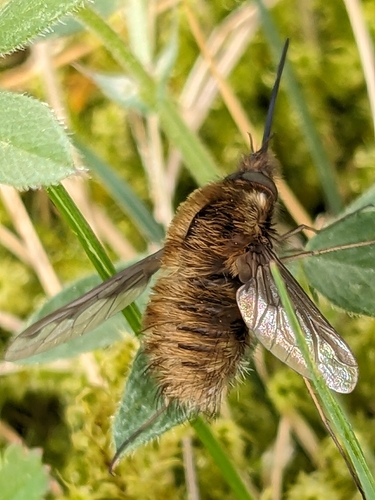
Greater Bee Fly

Greater Bee Fly

Bombylius major

Daily sighting probability ~10% · With luck
at Essen

In 3 days ~30% in a week ~60%

51 Verified sightings at Essen
152 In all 9 parks From 2019 to 2026
April Best month
☀️ Diurnal When it's spotted

About the Greater Bee Fly

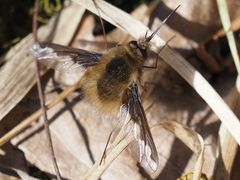
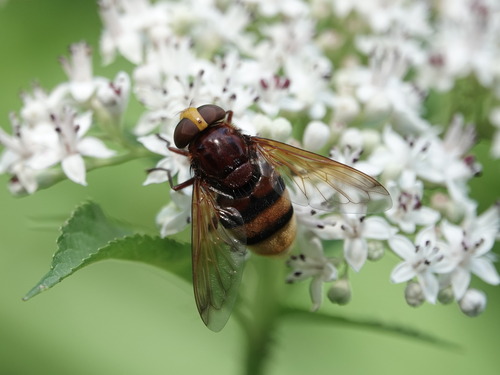
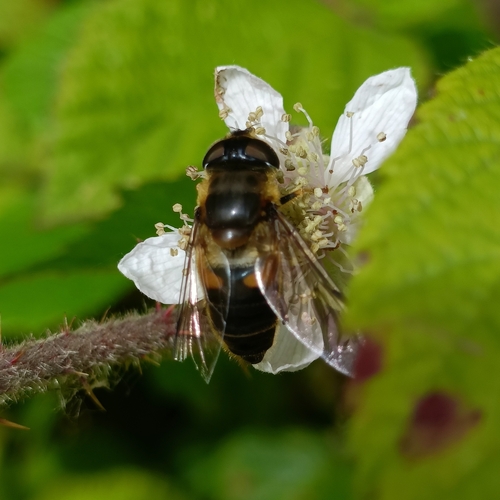
Bombylius major (commonly named the large bee-fly, the dark-edged bee-fly or the greater bee fly) is a parasitic bee mimic fly. B. major is the most common type of fly within the Bombylius genus. The fly derives its name from its close resemblance to bumblebees and is often mistaken for them.

Bombylius major exhibits a unique flight behavior known as "yawing" and plays a role in general pollination, without preference of flower types. The fly does not bite, sting, or spread disease. However, the fly uses this mimicry of bumblebees to its own advantage, allowing close access to host solitary bee and wasp nests in order to deposit its eggs. After hatching, the larvae find their way into the nests to parasitically feed on the grubs.

Bombylius major is part of the family Bombyliidae, with a reported 6000 species worldwide. The subfamily Bombyliinae contains approximately 1100 identified species. The genus Bombylius currently comprises around 450 described species.

Bombylius major can be found from April to June throughout temperate Europe, North America and some parts of Asia, concentrated in the northern hemisphere. The species occurs across a variety of environments... Wikipedia →
Global Distribution

Parks Where Found

# Park Country Daily sighting probability
1 Shenandoah National Park 🇺🇸 United States
~10%
2 Bavarian Forest National Park 🇩🇪 Germany
~10%
3 Congaree National Park 🇺🇸 United States
~10%
4 Great Smoky Mountains National Park 🇺🇸 United States
~10%
5 Snowdonia National Park 🇬🇧 United Kingdom
~10%
6 Acadia National Park 🇺🇸 United States
~10%
7 Pyrénées National Park 🇫🇷 France
<5%
8 Cévennes National Park 🇫🇷 France
<5%
9 Olympic National Park 🇺🇸 United States
<5%

Cities Where Found

# City Country Daily sighting probability
1 Birmingham 🇬🇧 United Kingdom
~20%
2 London 🇬🇧 United Kingdom
~20%
3 Copenhagen 🇩🇰 Denmark
~10%
4 Sapporo 🇯🇵 Japan
~10%
5 Liverpool 🇬🇧 United Kingdom
~10%
6 Essen 🇩🇪 Germany
~10%
7 Prague 🇨🇿 Czechia
~10%
8 Paris 🇫🇷 France
~10%
9 Vienna 🇦🇹 Austria
~10%
10 Warsaw 🇵🇱 Poland
~10%

Before you go

What are the chances of seeing a Greater Bee Fly in Essen?

With luck

About 10% of wildlife watchers report a Greater Bee Fly sighting in Essen on a given day, based on 51 verified sightings from GBIF citizen-science data. It is the 44th most-seen of the 434 insects we can rate there. Over three days the chance rises to about 30%, and over a week to about 60%, if each day is a fresh chance.

When is the best time to see a Greater Bee Fly in Essen?

April

In that month about 30% of wildlife watchers report a Greater Bee Fly in Essen on a given day, against under 5% in June to February, the lowest months.

What time of day is best to see a Greater Bee Fly?

Between 1 and 4 pm

Across all the parks we cover, that three-hour window holds the most Greater Bee Fly sightings with a recorded time, and nearly all of them come between 6 am and 6 pm: it is a daytime animal.

Is Essen the best place to see a Greater Bee Fly?

6th of 51

Of the 51 cities where we can rate Greater Bee Fly sightings, Essen ranks 6th at about 10%. The best odds are in Birmingham (United Kingdom, about 20%), London (United Kingdom, about 20%) and Copenhagen (Denmark, about 10%).

Which relatives of the Greater Bee Fly live in Essen?

Same family: Bombyliidae

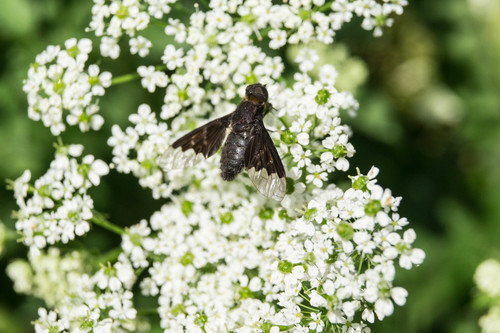
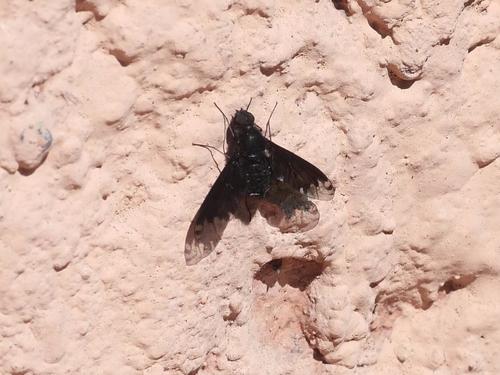
The closest relatives of the Greater Bee Fly that you can see in Essen (family Bombyliidae, Bee Flies) are Black Banded Bee Fly (about 10%) and Anthracite Bee-Fly (about 10%), with each one's daily chance of a sighting.

Where does the Greater Bee Fly sighting chance come from?

GBIF citizen-science records

It is estimated from how often the Greater Bee Fly is recorded against all the insects logged in Essen (51 verified sightings), calibrated against known sighting rates. Figures are rounded to the nearest 10% because citizen-science data supports honest approximations, not decimals, and months with records from fewer than five people show "—". How it works.

← Back to Essen