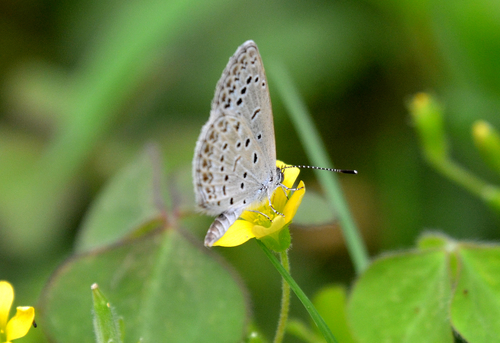
Japanese Assassin Bug

Japanese Assassin Bug

Agriosphodrus dohrni

Daily sighting probability ~10% · With luck
at Fukuoka

In 3 days ~30% in a week ~60%

5 Verified sightings at Fukuoka
November Best month

About the Japanese Assassin Bug

Agriosphodrus is a genus with a sole species, A. dohrni, the Japanese assassin bug. It is a species of insect in the family Reduviidae, found in China, Southeast Asia, India and Japan. It lives in trunks of various trees near human habitation, like parks and roadsides, mostly found on poplar, willow and tree of heavens. Despite its common name, the species is not native to Japan, where it was first recorded in 1930 and is considered invasive.

Agriosphodrus is a monotypic genus of assassin bugs in the subfamily Harpactorinae. A second species formerly assigned to Agriosphodrus, A. perelegans, found in Vietnam, was moved to the genus Cosmosycanus in 2004. This large assassin bug can reach body lengths of up to 25 mm (99 in) in females and up to 20 (0.81 in) in males. It features a glossy black body with white wax spots along their sides. They are covered in long, upright hairs, accendet by pale to dark yellow spots along its head and the edge of its flared abdomen. Females display a red tip at the end of thei abdomen, while males have a red patch on their lower belly.

The life cycle of Agriosphodrus dohrni... Wikipedia →
Global Distribution

Parks Where Found

# Park Country Daily sighting probability

More parks will be added in future updates.

Cities Where Found

# City Country Daily sighting probability
1 Xi'an 🇨🇳 China
~20%
2 Nagoya 🇯🇵 Japan
~20%
3 Sendai 🇯🇵 Japan
~20%
4 Fukuoka 🇯🇵 Japan
~10%
5 Nanjing 🇨🇳 China
~10%
6 Tokyo 🇯🇵 Japan
~10%
7 Osaka 🇯🇵 Japan
~10%

Before you go

What are the chances of seeing a Japanese Assassin Bug in Fukuoka?

With luck

About 10% of wildlife watchers report a Japanese Assassin Bug sighting in Fukuoka on a given day, based on 5 verified sightings from GBIF citizen-science data. It is the 19th most-seen of the 26 insects we can rate there. Over three days the chance rises to about 30%, and over a week to about 60%, if each day is a fresh chance.

When is the best time to see a Japanese Assassin Bug in Fukuoka?

November

In that month about 30% of wildlife watchers report a Japanese Assassin Bug in Fukuoka on a given day, against under 5% in June–August, October and December–March, the lowest months. That is one of Fukuoka's driest months, with about 90 mm of rain against 360 mm in July.

Is Fukuoka the best place to see a Japanese Assassin Bug?

4th of 7

Of the 7 cities where we can rate Japanese Assassin Bug sightings, Fukuoka ranks 4th at about 10%. The best odds are in Xi'an (China, about 20%), Nagoya (Japan, about 20%) and Sendai (Japan, about 20%).

Which relatives of the Japanese Assassin Bug live in Fukuoka?

Same order: Hemiptera

The closest relatives of the Japanese Assassin Bug that you can see in Fukuoka (order Hemiptera, True Bugs, Hoppers, Aphids, and allies) are Yellow-Spotted Stink Bug (about 30%), Large Brown Cicada (about 30%) and Black Giant Cicada (about 20%), with each one's daily chance of a sighting.

Where does the Japanese Assassin Bug sighting chance come from?

GBIF citizen-science records

It is estimated from how often the Japanese Assassin Bug is recorded against all the insects logged in Fukuoka (5 verified sightings), calibrated against known sighting rates. Figures are rounded to the nearest 10% because citizen-science data supports honest approximations, not decimals, and months with records from fewer than five people show "—". How it works.

← Back to Fukuoka