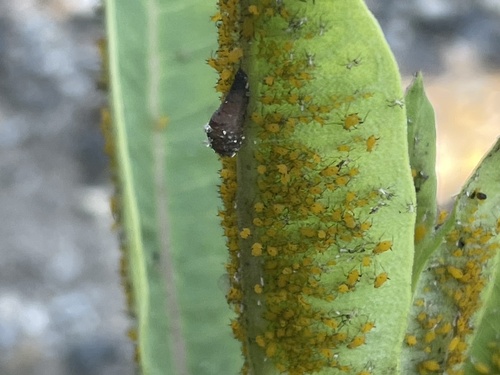
Cottony Cushion Scale

Cottony Cushion Scale

Icerya purchasi

Daily sighting probability <5% · Rare
at Guadalajara

In 3 days ~10% in a week ~20%

5 Verified sightings at Guadalajara
172 In all 4 parks From 2019 to 2026
May Best month
☀️ Diurnal When it's spotted

About the Cottony Cushion Scale

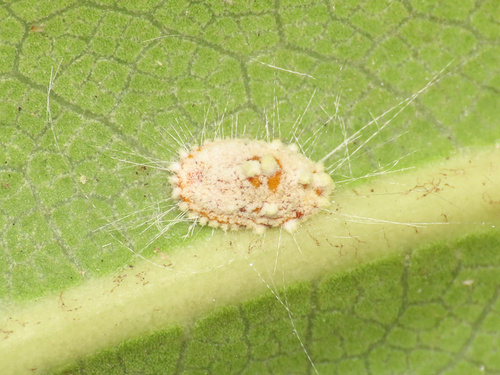
Icerya purchasi (common name: cottony cushion scale) is a scale insect that feeds on more than 80 families of woody plants, most notably on Citrus and Pittosporum. Originally described in 1878 from specimens collected in New Zealand as pests of kangaroo acacia and named by W.M. Maskell "after the Rev. Dr. Purchas who, [he] believe[d], first found it", it is now found worldwide where citrus crops are grown. The cottony cushion scale originates from Australia.

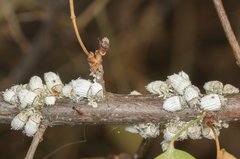
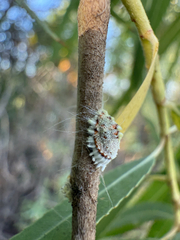
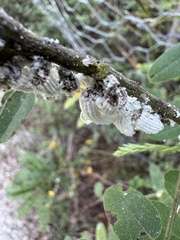
This scale infests twigs and branches. The mature hermaphrodite is oval in shape, reddish-brown with black hairs, 5 mm long. When mature, the insect remains stationary, attaches itself to the plant by waxy secretions, and produces a white egg sac in grooves, by extrusion, in the body which encases hundreds of red eggs. The egg sac will grow to be two to three times as long as the body. Newly hatched nymphs are the primary dispersal stage, with dispersion known to occur by wind and by crawling. Early stage nymphs feed from the midrib veins of leaves and small twigs, and do the bulk of the damage. At each molt, they leave at the old feeding point the former skin and the waxy secretions in which they had covered themselves... Wikipedia →

Global Distribution

Parks Where Found

# Park Country Daily sighting probability
1 Garden Route National Park 🇿🇦 South Africa
~10%
2 Table Mountain National Park 🇿🇦 South Africa
~10%
3 Galápagos Islands 🇪🇨 Ecuador
~10%
4 Everglades National Park 🇺🇸 United States
<5%

Cities Where Found

# City Country Daily sighting probability
1 Naples 🇮🇹 Italy
~10%
2 Pretoria 🇿🇦 South Africa
~10%
3 Nairobi 🇰🇪 Kenya
~10%
4 Barcelona 🇪🇸 Spain
~10%
5 Cape Town 🇿🇦 South Africa
~10%
6 Nagoya 🇯🇵 Japan
~10%
7 Guatemala City 🇬🇹 Guatemala
~10%
8 Johannesburg 🇿🇦 South Africa
~10%
9 Athens 🇬🇷 Greece
~10%
10 Valencia 🇪🇸 Spain
~10%

Before you go

What are the chances of seeing a Cottony Cushion Scale in Guadalajara?

Rare

Under 5% of wildlife watchers report a Cottony Cushion Scale sighting in Guadalajara on a given day, based on 5 verified sightings from GBIF citizen-science data. It is the 199th most-seen of the 229 insects we can rate there. Over three days the chance rises to about 10%, and over a week to about 20%, if each day is a fresh chance.

When is the best time to see a Cottony Cushion Scale in Guadalajara?

February, May and December

In those months about 10% of wildlife watchers report a Cottony Cushion Scale in Guadalajara on a given day, against under 5% in January, March–April and June–November, the lowest months. Those are among Guadalajara's driest months, with about 15 mm of rain a month against 210 mm in July.

What time of day is best to see a Cottony Cushion Scale?

Between 8 and 11 am

Across all the parks we cover, that three-hour window holds the most Cottony Cushion Scale sightings with a recorded time, and about 9 in 10 of them come between 6 am and 6 pm: it is a daytime animal.

Is Guadalajara the best place to see a Cottony Cushion Scale?

37th of 45

Of the 45 cities where we can rate Cottony Cushion Scale sightings, Guadalajara ranks 37th at under 5%. The best odds are in Naples (Italy, about 10%), Pretoria (South Africa, about 10%) and Nairobi (Kenya, about 10%).

Which relatives of the Cottony Cushion Scale live in Guadalajara?

Same order: Hemiptera

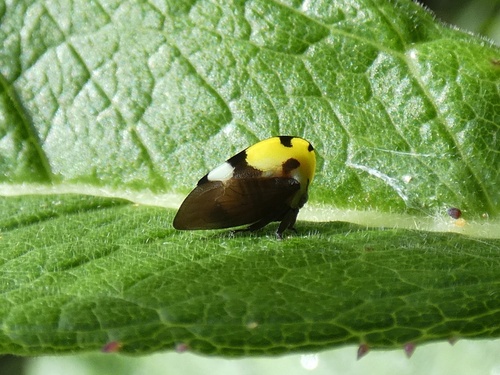
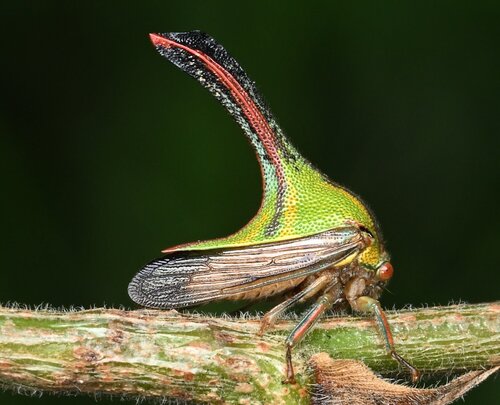
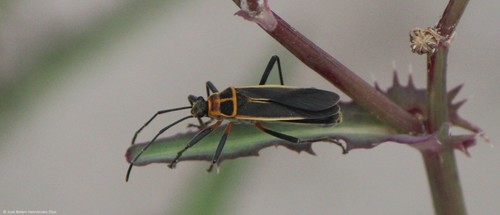
The closest relatives of the Cottony Cushion Scale that you can see in Guadalajara (order Hemiptera, True Bugs, Hoppers, Aphids, and allies) are Mexican Treehopper (about 20%), Thorn Treehopper (about 10%) and Stenomacra marginella (about 10%), with each one's daily chance of a sighting.

Where does the Cottony Cushion Scale sighting chance come from?

GBIF citizen-science records

It is estimated from how often the Cottony Cushion Scale is recorded against all the insects logged in Guadalajara (5 verified sightings), calibrated against known sighting rates. Figures are rounded to the nearest 10% because citizen-science data supports honest approximations, not decimals, and months with records from fewer than five people show "—". How it works.

← Back to Guadalajara