Diplolepis mayri

Diplolepis mayri

Diplolepis mayri

Daily sighting probability <5% · Rare
at Hamburg

In 3 days ~10% in a week ~20%

5 Verified sightings at Hamburg
30 In all 2 parks From 2019 to 2026
September Best month
☀️ Diurnal When it's spotted

About the Diplolepis mayri

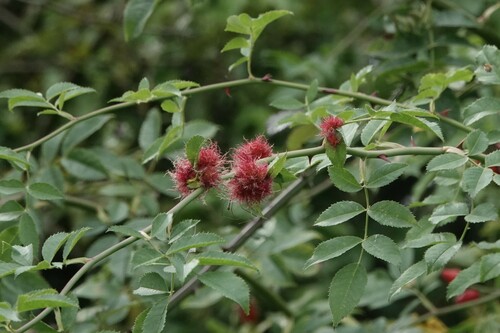
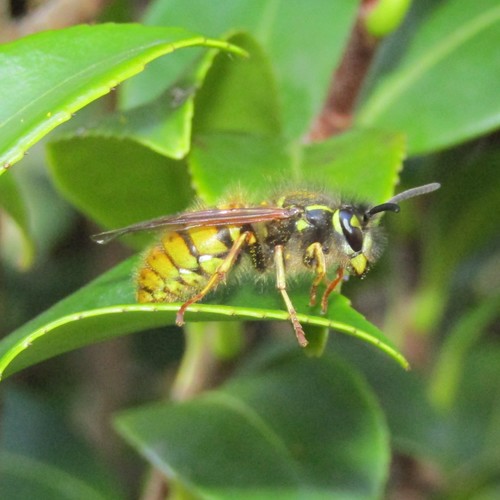
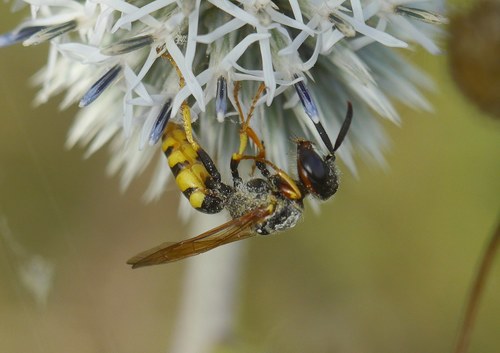
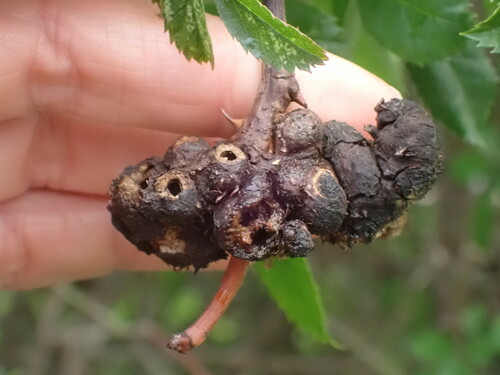
Diplolepis mayri is a gall inducing insect (Hymenoptera: Cynipidae) causing galls on wild roses (Rosa sp.) in the Western Palaearctic. Diploleis mayri is less frequent on rose shrubs than D. rosae. Its galls show in their external morphology resemblance to the mossy rose gall or robin's pincushion (Diplolepis rosae), but the surface of the gall is less covered and the emergences on it are more spine-like. It may appear together with D. rosae on the same host plant. Galls of D. mayri are multilocular and its chambers have thicker walls than found in D. rosae.

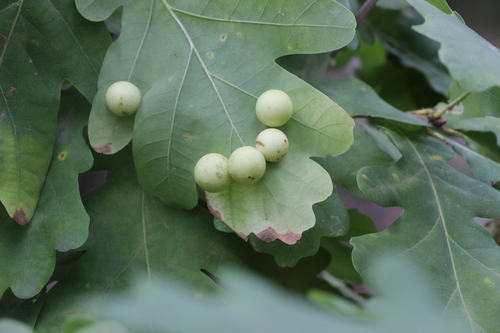
In the winter time galls of D. mayri are often opened by predators just as are the galls of D. rosae. These predators may be birds as in the case of other Cynipidae galls: for D. rosae the lesser spotted woodpecker (Picoides minor), for Andricus spp. and Neuroterus spp. the great tit (Parus major).

In its galls occurs the same parasitoid assemblage as known for D. rosae. The most abundant parasitoids of both galls are Orthopelma mediator, Torymus bedeguaris, Glyphomerus stigma and Pteromalus bedeguaris. One inquiline species, Periclistus brandtii also occurs in both galls... Wikipedia →
Global Distribution

Parks Where Found

# Park Country Daily sighting probability
1 Sierra Nevada National Park 🇪🇸 Spain
~20%
2 Sierra de Guadarrama National Park 🇪🇸 Spain
<5%

Cities Where Found

# City Country Daily sighting probability
1 Kharkiv 🇺🇦 Ukraine
~10%
2 Almaty 🇰🇿 Kazakhstan
~10%
3 Kyiv 🇺🇦 Ukraine
~10%
4 Hamburg 🇩🇪 Germany
<5%

Before you go

What are the chances of seeing a Diplolepis mayri in Hamburg?

Rare

Under 5% of wildlife watchers report a Diplolepis mayri sighting in Hamburg on a given day, based on 5 verified sightings from GBIF citizen-science data. It is the 364th most-seen of the 423 insects we can rate there. Over three days the chance rises to about 10%, and over a week to about 20%, if each day is a fresh chance.

When is the best time to see a Diplolepis mayri in Hamburg?

March and September

In those months about 10% of wildlife watchers report a Diplolepis mayri in Hamburg on a given day, against under 5% in April–August and October–February, the lowest months.

What time of day is best to see a Diplolepis mayri?

Between 10 am and 1 pm

Across all the parks we cover, that three-hour window holds the most Diplolepis mayri sightings with a recorded time, and about 9 in 10 of them come between 6 am and 6 pm: it is a daytime animal.

Is Hamburg the best place to see a Diplolepis mayri?

4th of 4

Of the 4 cities where we can rate Diplolepis mayri sightings, Hamburg ranks 4th at under 5%. The best odds are in Kharkiv (Ukraine, about 10%), Almaty (Kazakhstan, about 10%) and Kyiv (Ukraine, about 10%).

Where does the Diplolepis mayri sighting chance come from?

GBIF citizen-science records

It is estimated from how often the Diplolepis mayri is recorded against all the insects logged in Hamburg (5 verified sightings), calibrated against known sighting rates. Figures are rounded to the nearest 10% because citizen-science data supports honest approximations, not decimals, and months with records from fewer than five people show "—". How it works.

← Back to Hamburg