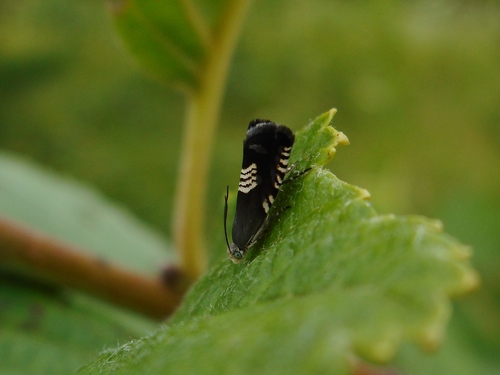
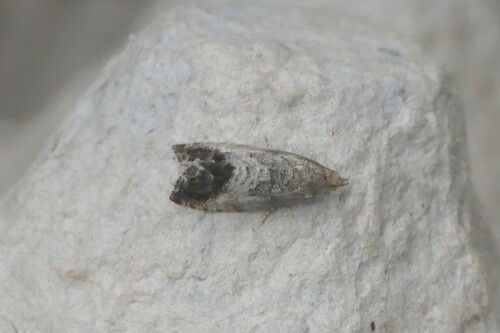
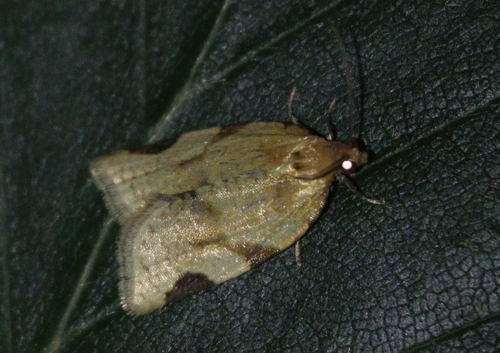
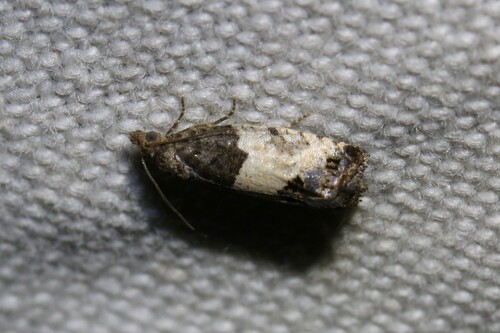
Eye-Spotted Bud Moth

Eye-Spotted Bud Moth

Spilonota ocellana

Daily sighting probability <5% · Rare
at Helsinki

In 3 days ~10% in a week ~20%

7 Verified sightings at Helsinki
38 In all 2 parks From 2019 to 2026
July Best month
🌙 Nocturnal When it's spotted

About the Eye-Spotted Bud Moth

Spilonota ocellana, the bud moth, is a moth of the family Tortricidae. It is found in the Palearctic realm, from North Africa and Europe to Iran, eastern Russia, China (Hebei, Inner Mongolia, Jilin, Zhejiang, Fujian, Hubei, Sichuan, Shaanxi, Gansu, and Qinghai), Korea, and Japan. It is also present on Madeira and in North America.

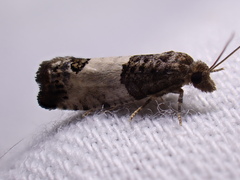
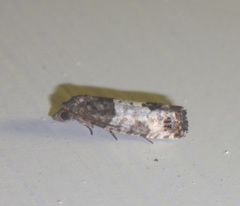
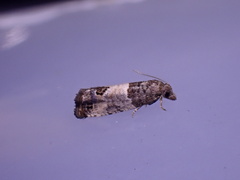
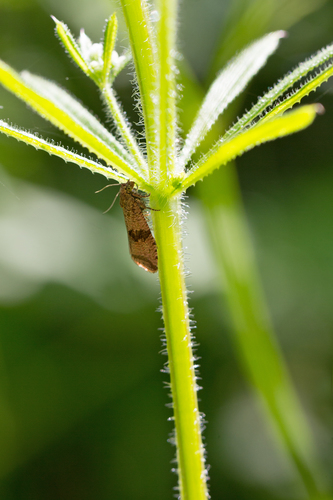
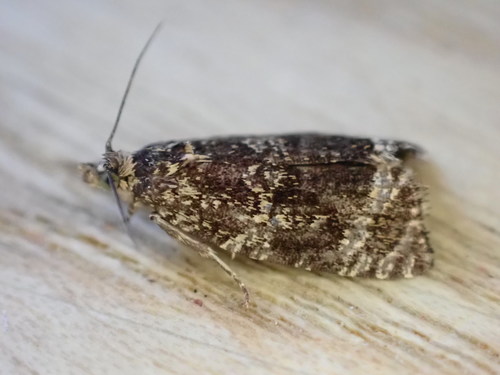
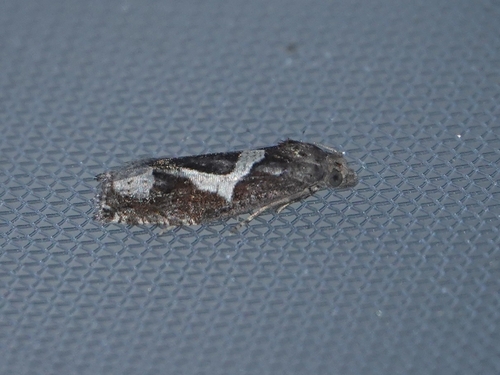
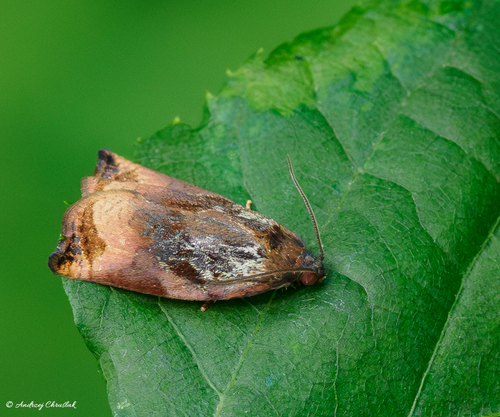
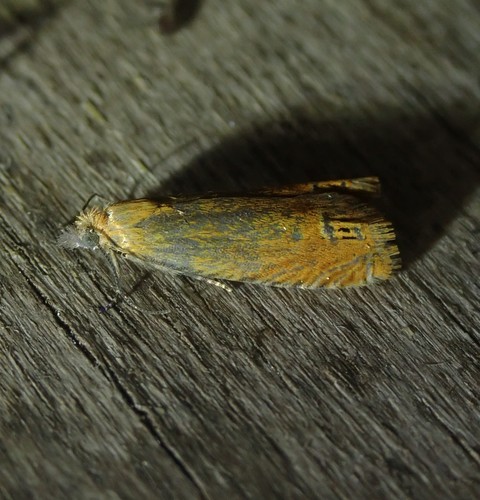
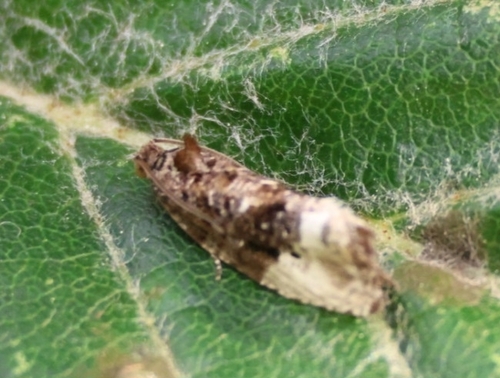
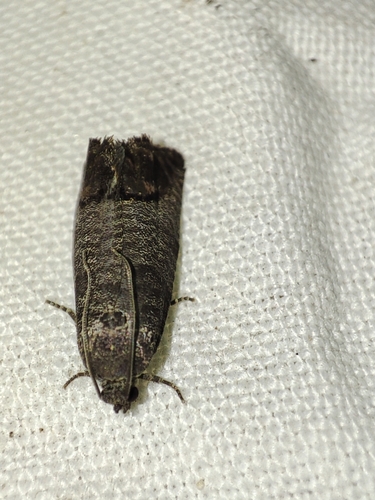
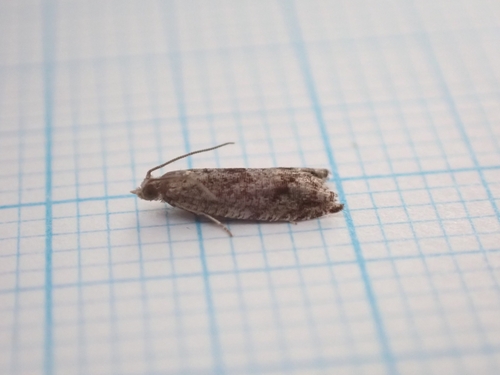
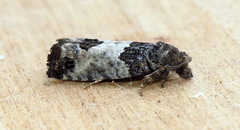
The wingspan is 12–17 mm. The forewings are whitish, sometimes partly suffused with grey, more or less strigulated with dark fuscous. The basal patch is dark grey, sometimes blackish-mixed, edge somewhat angulated and the central fascia form a dark grey sometimes indistinct costal suffusion, and there is a black-edged triangular praetornal spot. The ocellus is edged with leaden- metallic, enclosing several sometimes confluent black dashes. The cilia are dark grey. The hindwings are rather dark grey. The larva is pinkish-brown; head and plate of 2 dark fuscous: on blackthorn, larch, alder, etc.; May. The larch -feeding form distinguished as lariciana is usually somewhat smaller and darker.

The moth flies from May to October depending on the location. There is one generation per year. The larvae feed on various deciduous trees and shrubs including Quercus, Betula, Sorbus and Vaccinium. Wikipedia →
Global Distribution

Parks Where Found

# Park Country Daily sighting probability
1 Wadden Sea National Park 🇩🇪 Germany
~10%
2 Bavarian Forest National Park 🇩🇪 Germany
~10%

Cities Where Found

# City Country Daily sighting probability
1 Liverpool 🇬🇧 United Kingdom
~10%
2 London 🇬🇧 United Kingdom
<5%
3 Birmingham 🇬🇧 United Kingdom
<5%
4 Copenhagen 🇩🇰 Denmark
<5%
5 Helsinki 🇫🇮 Finland
<5%
6 Toronto 🇨🇦 Canada
<5%

Before you go

What are the chances of seeing an Eye-Spotted Bud Moth in Helsinki?

Rare

Under 5% of wildlife watchers report an Eye-Spotted Bud Moth sighting in Helsinki on a given day, based on 7 verified sightings from GBIF citizen-science data. It is the 732nd most-seen of the 838 insects we can rate there. Over three days the chance rises to about 10%, and over a week to about 20%, if each day is a fresh chance.

When is the best time to see an Eye-Spotted Bud Moth in Helsinki?

July

In that month about 10% of wildlife watchers report an Eye-Spotted Bud Moth in Helsinki on a given day, against under 5% in August to June, the lowest months.

What time of day is best to see an Eye-Spotted Bud Moth?

Between 10 pm and 1 am

Across all the parks we cover, that three-hour window holds the most Eye-Spotted Bud Moth sightings with a recorded time, and about 7 in 10 of them come between 6 pm and 6 am: it is mostly seen at night.

Is Helsinki the best place to see an Eye-Spotted Bud Moth?

5th of 6

Of the 6 cities where we can rate Eye-Spotted Bud Moth sightings, Helsinki ranks 5th at under 5%. The best odds are in Liverpool (United Kingdom, about 10%), London (United Kingdom, under 5%) and Birmingham (United Kingdom, under 5%).

Which relatives of the Eye-Spotted Bud Moth live in Helsinki?

Same family: Tortricidae

The closest relatives of the Eye-Spotted Bud Moth that you can see in Helsinki (family Tortricidae, Tortricid Leafroller Moths) are Barred Marble (about 10%), Common Marble (about 10%) and White-Foot Bell (about 10%), with each one's daily chance of a sighting.

Where does the Eye-Spotted Bud Moth sighting chance come from?

GBIF citizen-science records

It is estimated from how often the Eye-Spotted Bud Moth is recorded against all the insects logged in Helsinki (7 verified sightings), calibrated against known sighting rates. Figures are rounded to the nearest 10% because citizen-science data supports honest approximations, not decimals, and months with records from fewer than five people show "—". How it works.

← Back to Helsinki