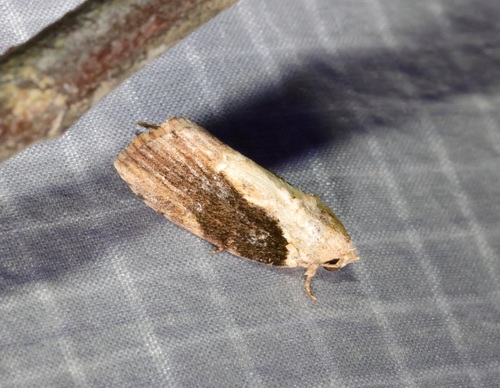
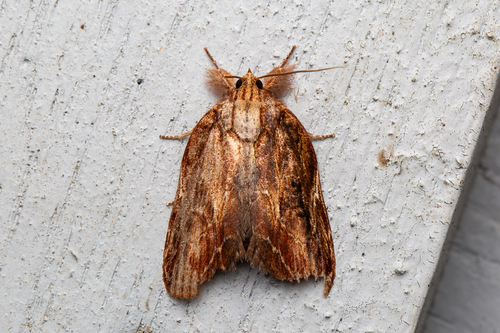
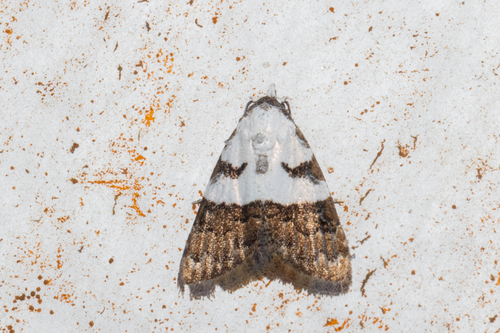
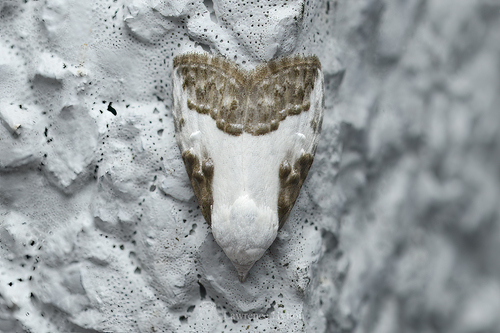
Ailanthus Defoliator

Ailanthus Defoliator

Eligma narcissus

Daily sighting probability <5% · Rare
at Hong Kong

In 3 days ~10% in a week ~20%

13 Verified sightings at Hong Kong
19 In 1 park From 2019 to 2026
November Best month
☀️🌙 Day & Night When it's spotted

About the Ailanthus Defoliator

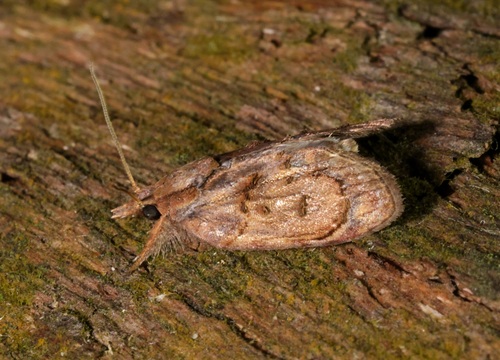
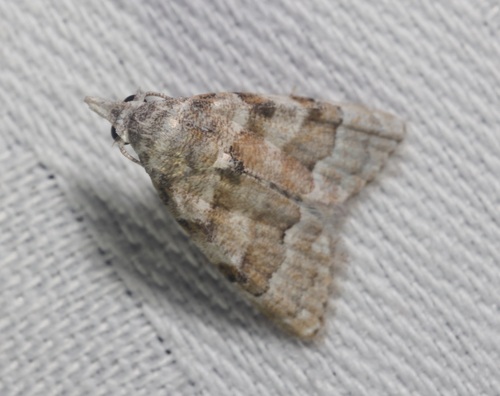
Eligma narcissus, the ailanthus defoliator, is a moth in the family Nolidae. The species was first described by Pieter Cramer in 1775. It is found in tropical Asia and the subtropics of China, India, Sri Lanka, Java and Southeast Islands.

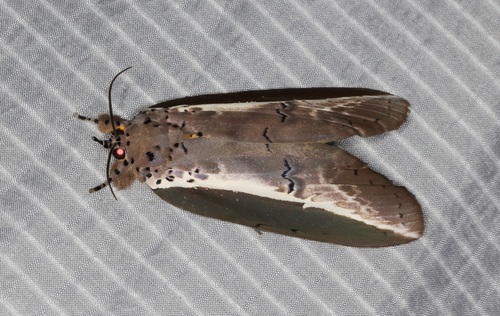
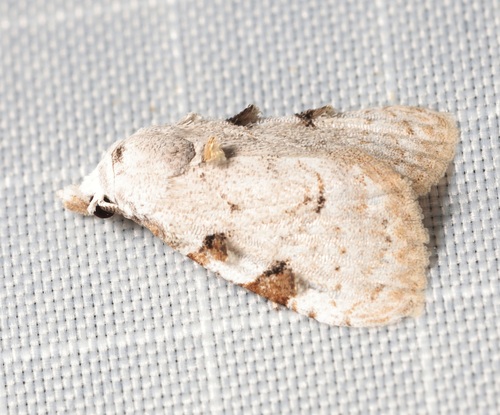
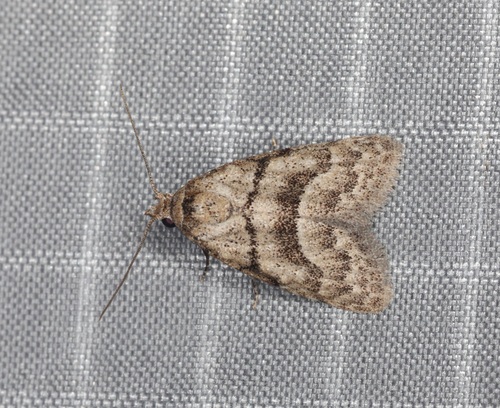
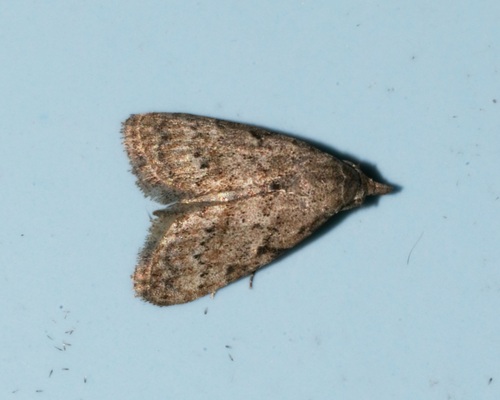
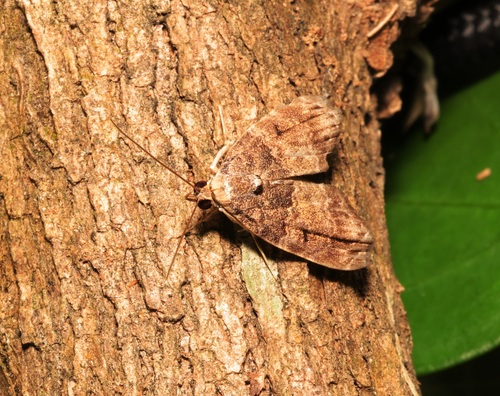
Head and thorax greyish brown and spotted in black. Abdomen bright yellow with dorsal and lateral series of black spots. Forelegs are grey brown and spotted with black. Midlegs and hindlegs are yellowish with black spots on tibia. Tarsi grey brown. Forewings are greyish brown where costal area is with an olive tinge. There is an irregular and diffused curved white fascia from base to apex. Some basal and sub-basal black spots. A waved black line runs from lower angle of cell to inner margin. A submarginal series of black spots, those towards outer angle conjoined into streaks. Hindwings are bright yellow. Apical area is black, suffused or streaked with dark blue, and terminating at vein 1b. Cilia whitish at tips.

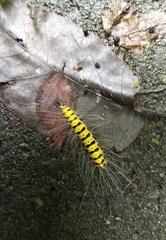
The larvae feed on Canarium and Ailanthus species, including A. fordii. They are also found to feed on Ailanthus altissima, Amygdalus persica, and Toona sinensis from China. Wikipedia →

Global Distribution

Parks Where Found

# Park Country Daily sighting probability
1 Taroko National Park 🇹🇼 Taiwan
~10%

More parks will be added in future updates.

Cities Where Found

# City Country Daily sighting probability
1 Thiruvananthapuram 🇮🇳 India
~20%
2 Nagoya 🇯🇵 Japan
~10%
3 Qingdao 🇨🇳 China
~10%
4 Salem 🇮🇳 India
~10%
5 Kochi 🇮🇳 India
~10%
6 Nanjing 🇨🇳 China
~10%
7 Hyderabad 🇮🇳 India
~10%
8 Osaka 🇯🇵 Japan
~10%
9 Hong Kong 🇨🇳 China
<5%
10 Bengaluru 🇮🇳 India
<5%

Before you go

What are the chances of seeing an Ailanthus Defoliator in Hong Kong?

Rare

Under 5% of wildlife watchers report an Ailanthus Defoliator sighting in Hong Kong on a given day, based on 13 verified sightings from GBIF citizen-science data. It is the 613th most-seen of the 1125 insects we can rate there. Over three days the chance rises to about 10%, and over a week to about 20%, if each day is a fresh chance.

When is the best time to see an Ailanthus Defoliator in Hong Kong?

October and November

In those months about 10% of wildlife watchers report an Ailanthus Defoliator in Hong Kong on a given day, against under 5% in December to September, the lowest months. Those are among Hong Kong's driest months, with about 40 mm of rain a month against 280 mm in June.

What time of day is best to see an Ailanthus Defoliator?

Between 9 pm and midnight

Across all the parks we cover, that three-hour window holds the most Ailanthus Defoliator sightings with a recorded time, and about half of them come between 6 am and 6 pm: it is seen both by day and at night.

Is Hong Kong the best place to see an Ailanthus Defoliator?

9th of 11

Of the 11 cities where we can rate Ailanthus Defoliator sightings, Hong Kong ranks 9th at under 5%. The best odds are in Thiruvananthapuram (India, about 20%), Nagoya (Japan, about 10%) and Qingdao (China, about 10%).

Which relatives of the Ailanthus Defoliator live in Hong Kong?

Same family: Nolidae

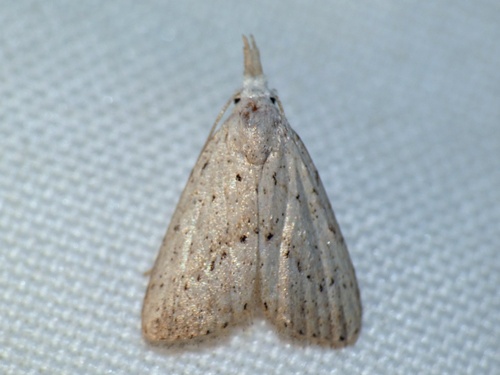
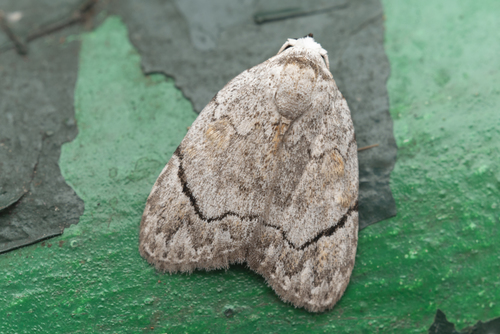
The closest relatives of the Ailanthus Defoliator that you can see in Hong Kong (family Nolidae, Tufted Moths) are Meganola brunellus (about 10%), Melanographia flexilineata (about 10%) and Nola pascua (about 10%), with each one's daily chance of a sighting.

Where does the Ailanthus Defoliator sighting chance come from?

GBIF citizen-science records

It is estimated from how often the Ailanthus Defoliator is recorded against all the insects logged in Hong Kong (13 verified sightings), calibrated against known sighting rates. Figures are rounded to the nearest 10% because citizen-science data supports honest approximations, not decimals, and months with records from fewer than five people show "—". How it works.

← Back to Hong Kong