

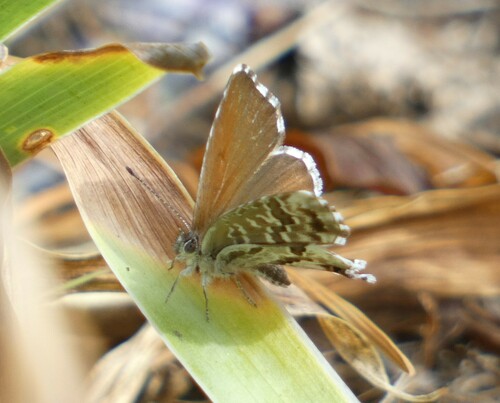
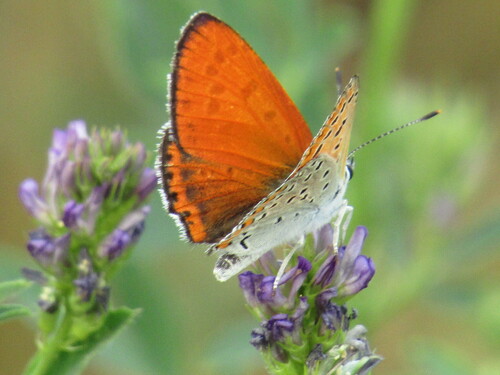

Fasciated Conehead Mantid

Fasciated Conehead Mantid

Empusa fasciata

Daily sighting probability ~20% · Possible
at Jerusalem

In 3 days ~50% in a week ~80%

18 Verified sightings at Jerusalem
March Best month

About the Fasciated Conehead Mantid

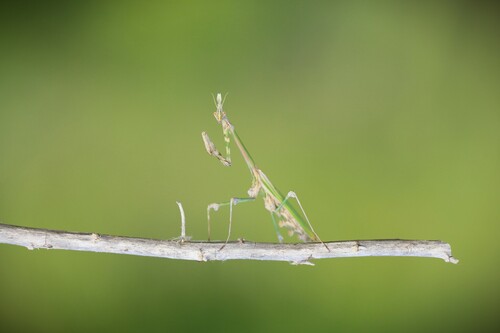
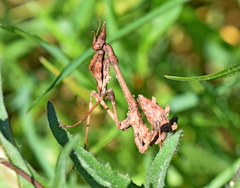
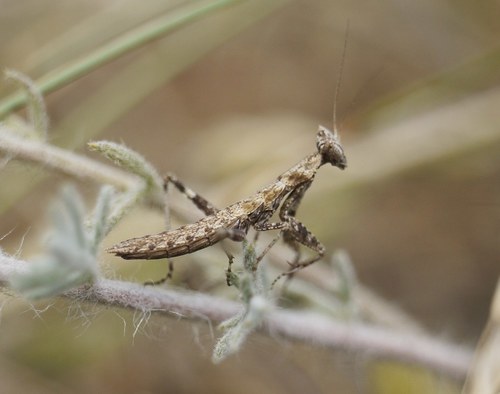
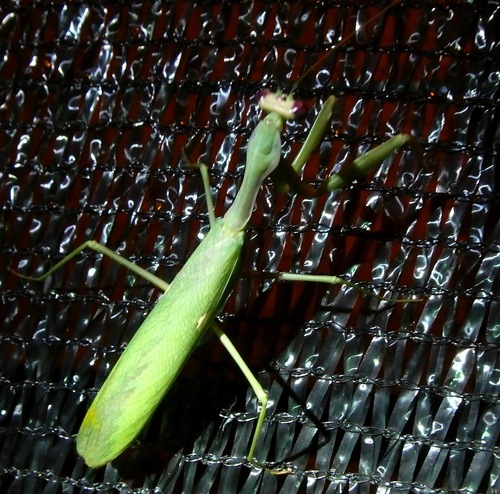
Empusa fasciata, commonly known as the devil's mare, is a species of praying mantis in the genus Empusa in the order Mantodea. The praying mantis Empusa fasciata has a tapering head with a miter-like helmet, oval compound eyes, slender raptorial forelegs and a long thin thorax. E. fasciata often bends sharply upward at the abdomen, making the thorax appear even longer. The ventral abdomen and the femurs of the long thin walking legs have distinct lobules, which serve as camouflage. Due to its bizarre shape and the yellowish-green striped pattern of the legs, E. fasciata is well-camouflaged in vegetation, and is noticeable only when in motion.

E. fasciata can be found from western Asia to the northeastern coast of Italy, in Morocco and southern Africa and appears most commonly in the southern Balkans. It prefers xerothermic sites. For instance, on the Adriatic coast, E. fasciata is found mainly on south-facing flysch and karst slopes, where Mantis religiosa can also occur. From Croatia to the bay of Trieste, E. fasciata reaches its adult stage in May. Mating can occur repeatedly, and females lay their eggs on vegetation. The adult males... Wikipedia →

Global Distribution

Parks Where Found

# Park Country Daily sighting probability

More parks will be added in future updates.

Cities Where Found

# City Country Daily sighting probability
1 Jerusalem 🇮🇱 Israel
~20%
2 Istanbul 🇹🇷 Turkey
~10%

Before you go

What are the chances of seeing a Fasciated Conehead Mantid in Jerusalem?

Possible

About 20% of wildlife watchers report a Fasciated Conehead Mantid sighting in Jerusalem on a given day, based on 18 verified sightings from GBIF citizen-science data. It is the 25th most-seen of the 137 insects we can rate there. Over three days the chance rises to about 50%, and over a week to about 80%, if each day is a fresh chance.

When is the best time to see a Fasciated Conehead Mantid in Jerusalem?

January, March and October

In those months about 40% of wildlife watchers report a Fasciated Conehead Mantid in Jerusalem on a given day, against under 5% in May–June, September and November, the lowest months. Those are among Jerusalem's wettest months, with about 45 mm of rain a month against almost none in August.

Is Jerusalem the best place to see a Fasciated Conehead Mantid?

Yes

Of the 2 cities where we can rate Fasciated Conehead Mantid sightings, Jerusalem has the highest daily chance: about 20%. Next come Istanbul (Turkey, about 10%).

Where does the Fasciated Conehead Mantid sighting chance come from?

GBIF citizen-science records

It is estimated from how often the Fasciated Conehead Mantid is recorded against all the insects logged in Jerusalem (18 verified sightings), calibrated against known sighting rates. Figures are rounded to the nearest 10% because citizen-science data supports honest approximations, not decimals, and months with records from fewer than five people show "—". How it works.

← Back to Jerusalem