Pallas's Long-tongued Bat

Pallas's Long-tongued Bat

Glossophaga soricina

Silhouette: Edwin Price · PhyloPic

LCLeast ConcernNTVUENCR
Daily sighting probability ~20% · Possible
at João Pessoa

In 3 days ~50% in a week ~80%

7 Verified sightings at João Pessoa
June Best month
🌅 Crepuscular When it's spotted

About the Pallas's Long-tongued Bat

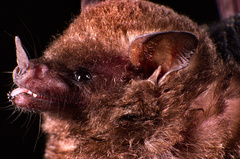
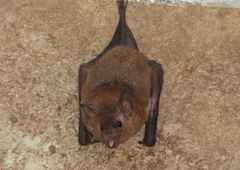
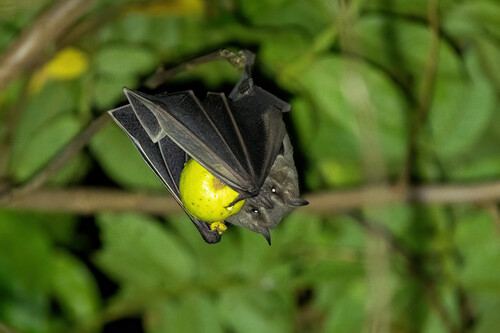
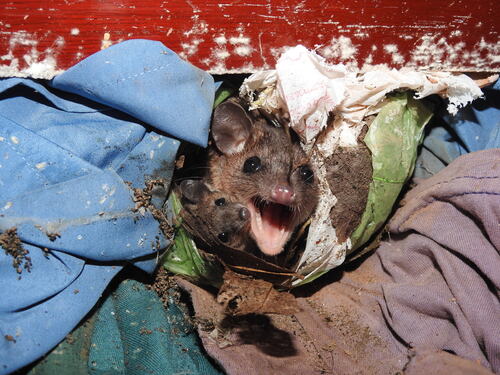
Pallas's long-tongued bat (Glossophaga soricina) is a South and Central American bat with a fast metabolism that feeds on nectar. It has the fastest metabolism ever recorded in a mammal, similar to those of hummingbirds. Although it uses 50% of its stored fat over the course of a day, over 80% of its energy comes directly from the simple sugars that compose its diet of nectar, without being stored in any form. It will also feed on pollen, flower parts, fruit and insects.

A 2013 study determined that their tongues have a mopping ability that is powered by blood, a phenomenon unique in nature. Elongated hairs at the tongue's tip, which normally lie flat, become engorged with blood when the tongue is protruded. As a result, the hairs stand in erect rows, perpendicular to the tongue. The tongue tip increases by over 50 percent in length, contracting its width to squeeze enlarged vascular sinuses along the tongue's length, that are directly connected to the hairs. During this process tissue capillaries turn from pink (little blood) to dark red. The blood vessel networks that enter the tip of the tongue are fringed by muscle fibers, which contract to compress... Wikipedia →

Global Distribution

Parks Where Found

# Park Country Daily sighting probability

More parks will be added in future updates.

Cities Where Found

# City Country Daily sighting probability
1 João Pessoa 🇧🇷 Brazil
~20%
2 São Paulo 🇧🇷 Brazil
<5%

Zoos & Centres Where Found

# Zoo / Centre Country
1 Zoo Pilsen 🇨🇿 Czechia In captivity
2 Nuremberg Zoo 🇩🇪 Germany In captivity
3 Tiergarten Am Tiergarten 28 in Nürnberg 🇩🇪 Germany In captivity
4 Berlin Zoological Garden 🇩🇪 Germany In captivity
5 Mesker Park Zoo and Botanic Garden 🇺🇸 United States In captivity
6 Aquarium Berlin 🇩🇪 Germany In captivity
7 Tiergarten Am Tiergarten 12 in Nürnberg 🇩🇪 Germany In captivity
8 Tiergarten Am Tiergarten 14 in Nürnberg 🇩🇪 Germany In captivity
9 Tiergarten Am Tiergarten 6 in Nürnberg 🇩🇪 Germany In captivity

Before you go

What are the chances of seeing a Pallas's Long-tongued Bat in João Pessoa?

Possible

About 20% of wildlife watchers report a Pallas's Long-tongued Bat sighting in João Pessoa on a given day, based on 7 verified sightings from GBIF citizen-science data. It is the 8th most-seen of the 13 mammals we can rate there. Over three days the chance rises to about 50%, and over a week to about 80%, if each day is a fresh chance.

When is the best time to see a Pallas's Long-tongued Bat in João Pessoa?

June

In that month about 50% of wildlife watchers report a Pallas's Long-tongued Bat in João Pessoa on a given day, against under 5% in March, August and October–January, the lowest months. That is one of João Pessoa's wettest months, with about 230 mm of rain against 20 mm in November.

What time of day is best to see a Pallas's Long-tongued Bat?

Between 7 and 10 pm

Across all the parks we cover, that three-hour window holds the most Pallas's Long-tongued Bat sightings with a recorded time, and about 7 in 10 of them come between 6 pm and 6 am: it is most active around dawn and dusk.

Is João Pessoa the best place to see a Pallas's Long-tongued Bat?

Yes

Of the 2 cities where we can rate Pallas's Long-tongued Bat sightings, João Pessoa has the highest daily chance: about 20%. Next come São Paulo (Brazil, under 5%).

Which relatives of the Pallas's Long-tongued Bat live in João Pessoa?

Same family: Phyllostomidae

The closest relatives of the Pallas's Long-tongued Bat that you can see in João Pessoa (family Phyllostomidae, New World Leaf-nosed Bats) are Flat-faced Fruit-eating Bat (about 30%) and White-lined Broad-nosed Bat (about 20%), with each one's daily chance of a sighting.

Where does the Pallas's Long-tongued Bat sighting chance come from?

GBIF citizen-science records

It is estimated from how often the Pallas's Long-tongued Bat is recorded against all the mammals logged in João Pessoa (7 verified sightings), calibrated against known sighting rates. Figures are rounded to the nearest 10% because citizen-science data supports honest approximations, not decimals, and months with records from fewer than five people show "—". How it works.

← Back to João Pessoa