White-Barred Emperor

White-Barred Emperor

Charaxes brutus

Daily sighting probability ~20% · Possible
at Kigali

In 3 days ~40% in a week ~70%

5 Verified sightings at Kigali
152 In all 6 parks From 2019 to 2026
June Best month
☀️ Diurnal When it's spotted

About the White-Barred Emperor

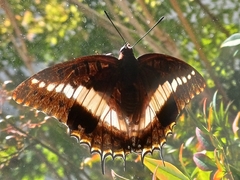
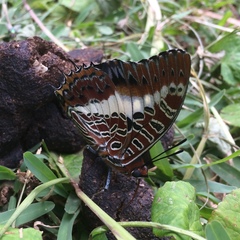
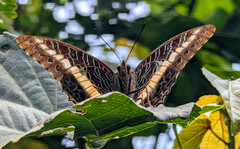
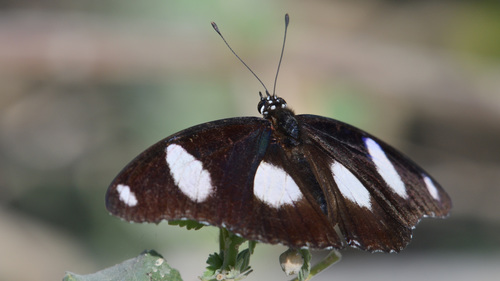
Charaxes brutus, the white-barred emperor or white-barred Charaxes, is a butterfly of the family Nymphalidae. It is found in Africa (see subspecies section for detailed information). Its flight period is year-round. Notes on the biology of brutus are given by Larsen, T.B. (1991).

Its average wingspan is 60–75 mm in males and 75–90 mm in females. Both wings above black or black-brown with a common white or whitish yellow discal band, which on the forewing is broken up into spots towards the costal margin. Marginal spots wanting; but

the hindwing has before the distal margin 2—4 small blue spots, 2 in cellule 1 c and one each in 2 and 3. The under surface has a continuous white discal band; the ground-colour of the basal part is red-brown with the black, white-edged markings peculiar to the genus, which stand out sharply; the marginal part is brown-yellow next to the discal band and then ornamented with large, triangular black spots, distally bordered with pale grey. The hindwing also at vein 3 with a distinct, but short tail. — brutus Cr. The discal band on the upper surface pure white, not or only indistinctly margined with blue, on the forewing also with a spot... Wikipedia →

Global Distribution

Parks Where Found

# Park Country Daily sighting probability
1 Gonarezhou National Park 🇿🇼 Zimbabwe
~30%
2 Bwindi Impenetrable National Park 🇺🇬 Uganda
~20%
3 iSimangaliso Wetland Park 🇿🇦 South Africa
~10%
4 Table Mountain National Park 🇿🇦 South Africa
~10%
5 Kruger National Park 🇿🇦 South Africa
~10%
6 Garden Route National Park 🇿🇦 South Africa
~10%

Cities Where Found

# City Country Daily sighting probability
1 Lusaka 🇿🇲 Zambia
~30%
2 Kigali 🇷🇼 Rwanda
~20%
3 Durban 🇿🇦 South Africa
~10%
4 Cape Town 🇿🇦 South Africa
~10%
5 Pretoria 🇿🇦 South Africa
~10%
6 Nairobi 🇰🇪 Kenya
~10%
7 Johannesburg 🇿🇦 South Africa
~10%

Before you go

What are the chances of seeing a White-Barred Emperor in Kigali?

Possible

About 20% of wildlife watchers report a White-Barred Emperor sighting in Kigali on a given day, based on 5 verified sightings from GBIF citizen-science data. It is the 19th most-seen of the 25 insects we can rate there. Over three days the chance rises to about 40%, and over a week to about 70%, if each day is a fresh chance.

When is the best time to see a White-Barred Emperor in Kigali?

June and October–November

In those months about 30% of wildlife watchers report a White-Barred Emperor in Kigali on a given day, against under 5% in August–September and December–May, the lowest months.

What time of day is best to see a White-Barred Emperor?

Between noon and 3 pm

Across all the parks we cover, that three-hour window holds the most White-Barred Emperor sightings with a recorded time, and about 9 in 10 of them come between 6 am and 6 pm: it is a daytime animal.

Is Kigali the best place to see a White-Barred Emperor?

2nd of 7

Of the 7 cities where we can rate White-Barred Emperor sightings, Kigali ranks 2nd at about 20%. The best odds are in Lusaka (Zambia, about 30%).

Which relatives of the White-Barred Emperor live in Kigali?

Same family: Nymphalidae

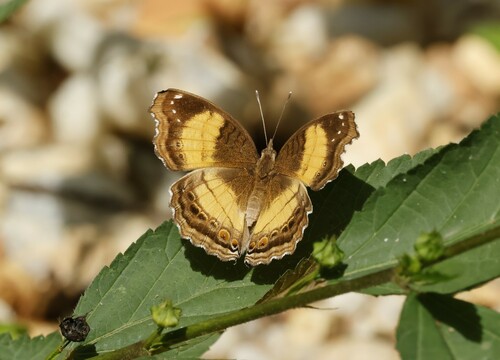
The closest relatives of the White-Barred Emperor that you can see in Kigali (family Nymphalidae, Brush-footed Butterflies) are Soldier Commodore (about 50%), Dark Blue Pansy (about 40%) and Mycalesis rhacotis (about 30%), with each one's daily chance of a sighting.

Where does the White-Barred Emperor sighting chance come from?

GBIF citizen-science records

It is estimated from how often the White-Barred Emperor is recorded against all the insects logged in Kigali (5 verified sightings), calibrated against known sighting rates. Figures are rounded to the nearest 10% because citizen-science data supports honest approximations, not decimals, and months with records from fewer than five people show "—". How it works.

← Back to Kigali