









All 2 in 3 days here: ~40%
Bwindi Impenetrable National Park
🇺🇬 Uganda
East Africa, Uganda 1511 spp. recorded
Bwindi Impenetrable National Park is a dense tropical rainforest situated in southwestern Uganda. Unlike the open savannahs typical of East Africa, this protected area consists of steep, mist-shrouded mountain ridges covered in thick, ancient vegetation and tangled vines.
-1.053° S 29.712° E
🦜 Nature

645 Species sighted
85,983 Verified sightings From 2019 to 2026
Jul Best month
⭐ Iconic Species
📊 Most Spotted
⭐ Iconic Species
📊 Most Spotted
⭐ Iconic Species
📊 Most Spotted
⭐ Iconic Species
📊 Most Spotted
📊 Most Spotted
📊 Most Spotted
🌙 Most active after dark
+ 1102 more species with insufficient data
Challenges you can complete here
Recent sightings in Bwindi Impenetrable National Park
LIVEiNaturalistSighting Calendar
How many species you'd see in a day
45Jan
46Feb
54Mar
36Apr
62May
49Jun
63Jul
49Aug
48Sep
50Oct
50Nov
46Dec
Sighting Zones
Warmer areas are where all species together are recorded most often.
-
Ruhija
Daily sight. prob.vs avg Mantled Guereza~80%+20%
 Johnston's Chameleon~70%+20%
 Blue Monkey~60%+10%
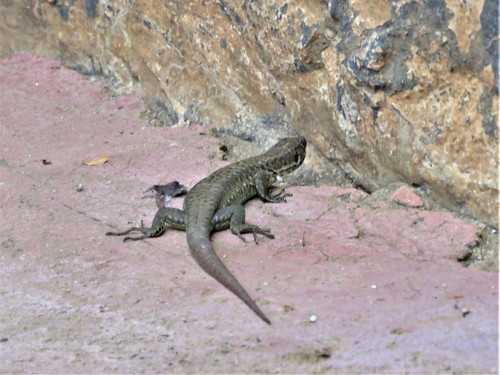
 Jackson's Forest Lizard~60%+20%
 Chubb's Cisticola~50%+10%
 Black Sawwing~50%-10%
 Northern Double-collared Sunbird~50%-10%
 Green White-eye~50%-10%
 Eastern Gorilla~50%-30%
 Olive Baboon~50%+10%
 Boehm's Bush Squirrel~50%+10%
 Cinnamon-chested Bee-eater~40%-10%
-
Bamboo Zone
Daily sight. prob.vs avg -
Entrance Road
Daily sight. prob.vs avg Red-tailed Monkey~70%+40%
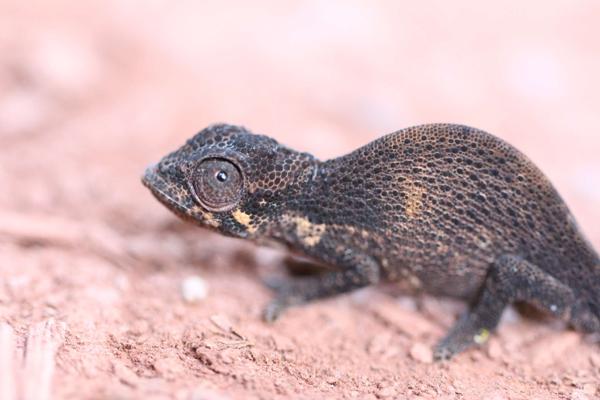
 Montane side-striped chameleon~70%+40%
- Olive Baboon~60%+20%
- Mantled Guereza~50%-10%
- Northern Double-collared Sunbird~50%-10%
- Boehm's Bush Squirrel~50%+10%
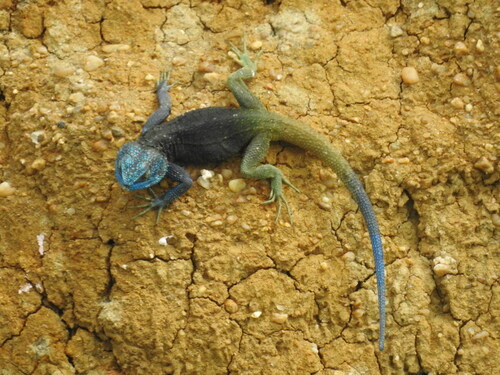
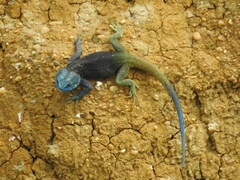 Uganda blue-headed tree agama~50%+30%
- Eastern Gorilla~50%-30%
- Blue Monkey~40%-10%
 Common Bulbul~40%-20%
 Yellow-rumped Tinkerbird~40%-10%
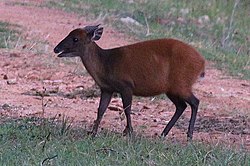 Weyns's Duiker~40%+30%
-
The Neck
Daily sight. prob.vs avg- Blue Monkey~80%+30%
- Red-tailed Monkey~80%+40%
- Eastern Gorilla~60%-10%
- Mantled Guereza~50%≈
 L'Hoest's Guenon~50%-10%
- Black Sawwing~50%-10%
- Yellow-rumped Tinkerbird~50%-10%
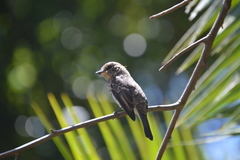 African Dusky Flycatcher~40%-10%
- Common Bulbul~40%-20%
- Uganda blue-headed tree agama~30%+10%
- Montane side-striped chameleon~30%≈
 Carruthers' Mountain Squirrel~30%+20%
-
Buhoma Farmland
Daily sight. prob.vs avg


🏕️ Experience
Essentials
Climate
Temp °C Rain mm
JanFebMarAprMayJunJulAugSepOctNovDec
0.0 Good
Wallace's Line Score
How good is this park for seeing wildlife? 🦜
Biodiversity
ExcellentHow rich is the wildlife?
4.8
Species by taxon
🦅 Birds 1032
🐒 Mammals 270
🦎 Reptiles 158
🐸 Amphibians 51
1511 Total Species
828 Global average across 316 parks
56 Threatened 4 Endemic
🔭
Sighting
GoodHow likely to see animals?
3.1
🎯
Top-12 Avg Probability
58% 📊
Coverage (262 species at ≥5% of 1511 in the inventory)
17% 🔀
Taxon variety in top 12 (7 bird, 4 mammal, 1 reptile)
72% 🔭
Species per 10 outings (distinct species a visitor would meet over 10 outings — effort held equal across parks)
187 🌟
Iconic-group species (≥15%) (every species from the 19 iconic groups — monkeys, cats, toucans, macaws, sloths, crocodilians… — not just the 4 highlighted above)
11 ⭐
High-prob species (>40%)
24 🏕️
Experience
Very goodHow easy and pleasant is the visit?
3.9
Climate Mixed Medium
Entrance Paid Low
Tourism Low High
Trails Hard Low
World Heritage Yes Bonus
What visitors say
We saw elephants, buffalo, birds, baboons all from the highway.
I really liked seeing the "family portrait" (below) so we could try to identify the individual gorillas we encountered.
After the impressive experiences with all the animals in the Queen Elisabeth National Park and the Kazynga Canal, we now enter the African jungle to see very rare animals: the mountain gorillas.
Gorilla trekking in Bwindi Impenetrable National Park felt like the perfect way to honor the time I had already spent in Uganda and to see another side of this incredible country.
Before you go
What animals can you see in Bwindi Impenetrable National Park?
1,511 species
Bwindi Impenetrable National Park has 1,511 recorded vertebrate species. The ones wildlife watchers report most often on a given day are Eastern Gorilla (about 80%), L'Hoest's Guenon (about 70%), Northern Double-collared Sunbird (about 60%), Common Bulbul (about 60%) and Mantled Guereza (about 60%). Among reptiles, the most-seen is Johnston's Chameleon (about 50%).
When is the best time to visit Bwindi Impenetrable National Park for wildlife?
February–March and May–November
In those months the park's 12 most-seen species average about 60% on a given day, against about 40% in April.
Can you see an Eastern Gorilla in Bwindi Impenetrable National Park?
Yes
About 80% of wildlife watchers report an Eastern Gorilla sighting in Bwindi Impenetrable National Park on a given day, based on 353 verified sightings from GBIF citizen-science data from 2019 to 2026. The best time is April, June, August–September and December–February (about 80%).
Can you see a Mantled Guereza in Bwindi Impenetrable National Park?
Yes
About 60% of wildlife watchers report a Mantled Guereza sighting in Bwindi Impenetrable National Park on a given day, based on 91 verified sightings from GBIF citizen-science data from 2019 to 2026. The best time is April, July and October–November (about 70%).
Can you see a Northern Double-collared Sunbird in Bwindi Impenetrable National Park?
Yes
About 60% of wildlife watchers report a Northern Double-collared Sunbird sighting in Bwindi Impenetrable National Park on a given day, based on 1,493 verified sightings from GBIF citizen-science data from 2019 to 2026. The best time is December (about 80%).
Can you see a Johnston's Chameleon in Bwindi Impenetrable National Park?
Yes
About 50% of wildlife watchers report a Johnston's Chameleon sighting in Bwindi Impenetrable National Park on a given day, based on 77 verified sightings from GBIF citizen-science data from 2019 to 2026. The best time is October and December–January (about 70%).
Where in Bwindi Impenetrable National Park is wildlife easiest to see?
Around Ruhija
The richest sighting zone is around Ruhija, followed by Bamboo Zone and Entrance Road, ranked by how many of the park's headline animals visitors can expect to see in each. See the zones on the map.
Is Bwindi Impenetrable National Park good for wildlife watching?
3.6 out of 5
On the Wallace's Line Score, Bwindi Impenetrable National Park rates 3.6/5: 169th of 316 parks worldwide and 54th in Africa. 30 of its species are reported by about 40% or more of wildlife watchers on a given day.


