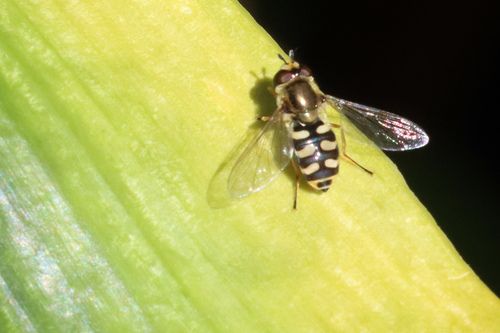
About the Olive Fruit Fly
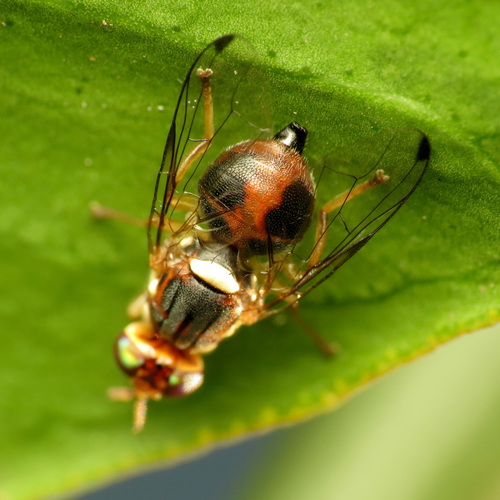
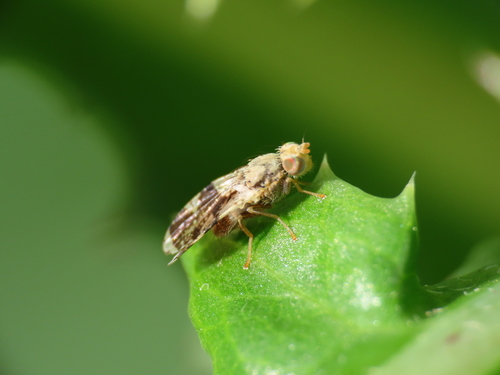
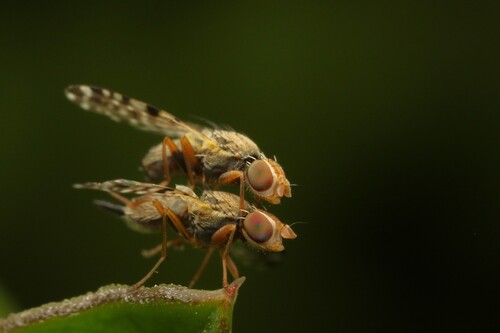
The olive fruit fly (Bactrocera oleae) is a species of fruit fly which belongs to the subfamily Dacinae. It is a phytophagous species whose larvae feed on the fruit of olive trees, hence the common name. It is considered a serious pest in the cultivation of olives.
Until 1998, the fly had not been detected in the United States, and its range coincided with the range of the olive tree in the Eastern Hemisphere: northern, eastern, and southern Africa, Southern Europe, the Canary Islands, India, and western Asia. In the Western Hemisphere, it is currently restricted to California, Baja California, and Sonora. The olive fruit fly was first detected in North America infesting olive fruits on landscape trees in Los Angeles County in November 1998. It can now be found throughout the state of California.
In the final years of the 18th century, Italian scientist Giuseppe Maria Giovene (1753–1837), in his work Avviso per la distruzione dei vermi che attaccano la polpa delle olive (1792), provided some suggestions for peasants to effectively destroy the fly musca oleae, which infested the pulp of olive trees.
This species is associated with plants... Wikipedia →