Ram's Horn Gall Wasp

Ram's Horn Gall Wasp

Andricus aries

Daily sighting probability ~10% · With luck
at Liverpool

In 3 days ~20% in a week ~40%

20 Verified sightings at Liverpool
February Best month

About the Ram's Horn Gall Wasp

Andricus aries is a species of gall-forming wasps, in the genus Andricus. The species was named by the French entomologist Joseph-Étienne Giraud, in 1859. It is commonly found in eastern Europe and during the 21st century has spread to western Europe.

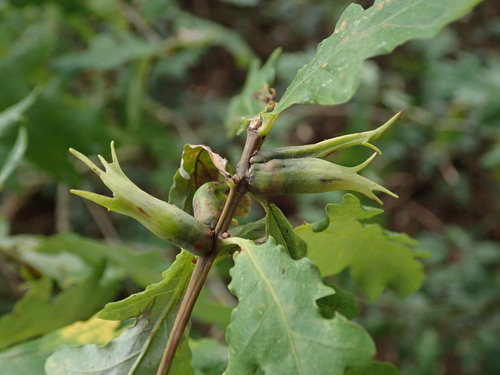
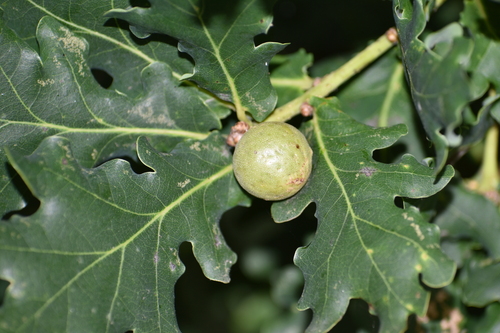
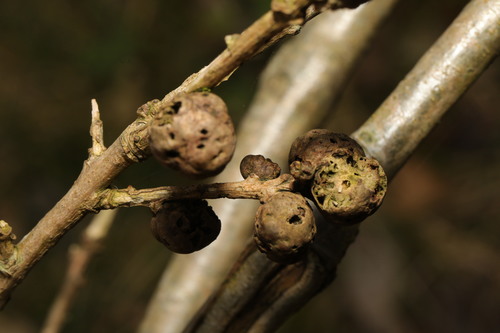
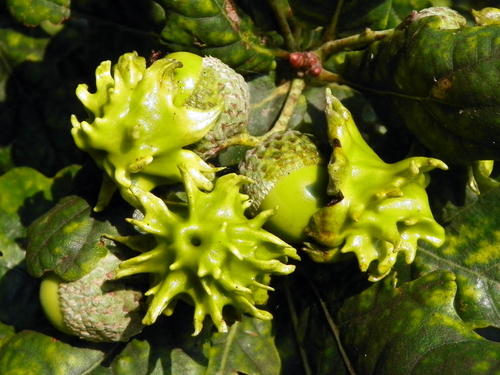
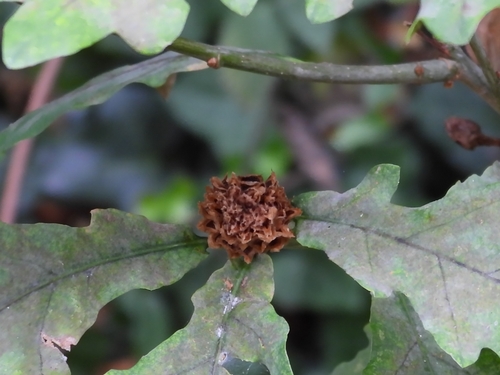
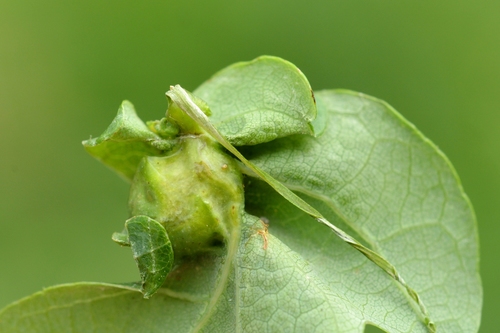
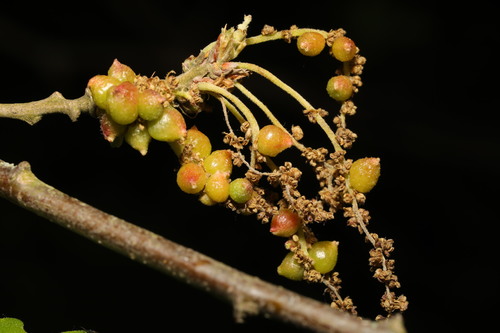
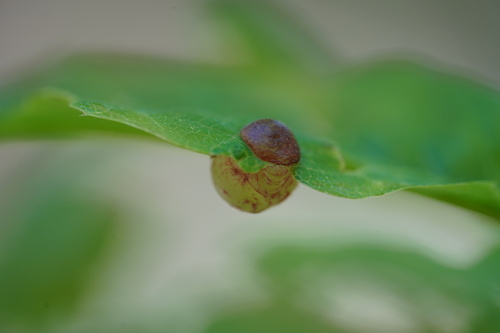
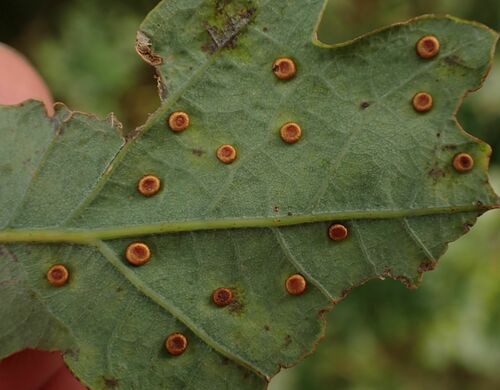
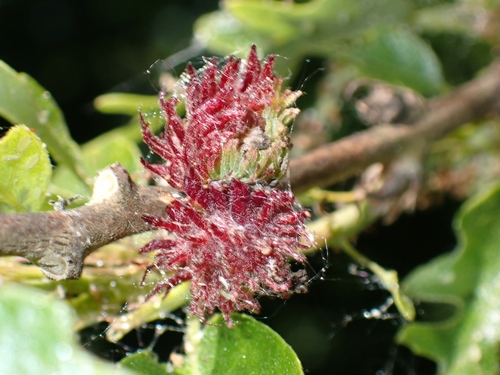
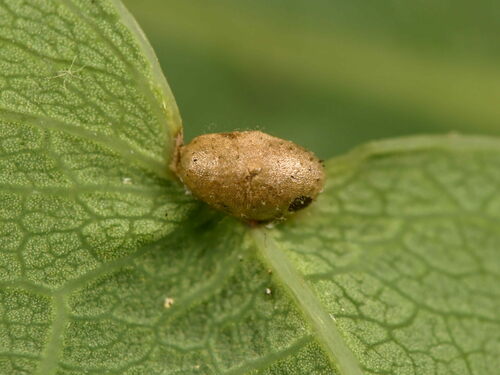
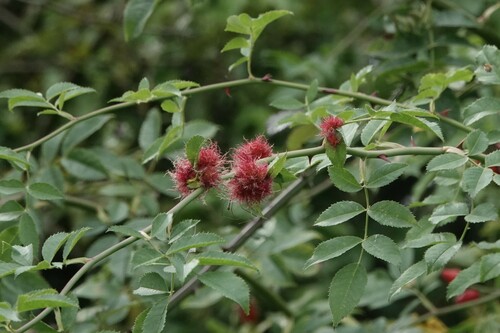
Adults lay their eggs on various species of oak, including Quercus robur, Q. petraea, Q. pubescens and Q. cerris, The developing larvae cause the trees to create an elongated gall, reminiscent of a ram's horn, hence the epithet aries and the vernacular name "ram's horn gall wasp". Green at first, the gall can be reduced to a single strap or can just be 5 mm long. It later hardens, turns brown and is especially variable when the gall contains inquilines (Synergus species). A. aries does not cause galls to form on acorns but causes galls to develop on leaf buds on twigs, these have a variety of forms which are due to the activities of parasites and inquilines. Its sexual stage is found on the catkins of Evergreen Oak In northwestern Europe, at least, their reproduction is solely asexual generation, however, experiments have demonstrated that newly emerged females will lay eggs in the axillary buds of Quercus cerris. A... Wikipedia →

Global Distribution

Parks Where Found

# Park Country Daily sighting probability

More parks will be added in future updates.

Cities Where Found

# City Country Daily sighting probability
1 London 🇬🇧 United Kingdom
~10%
2 Liverpool 🇬🇧 United Kingdom
~10%
3 Birmingham 🇬🇧 United Kingdom
~10%
4 Vienna 🇦🇹 Austria
<5%

Before you go

What are the chances of seeing a Ram's Horn Gall Wasp in Liverpool?

With luck

About 10% of wildlife watchers report a Ram's Horn Gall Wasp sighting in Liverpool on a given day, based on 20 verified sightings from GBIF citizen-science data. It is the 296th most-seen of the 632 insects we can rate there. Over three days the chance rises to about 20%, and over a week to about 40%, if each day is a fresh chance.

When is the best time to see a Ram's Horn Gall Wasp in Liverpool?

January–April, June, August–September and November

In those months about 10% of wildlife watchers report a Ram's Horn Gall Wasp in Liverpool on a given day, against under 5% in May, July, October and December, the lowest months.

Is Liverpool the best place to see a Ram's Horn Gall Wasp?

Among the best

Of the 4 cities where we can rate Ram's Horn Gall Wasp sightings, Liverpool ranks 2nd at about 10%, level with the leaders once rounded. The best odds are in London (United Kingdom, about 10%).

Which relatives of the Ram's Horn Gall Wasp live in Liverpool?

Same genus: Andricus

The closest relatives of the Ram's Horn Gall Wasp that you can see in Liverpool (genus Andricus) are Oak Marble Gall Wasp (about 30%), Cola Nut Gall Wasp (about 20%) and Knopper Gall Wasp (about 20%), with each one's daily chance of a sighting.

Where does the Ram's Horn Gall Wasp sighting chance come from?

GBIF citizen-science records

It is estimated from how often the Ram's Horn Gall Wasp is recorded against all the insects logged in Liverpool (20 verified sightings), calibrated against known sighting rates. Figures are rounded to the nearest 10% because citizen-science data supports honest approximations, not decimals, and months with records from fewer than five people show "—". How it works.

← Back to Liverpool