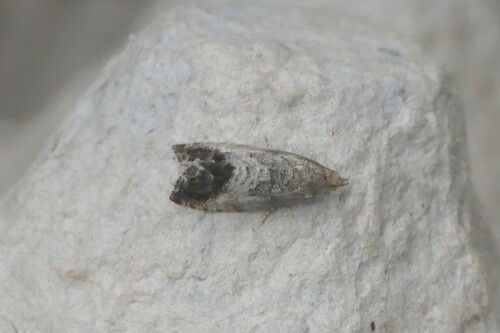
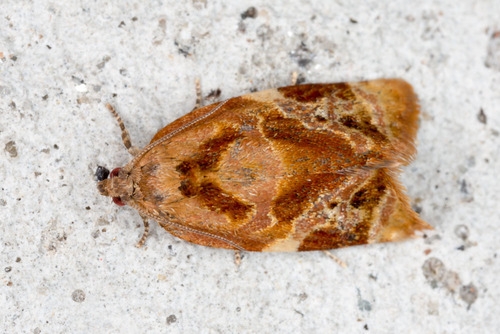
Black-Bordered Piercer

Black-Bordered Piercer

Pammene argyrana

Daily sighting probability <5% · Rare
at London

In 3 days ~10% in a week ~20%

6 Verified sightings at London
April Best month

About the Black-Bordered Piercer

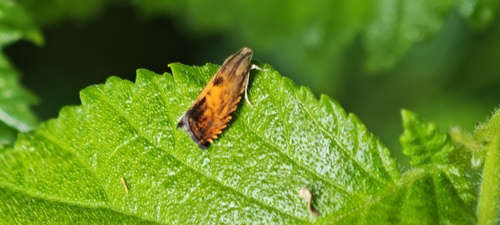
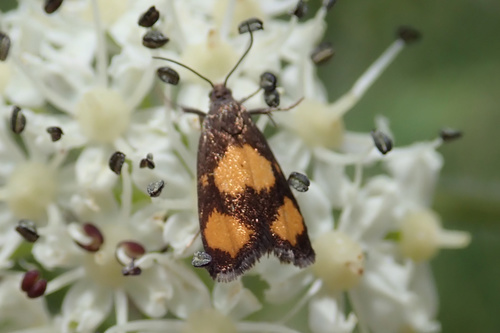
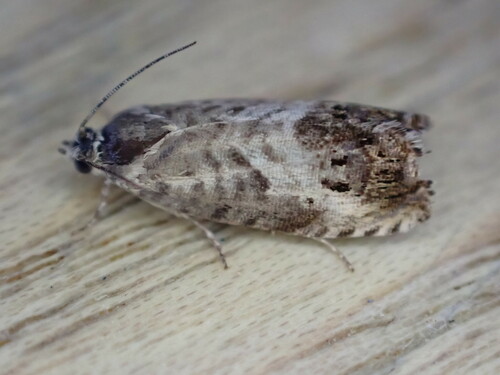
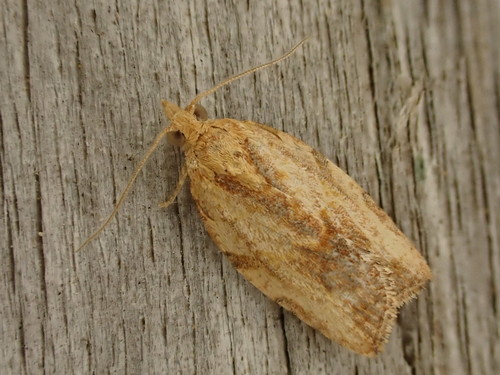
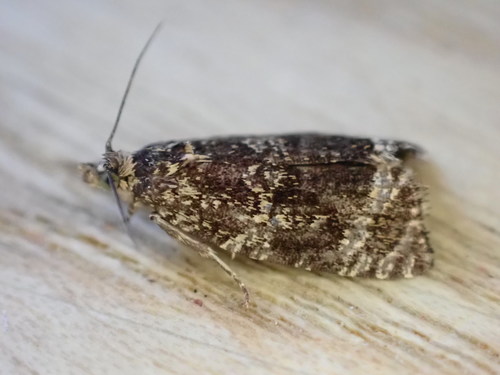
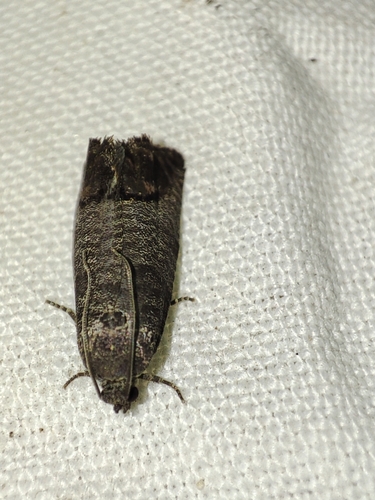
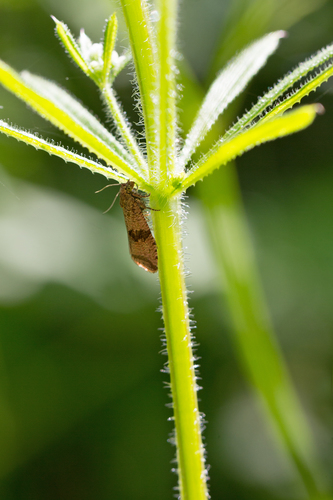
Pammene argyrana is a species of moth belonging to the family Tortricidae. It is native to Europe. The wingspan is 10–13 mm. The forewing has a white or brownish-white spot at the dorsal edge. The colour of the hindwings is characteristic: brownish white with sharply delineated brown areas in the posterior part and at the apex. Meyrick describes it - The forewings are fuscous, sometimes ochreous- tinged, irregularly marked with black, costa strigulated with black and white; three streaks from costa and margins of ocellus leaden - metallic; sharply angulated edge of basal patch and central fascia darker, separated by a somewhat pentagonal white dorsal blotch more or less strigulated with blackish; a suffused blackish spot before apex. Hindwings fuscous, in male basally whitish, with terminal and broader dorsal blackish fascia, in female posteriorly darker fuscous. The larva is pinkish-white, sharply ringed with white; spots red; head brown; plate of 2 whitish or grey, posterior edge blackish

Like Pammene giganteana, this species has larvae that develop in galls made by Cynipidae on Quercus. The adults fly in April–May, mostly at night, they often rest in a bark crack during the day. Wikipedia →
Global Distribution

Parks Where Found

# Park Country Daily sighting probability

More parks will be added in future updates.

Cities Where Found

# City Country Daily sighting probability
1 London 🇬🇧 United Kingdom
<5%

Before you go

What are the chances of seeing a Black-Bordered Piercer in London?

Rare

Under 5% of wildlife watchers report a Black-Bordered Piercer sighting in London on a given day, based on 6 verified sightings from GBIF citizen-science data. It is the 1300th most-seen of the 1504 insects we can rate there. Over three days the chance rises to about 10%, and over a week to about 20%, if each day is a fresh chance.

When is the best time to see a Black-Bordered Piercer in London?

April

In that month about 10% of wildlife watchers report a Black-Bordered Piercer in London on a given day, against under 5% in May to March, the lowest months.

Where else can you see a Black-Bordered Piercer?

Only London, in our data

London is the only city on Wallace's Line with enough records to rate Black-Bordered Piercer sightings: under 5% of wildlife watchers there report one on a given day.

Where does the Black-Bordered Piercer sighting chance come from?

GBIF citizen-science records

It is estimated from how often the Black-Bordered Piercer is recorded against all the insects logged in London (6 verified sightings), calibrated against known sighting rates. Figures are rounded to the nearest 10% because citizen-science data supports honest approximations, not decimals, and months with records from fewer than five people show "—". How it works.

← Back to London