Green Oak Tortrix

Green Oak Tortrix

Tortrix viridana

Daily sighting probability ~10% · With luck
at London

In 3 days ~20% in a week ~50%

170 Verified sightings at London
72 In all 4 parks From 2019 to 2026
June Best month
🌅 Crepuscular When it's spotted

About the Green Oak Tortrix

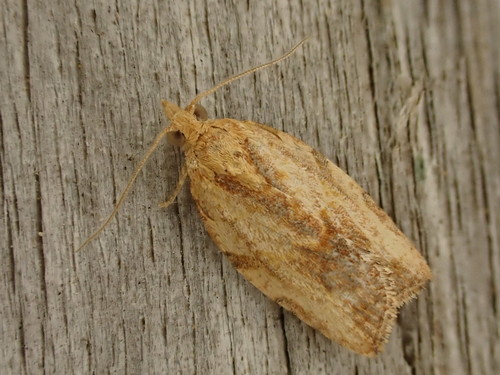
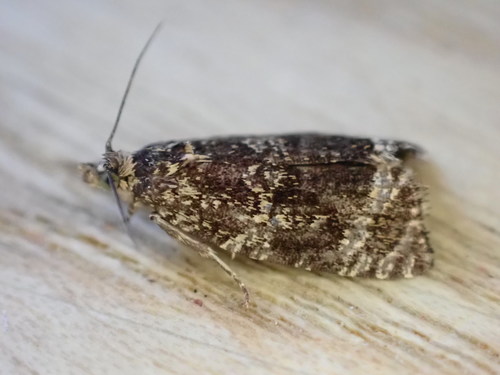
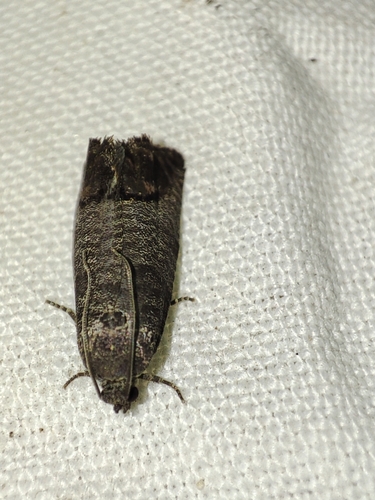
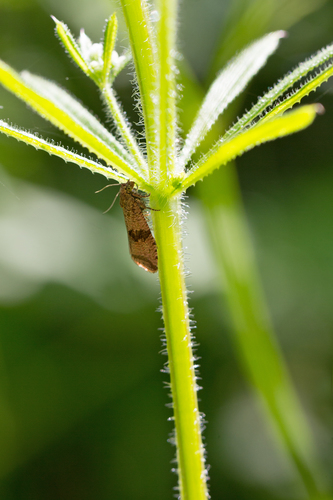
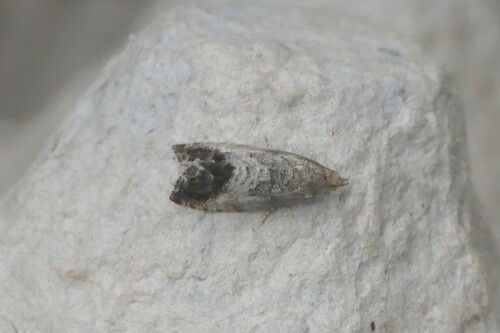
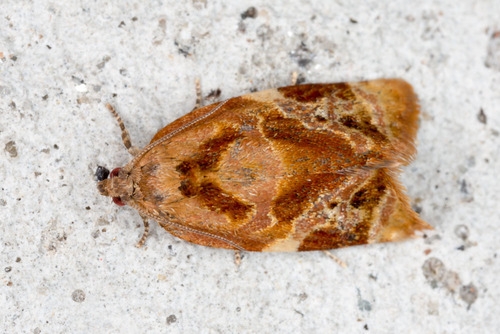
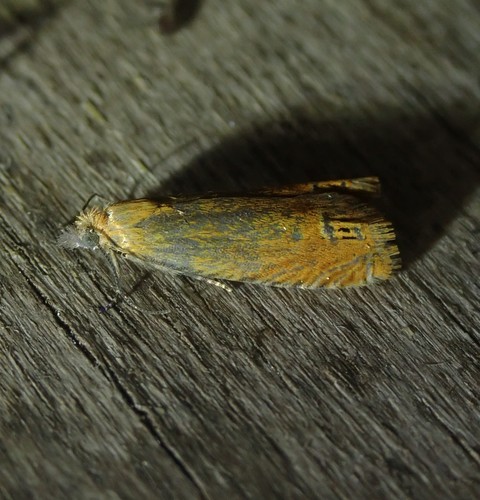
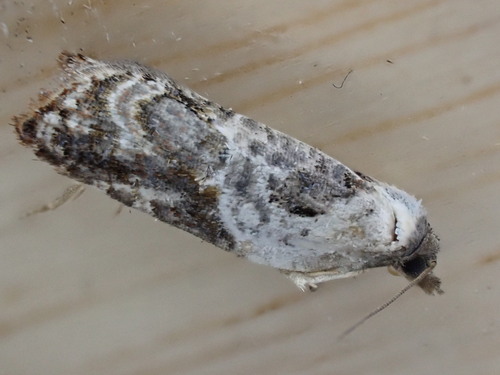
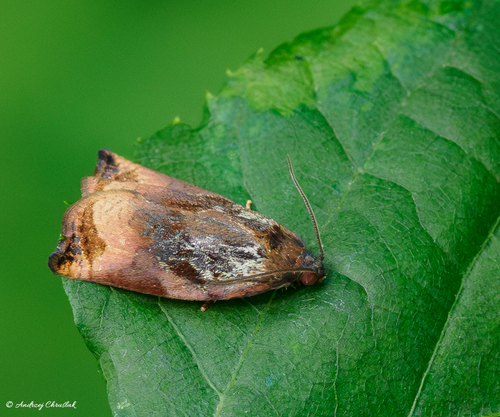
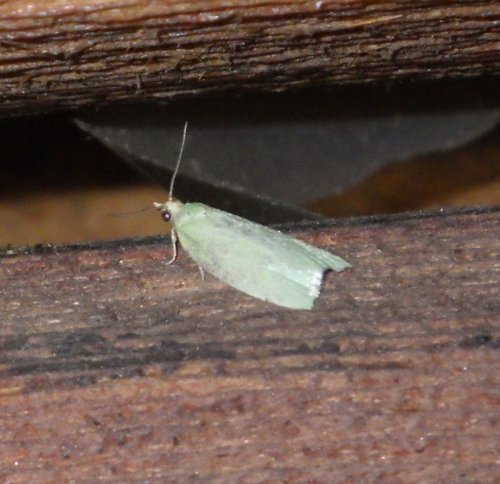
The green oak tortrix, Tortrix viridana, also known as the European oak leafroller and the green oak moth, is a distinctive green moth whose larvae feed on tree leaves, especially oak. The head, forebody and front wings are green, the hind wings lightly greyish. The wingspan is 18-24 millimetres.

An infestation of the larvae can defoliate an oak tree. The adult female lays its eggs next to leaf buds, which the larvae consume when they emerge. As the larvae grow bigger they eat larger leaves, and then roll themselves up in a full-sized leaf to pupate.

Larvae occur from April to June; adults are on wing in June and July. The Ichneumon wasp Dirophanes invisor is a parasitoid which specializes on T. viridana. They are commonly found in many parts of Britain. In the Butterfly Conservation’s Microlepidoptera Report 2011 this species was classified as common. Wikipedia →
Global Distribution

Parks Where Found

# Park Country Daily sighting probability
1 Cévennes National Park 🇫🇷 France
~10%
2 Snowdonia National Park 🇬🇧 United Kingdom
~10%
3 Wadden Sea National Park 🇩🇪 Germany
~10%
4 Sierra de Guadarrama National Park 🇪🇸 Spain
<5%

Cities Where Found

# City Country Daily sighting probability
1 London 🇬🇧 United Kingdom
~10%
2 Sofia 🇧🇬 Bulgaria
~10%
3 Liverpool 🇬🇧 United Kingdom
~10%
4 Stockholm 🇸🇪 Sweden
~10%
5 Essen 🇩🇪 Germany
~10%
6 Birmingham 🇬🇧 United Kingdom
~10%
7 Berlin 🇩🇪 Germany
~10%
8 Amsterdam 🇳🇱 Netherlands
<5%
9 Paris 🇫🇷 France
<5%
10 Brussels 🇧🇪 Belgium
<5%

Before you go

What are the chances of seeing a Green Oak Tortrix in London?

With luck

About 10% of wildlife watchers report a Green Oak Tortrix sighting in London on a given day, based on 170 verified sightings from GBIF citizen-science data. It is the 236th most-seen of the 1504 insects we can rate there. Over three days the chance rises to about 20%, and over a week to about 50%, if each day is a fresh chance.

When is the best time to see a Green Oak Tortrix in London?

May and June

In those months about 20% of wildlife watchers report a Green Oak Tortrix in London on a given day, against under 5% in July to April, the lowest months.

What time of day is best to see a Green Oak Tortrix?

Between 6 and 9 am

Across all the parks we cover, that three-hour window holds the most Green Oak Tortrix sightings with a recorded time, and about 7 in 10 of them come between 6 am and 6 pm: it is most active around dawn and dusk.

Is London the best place to see a Green Oak Tortrix?

Yes

Of the 19 cities where we can rate Green Oak Tortrix sightings, London has the highest daily chance: about 10%. Next come Sofia (Bulgaria, about 10%) and Liverpool (United Kingdom, about 10%).

Which relatives of the Green Oak Tortrix live in London?

Same family: Tortricidae

The closest relatives of the Green Oak Tortrix that you can see in London (family Tortricidae, Tortricid Leafroller Moths) are Light Brown Apple Moth (about 20%), Common Marble (about 10%) and Clepsis dumicolana (about 10%), with each one's daily chance of a sighting.

Where does the Green Oak Tortrix sighting chance come from?

GBIF citizen-science records

It is estimated from how often the Green Oak Tortrix is recorded against all the insects logged in London (170 verified sightings), calibrated against known sighting rates. Figures are rounded to the nearest 10% because citizen-science data supports honest approximations, not decimals, and months with records from fewer than five people show "—". How it works.

← Back to London