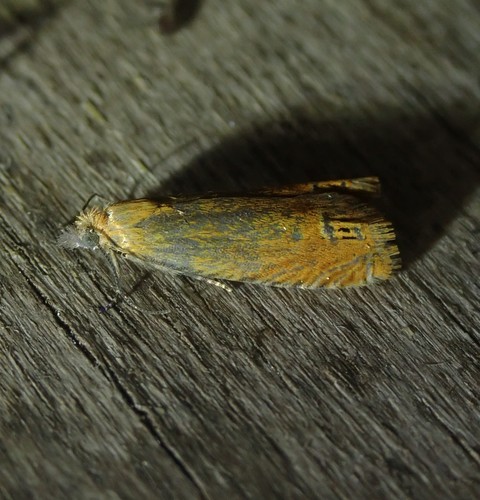
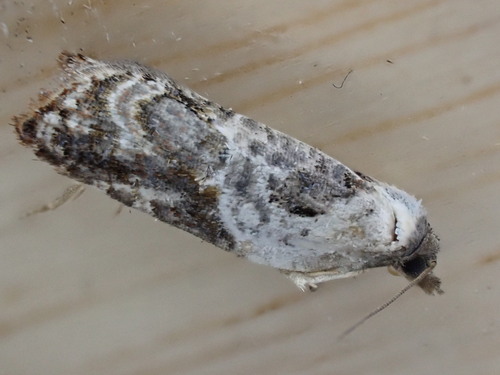
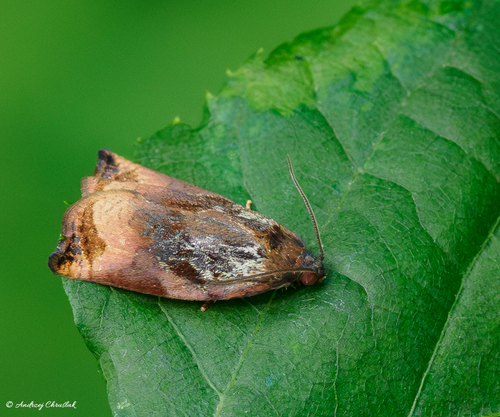
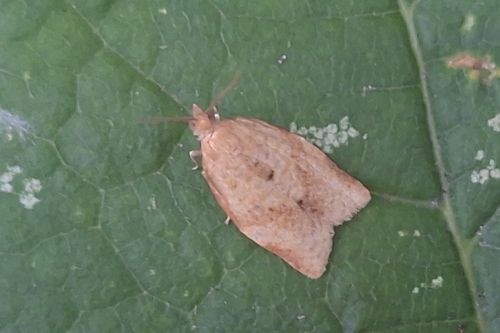
Dark-Barred Tortrix

Dark-Barred Tortrix

Syndemis musculana

Daily sighting probability <5% · Rare
at London

In 3 days ~10% in a week ~20%

12 Verified sightings at London
6 In 1 park From 2019 to 2026
May Best month
☀️🌙 Day & Night When it's spotted

About the Dark-Barred Tortrix

The name of the present species was misapplied to S. afflictana by Baron Walsingham in 1879. Syndemis musculana is a moth of the family Tortricidae. It is found in Europe, China (Heilongjiang, Jilin, Inner Mongolia), the Korean Peninsula, Japan, Russia (Amur) and North America.

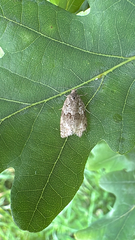
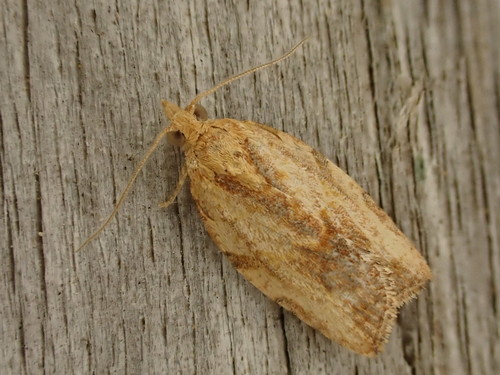
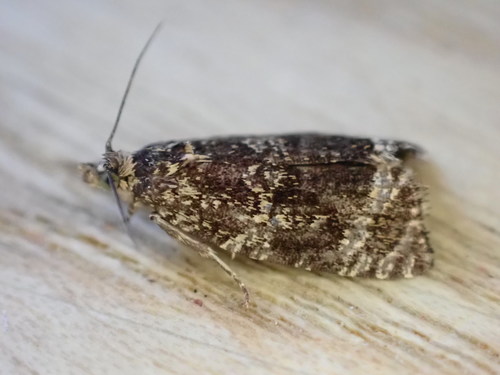
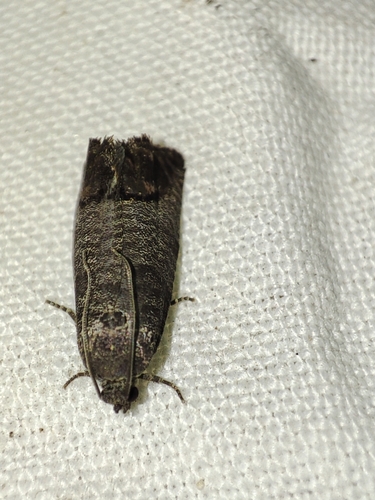
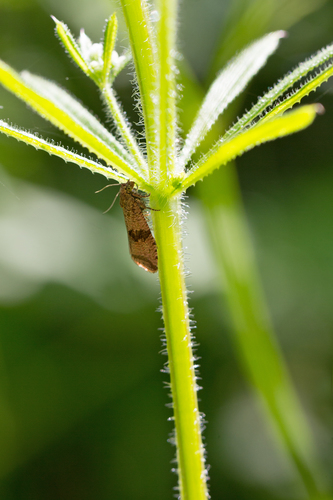
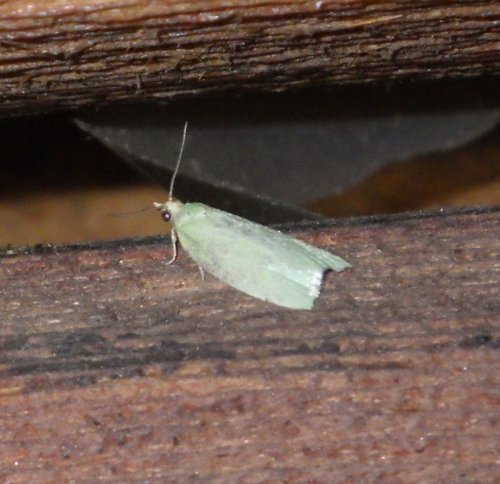
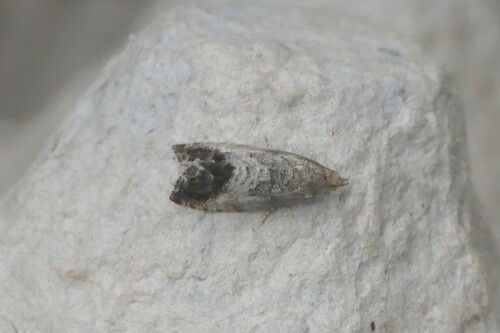
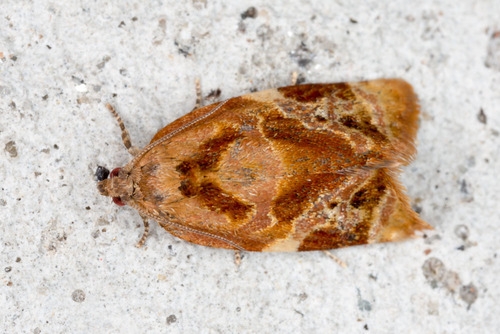
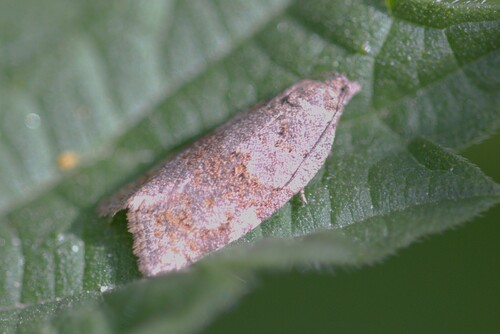
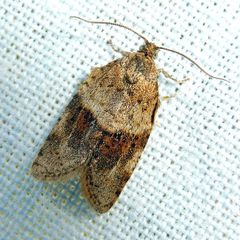
The wingspan is 15–22 mm. The species lacks striking patterns and is also quite variable in colour, thus it is not easy to determine. The head, thoracic and forewing are more or less brownish grey. The forewing has a more or less distinct, wide, brown cross-band in the middle. The hindwings are light grey-brown.

The adults fly from April to July in the temperate parts of their range, such as Belgium and the Netherlands. The caterpillars feed on oaks (Quercus), birches (Betula), spruces (Picea), ragworts (Senecio) and Rubus (brambles and allies). Less usually, they have been recorded to eat plant refuse and dry leaves. Wikipedia →
Global Distribution

Parks Where Found

# Park Country Daily sighting probability
1 Bavarian Forest National Park 🇩🇪 Germany
<5%

More parks will be added in future updates.

Cities Where Found

# City Country Daily sighting probability
1 Birmingham 🇬🇧 United Kingdom
<5%
2 London 🇬🇧 United Kingdom
<5%

Before you go

What are the chances of seeing a Dark-Barred Tortrix in London?

Rare

Under 5% of wildlife watchers report a Dark-Barred Tortrix sighting in London on a given day, based on 12 verified sightings from GBIF citizen-science data. It is the 1005th most-seen of the 1504 insects we can rate there. Over three days the chance rises to about 10%, and over a week to about 20%, if each day is a fresh chance.

When is the best time to see a Dark-Barred Tortrix in London?

May

In that month about 10% of wildlife watchers report a Dark-Barred Tortrix in London on a given day, against under 5% in June to April, the lowest months.

What time of day is best to see a Dark-Barred Tortrix?

Between 9 pm and midnight

Across all the parks we cover, that three-hour window holds the most Dark-Barred Tortrix sightings with a recorded time, and about 7 in 10 of them come between 6 pm and 6 am: it is seen both by day and at night.

Is London the best place to see a Dark-Barred Tortrix?

Among the best

Of the 2 cities where we can rate Dark-Barred Tortrix sightings, London ranks 2nd at under 5%, level with the leaders once rounded. The best odds are in Birmingham (United Kingdom, under 5%).

Which relatives of the Dark-Barred Tortrix live in London?

Same family: Tortricidae

The closest relatives of the Dark-Barred Tortrix that you can see in London (family Tortricidae, Tortricid Leafroller Moths) are Light Brown Apple Moth (about 20%), Common Marble (about 10%) and Clepsis dumicolana (about 10%), with each one's daily chance of a sighting.

Where does the Dark-Barred Tortrix sighting chance come from?

GBIF citizen-science records

It is estimated from how often the Dark-Barred Tortrix is recorded against all the insects logged in London (12 verified sightings), calibrated against known sighting rates. Figures are rounded to the nearest 10% because citizen-science data supports honest approximations, not decimals, and months with records from fewer than five people show "—". How it works.

← Back to London