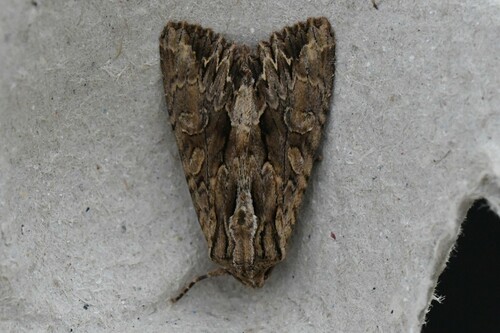
Dark Chestnut

Dark Chestnut

Conistra ligula

Daily sighting probability <5% · Rare
at London

In 3 days ~10% in a week ~20%

5 Verified sightings at London
January Best month

About the Dark Chestnut

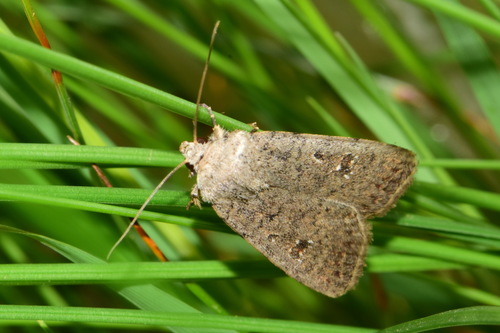
Conistra ligula, the dark chestnut, is a moth of the family Noctuidae. The species was first described by Eugenius Johann Christoph Esper in 1791 and it is found in the Palearctic. It is found in western, central and southern Europe. In western Europe, it is missing in many parts of Scotland and the western part of Ireland. In central Europe it is missing on the German North Sea coast, in Denmark, the entirety of Fennoscandia wooded, the northern Baltic countries and the central and northern Russia. The species also does not occur on many islands of the Mediterranean. In North Africa, it is found in Morocco. Further east, its range extends into northern Iraq, Turkey and Armenia.

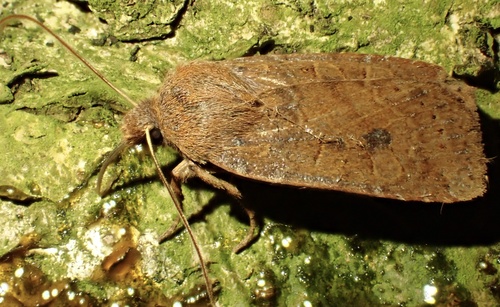
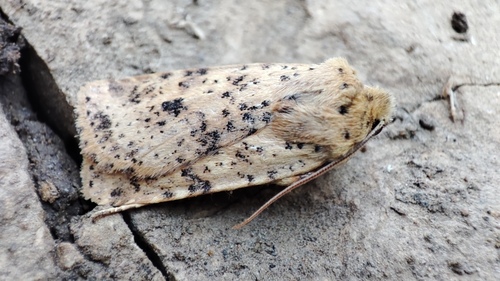
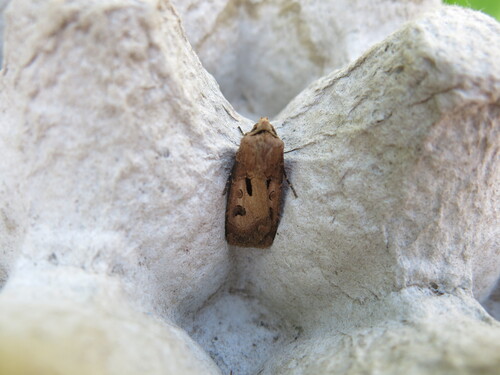
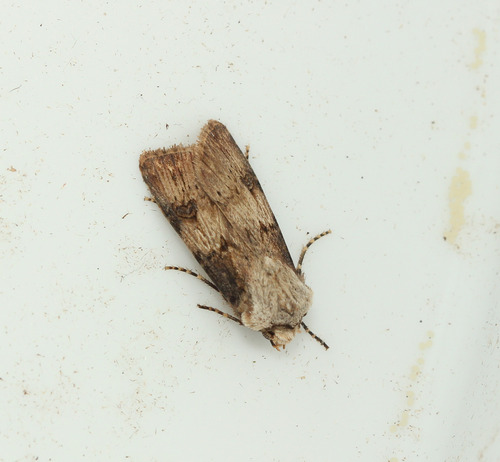
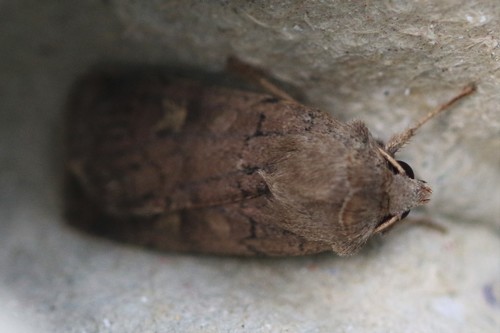
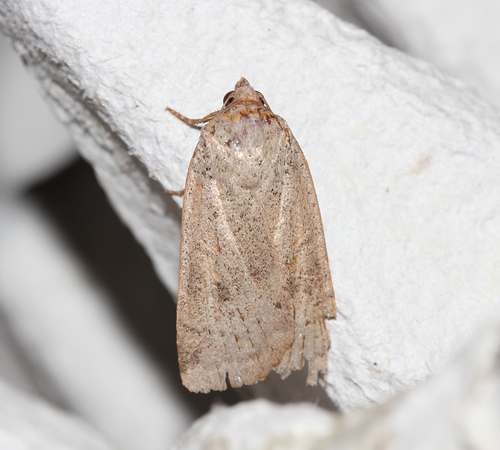
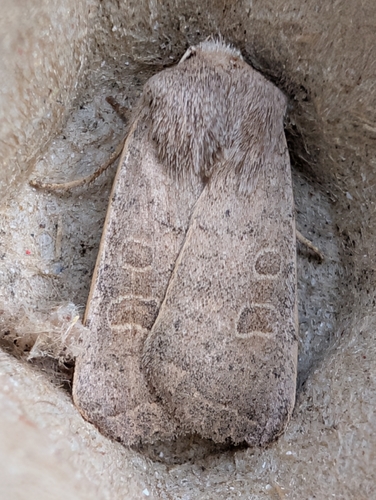
The length of the forewings is 13–15 mm. "Forewing deep red brown or purplish brown, darker than vaccinii; a pale submarginal band, grey or brownish grey, on which stand the spots forming the submarginal line; the lines and edges of the stigmata, and often the veins pale; hindwing brownish fuscous." Differential characters: dark brown or red-brown base colour of the forewings. Pale subterminal fascia. brown fuscous hindwings.

It overwinters partially as an... Wikipedia →
Global Distribution

Parks Where Found

# Park Country Daily sighting probability

More parks will be added in future updates.

Cities Where Found

# City Country Daily sighting probability
1 London 🇬🇧 United Kingdom
<5%

Before you go

What are the chances of seeing a Dark Chestnut in London?

Rare

Under 5% of wildlife watchers report a Dark Chestnut sighting in London on a given day, based on 5 verified sightings from GBIF citizen-science data. It is the 1394th most-seen of the 1504 insects we can rate there. Over three days the chance rises to about 10%, and over a week to about 20%, if each day is a fresh chance.

When is the best time to see a Dark Chestnut in London?

January

In that month about 10% of wildlife watchers report a Dark Chestnut in London on a given day, against under 5% in February to December, the lowest months.

Where else can you see a Dark Chestnut?

Only London, in our data

London is the only city on Wallace's Line with enough records to rate Dark Chestnut sightings: under 5% of wildlife watchers there report one on a given day.

Where does the Dark Chestnut sighting chance come from?

GBIF citizen-science records

It is estimated from how often the Dark Chestnut is recorded against all the insects logged in London (5 verified sightings), calibrated against known sighting rates. Figures are rounded to the nearest 10% because citizen-science data supports honest approximations, not decimals, and months with records from fewer than five people show "—". How it works.

← Back to London