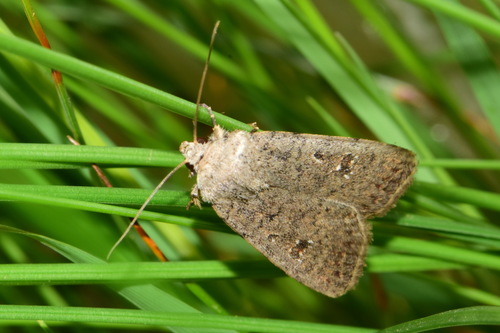
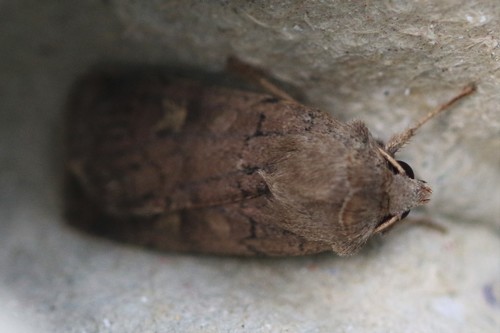
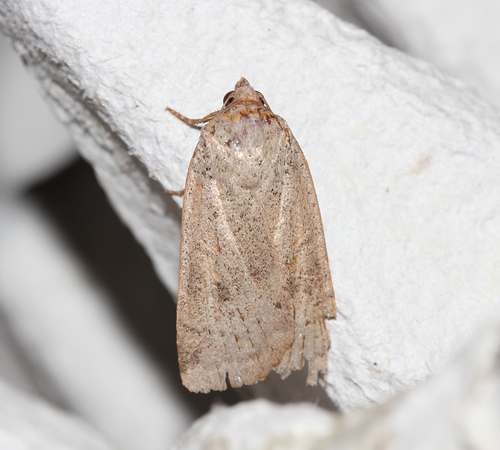
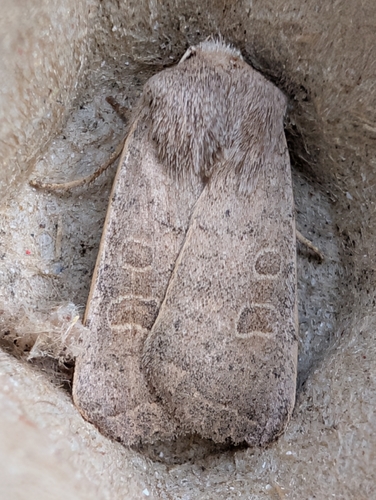
Red-Line Quaker

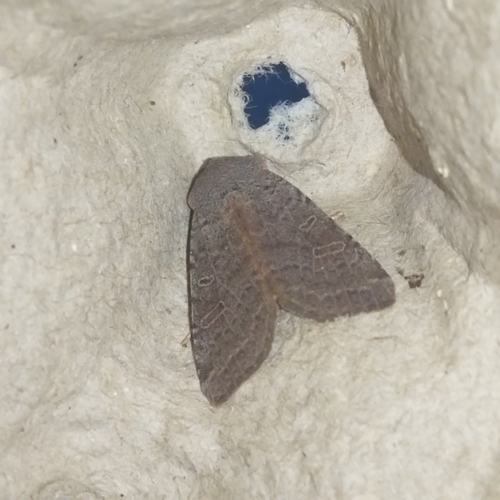
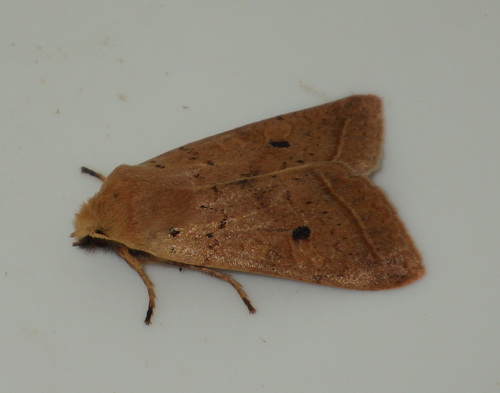
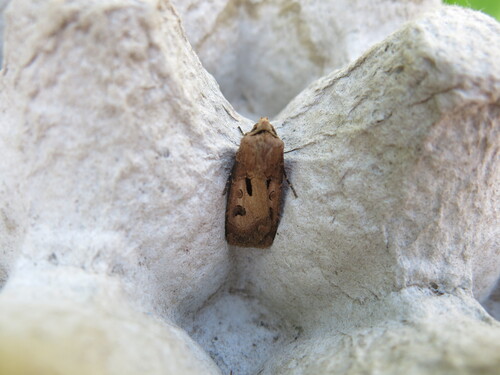
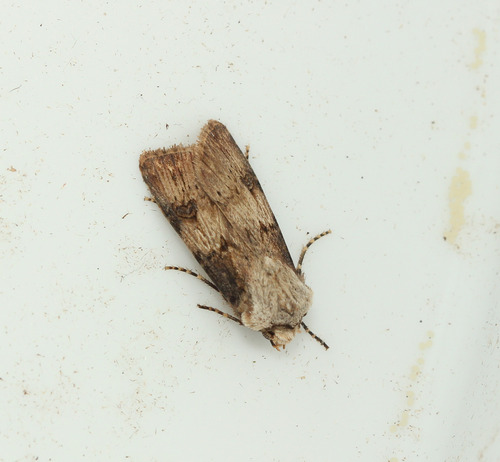
Red-Line Quaker

Agrochola lota

Daily sighting probability <5% · Rare
at London

In 3 days ~10% in a week ~20%

17 Verified sightings at London
7 In 1 park From 2019 to 2026
October Best month
☀️ Diurnal When it's spotted

About the Red-Line Quaker

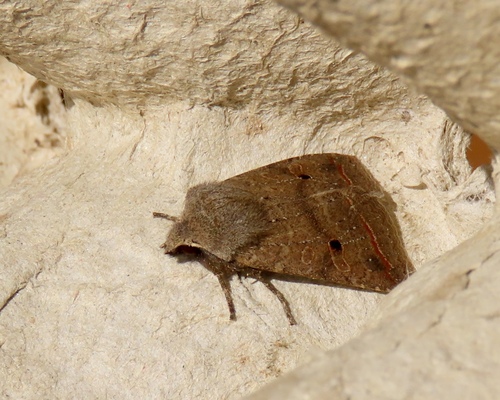
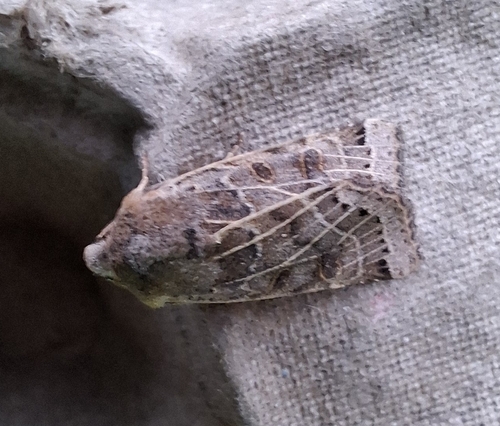
Agrochola lota, the red-line Quaker, is a moth of the family Noctuidae. The species was first described by Carl Alexander Clerck in 1759. It is distributed throughout the whole of Europe except Scandinavia; in Armenia, Asia Minor, and east across the Palearctic to the Altai Mountains and western Siberia.It was introduced to Newfoundland. In the Alps, it rises at altitudes of just over 1500 metres.

Forewing grey brown or leaden grey, often with a reddish tinge; inner and outer lines double, conversely lunulate-dentate, but rarely visible; a thick dark median shade; stigmata grey, with pinkish annuli edged with rufous, the lower half of reniform black; submarginal line nearly straight but angled on vein 7, pale with rufous inward edging; hindwing dark grey, with cell spot and submarginal cloud showing darker; the reddish examples in which the grey tints have entirely given place to rufous, form the ab. rufa Tutt; in rare cases the grey is darkened into black; this is ab. suffusa Tutt from Ireland; an equally rare form from England, in which the ground colour is whitish grey is pallida Tutt; in a form from Amasia, ab. subdita ab. nov. [Warren] the grey ground is duller... Wikipedia →
Global Distribution

Parks Where Found

# Park Country Daily sighting probability
1 Wadden Sea National Park 🇩🇪 Germany
<5%

More parks will be added in future updates.

Cities Where Found

# City Country Daily sighting probability
1 Liverpool 🇬🇧 United Kingdom
~10%
2 Porto 🇵🇹 Portugal
<5%
3 London 🇬🇧 United Kingdom
<5%

Before you go

What are the chances of seeing a Red-Line Quaker in London?

Rare

Under 5% of wildlife watchers report a Red-Line Quaker sighting in London on a given day, based on 17 verified sightings from GBIF citizen-science data. It is the 842nd most-seen of the 1504 insects we can rate there. Over three days the chance rises to about 10%, and over a week to about 20%, if each day is a fresh chance.

When is the best time to see a Red-Line Quaker in London?

October and November

In those months about 10% of wildlife watchers report a Red-Line Quaker in London on a given day, against under 5% in December to September, the lowest months.

What time of day is best to see a Red-Line Quaker?

Between 11 am and 2 pm

Across all the parks we cover, that three-hour window holds the most Red-Line Quaker sightings with a recorded time, and about 7 in 10 of them come between 6 am and 6 pm: it is a daytime animal.

Is London the best place to see a Red-Line Quaker?

3rd of 3

Of the 3 cities where we can rate Red-Line Quaker sightings, London ranks 3rd at under 5%. The best odds are in Liverpool (United Kingdom, about 10%) and Porto (Portugal, under 5%).

Which relatives of the Red-Line Quaker live in London?

Same genus: Agrochola

The closest relatives of the Red-Line Quaker that you can see in London (genus Agrochola) are Lunar Underwing (about 10%) and Beaded Chestnut (about 10%), with each one's daily chance of a sighting.

Where does the Red-Line Quaker sighting chance come from?

GBIF citizen-science records

It is estimated from how often the Red-Line Quaker is recorded against all the insects logged in London (17 verified sightings), calibrated against known sighting rates. Figures are rounded to the nearest 10% because citizen-science data supports honest approximations, not decimals, and months with records from fewer than five people show "—". How it works.

← Back to London