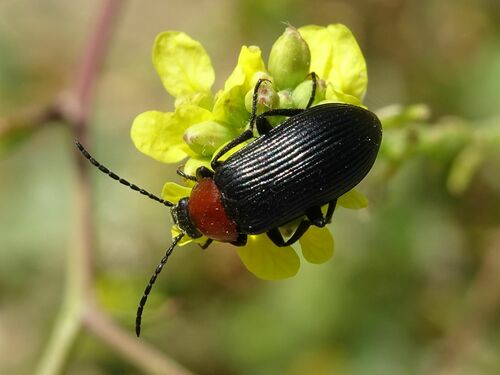
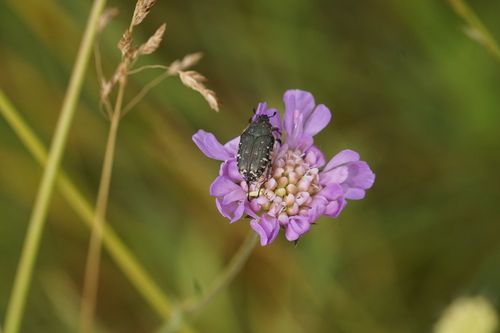
Burnt Pine Longhorn

Burnt Pine Longhorn

Arhopalus ferus

Daily sighting probability <5% · Rare
at Madrid

In 3 days ~10% in a week ~20%

5 Verified sightings at Madrid
10 In 1 park From 2019 to 2026
July Best month
☀️🌙 Day & Night When it's spotted

About the Burnt Pine Longhorn

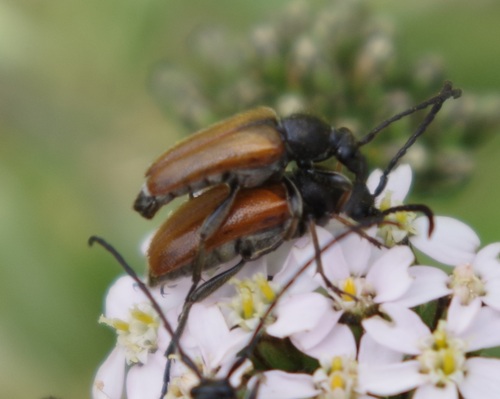
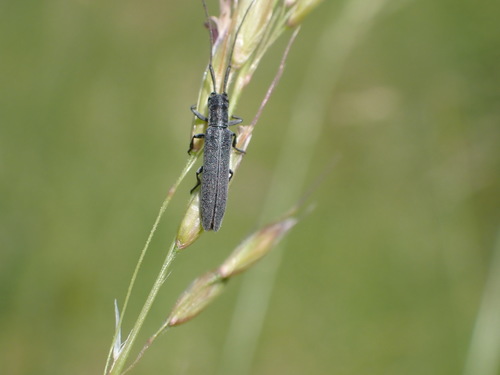
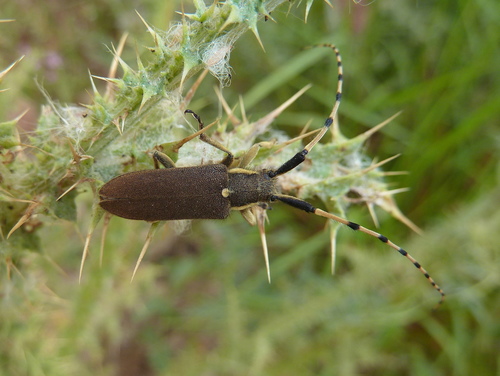
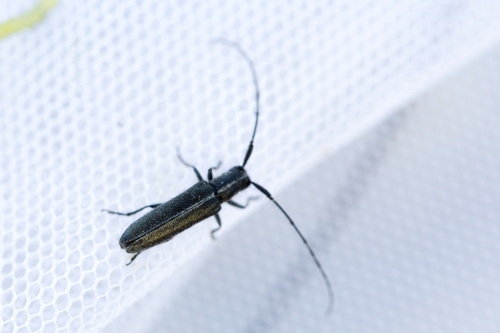
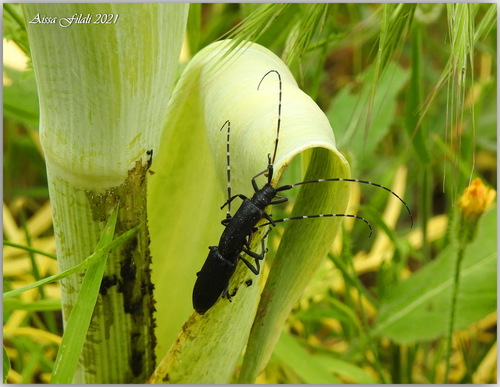
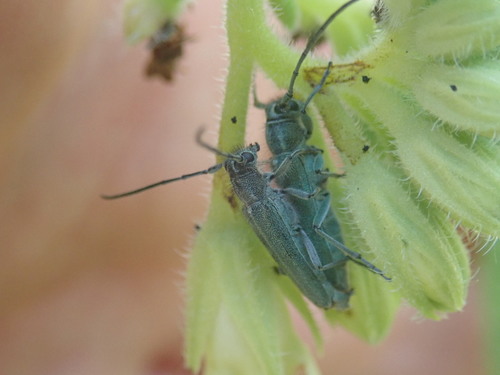
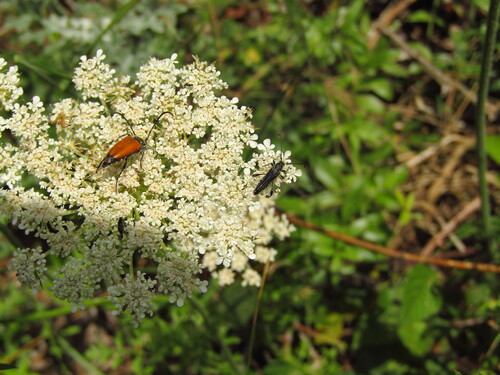
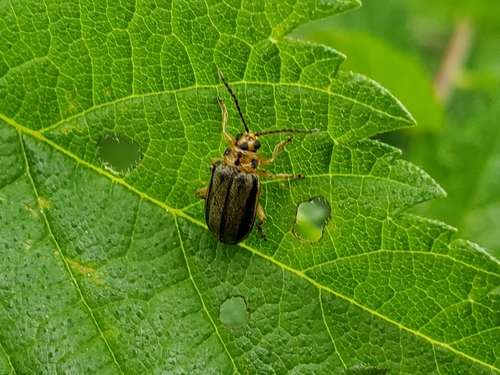
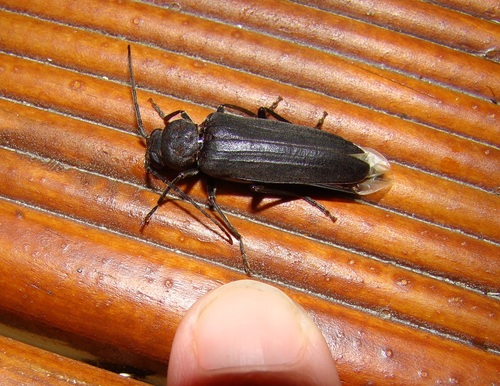
Arhopalus ferus, commonly known as the burnt pine longhorn beetle, is a species of long horn beetle, of the order Coleoptera. It was first described by French entomologist Étienne Mulsant in 1839. Adult beetles are 8–30 mm long reddish-brown to black, while males are generally smaller and lighter in colour.

The body is elongated and oval, typical for longhorn beetles. The head angles forward, showing most of the mouth parts. The thread-like antennae are half to three-quarters of the body length, longer in males. The prothorax is smoothly curved with no spines, narrower than the elytra. The elytra have four ridges and slightly tapering sides.

Eggs are white, opaque, and cigar-shaped, measuring about 0.5 by 1.8 mm. Creamy white larvae are cylindrical, with noticeable legs and pointed jaws. Larvae are active when removed from their tunnels. Arhopalus ferus prefers dead or dying Pinus and Picea injured by fire or other damage but rarely it will develop in healthy trees. Females are attracted to volatiles from burnt trees or sawmills.

Adults, live for several weeks, and emerge in spring to autumn. Females can lay up to about 1000... Wikipedia →
Global Distribution

Parks Where Found

# Park Country Daily sighting probability
1 Abel Tasman National Park 🇳🇿 New Zealand
~10%

More parks will be added in future updates.

Cities Where Found

# City Country Daily sighting probability
1 Auckland 🇳🇿 New Zealand
<5%
2 Madrid 🇪🇸 Spain
<5%

Before you go

What are the chances of seeing a Burnt Pine Longhorn in Madrid?

Rare

Under 5% of wildlife watchers report a Burnt Pine Longhorn sighting in Madrid on a given day, based on 5 verified sightings from GBIF citizen-science data. It is the 409th most-seen of the 457 insects we can rate there. Over three days the chance rises to about 10%, and over a week to about 20%, if each day is a fresh chance.

When is the best time to see a Burnt Pine Longhorn in Madrid?

July and August

In those months about 10% of wildlife watchers report a Burnt Pine Longhorn in Madrid on a given day, against under 5% in September to June, the lowest months. Those are among Madrid's driest months, with about 10 mm of rain a month against 65 mm in October.

What time of day is best to see a Burnt Pine Longhorn?

Between 8 and 11 pm

Across all the parks we cover, that three-hour window holds the most Burnt Pine Longhorn sightings with a recorded time, and about 6 in 10 of them come between 6 pm and 6 am: it is seen both by day and at night.

Is Madrid the best place to see a Burnt Pine Longhorn?

Among the best

Of the 2 cities where we can rate Burnt Pine Longhorn sightings, Madrid ranks 2nd at under 5%, level with the leaders once rounded. The best odds are in Auckland (New Zealand, under 5%).

Where does the Burnt Pine Longhorn sighting chance come from?

GBIF citizen-science records

It is estimated from how often the Burnt Pine Longhorn is recorded against all the insects logged in Madrid (5 verified sightings), calibrated against known sighting rates. Figures are rounded to the nearest 10% because citizen-science data supports honest approximations, not decimals, and months with records from fewer than five people show "—". How it works.

← Back to Madrid