Spanish Psammodromus

Spanish Psammodromus

Psammodromus hispanicus

LCLeast ConcernNTVUENCR
Daily sighting probability ~10% · With luck
at Madrid

In 3 days ~20% in a week ~30%

19 Verified sightings at Madrid
March Best month

About the Spanish Psammodromus

Psammodromus hispanicus, the Spanish psammodromus, is a species of lizard in the family Lacertidae. It is found in France, Portugal, and Spain. Its natural habitats are Mediterranean-type shrubby vegetation, temperate grassland, sandy shores, arable land, pastureland, and rural gardens.

It is threatened by habitat loss. The Spanish psammodromus was first described by Fitzinger in 1826, the scientific name of this species is Psammodromus hispanicus. Psammodromus from Greek meaning 'sand' and 'to run'. hispanicus from Latin meaning 'from Spain'.

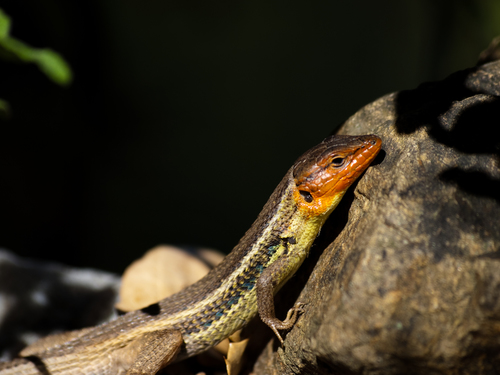
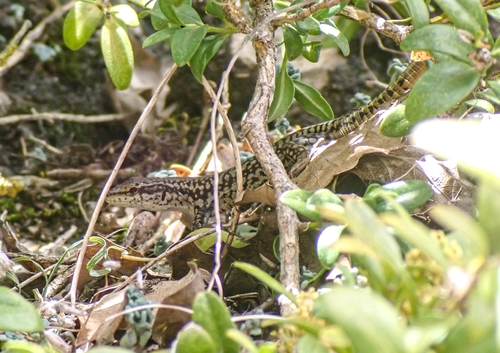
They are one of the smallest lizards of France, characterised by their unique patterns (see photos). The eggs measure 9 x 6 to 13 x 8 mm. The young hatch out at around 20 to 25 mm long. They can grow up to around 50 mm long, their tail being about 1.5 the body size giving them a total adult size of around 120 to 130 mm long.

They are slender and long-bodied. They have a small pointed head, normal to large hind limbs and a very long, slender tail, they have keeled, overlapping scales and like its cousin the large psammodromus, they have a rough appearance.... Wikipedia →

Global Distribution

Parks Where Found

# Park Country Daily sighting probability

More parks will be added in future updates.

Cities Where Found

# City Country Daily sighting probability
1 Madrid 🇪🇸 Spain
~10%

Before you go

What are the chances of seeing a Spanish Psammodromus in Madrid?

With luck

About 10% of wildlife watchers report a Spanish Psammodromus sighting in Madrid on a given day, based on 19 verified sightings from GBIF citizen-science data. It is the 11th most-seen of the 15 reptiles we can rate there. Over three days the chance rises to about 20%, and over a week to about 30%, if each day is a fresh chance.

When is the best time to see a Spanish Psammodromus in Madrid?

March, May–June and October–November

In those months about 10% of wildlife watchers report a Spanish Psammodromus in Madrid on a given day, against under 5% in April, July–September and December–February, the lowest months.

Where else can you see a Spanish Psammodromus?

Only Madrid, in our data

Madrid is the only city on Wallace's Line with enough records to rate Spanish Psammodromus sightings: about 10% of wildlife watchers there report one on a given day.

Where does the Spanish Psammodromus sighting chance come from?

GBIF citizen-science records

It is estimated from how often the Spanish Psammodromus is recorded against all the reptiles logged in Madrid (19 verified sightings), calibrated against known sighting rates. Figures are rounded to the nearest 10% because citizen-science data supports honest approximations, not decimals, and months with records from fewer than five people show "—". How it works.

← Back to Madrid