



Completed

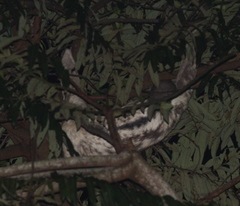

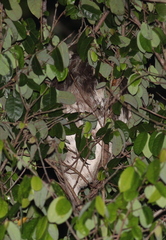
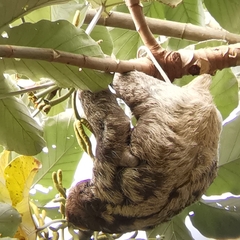

Pale-throated Sloth
Bradypus tridactylus
Silhouette: PhyloPic
- KingdomAnimalia (Animals)
- PhylumChordata (Chordates)
- ClassMammalia (Mammals)
- OrderPilosa (Sloths and Anteaters)
- FamilyBradypodidae (Three-toed Sloths)
- GenusBradypus (Three-toed Sloths)
- SpeciesBradypus tridactylus (Pale-throated Sloth)
In 3 days ~80% in a week >90%
25 Verified sightings at Manaus
August Best month
☀️🌙 Day & Night When it's spotted
About the Pale-throated Sloth
The pale-throated sloth (Bradypus tridactylus), occasionally known as the ai, is a species of three-toed sloth that inhabits tropical rainforests in northern South America. It is similar in appearance to, and often confused with, the brown-throated sloth, which has a much wider distribution. Genetic evidence has been interpreted to suggest the two species diverged only around 400,000 years ago, although the most recent evidence indicates the split was closer to 6 million years.
The pale-throated sloth has a rounded head with a blunt nose and small external ears. Its limbs are long and relatively weak, with the arms nearly twice the length of the hindlimbs. Both the hands and feet have three digits, each equipped with long, arched claws, the middle claw being the largest and strongest.
Adult males measure 45 to 55 cm (18 to 22 in) in head-body length, with a short tail of 4 to 6 cm (1.6 to 2.4 in), and weigh between 3.2 and 6 kg (7.1 and 13.2 lb). Females are generally larger, ranging from 50 to 75 cm (20 to 30 in) in length and weighing 3.8 to 6.5 kg (8.4 to 14.3 lb).
The body is covered with coarse guard hairs up to 10 cm (3.9 in) long, with a finer undercoat... Wikipedia →
Recent sightings of Pale-throated Sloth in Manaus
LIVEiNaturalistGlobal Distribution
Parks Where Found
| # | Park | Country | Daily sighting probability |
|---|
More parks will be added in future updates.
Cities Where Found
| # | City | Country | Daily sighting probability |
|---|---|---|---|
| 1 | Manaus | 🇧🇷 Brazil |
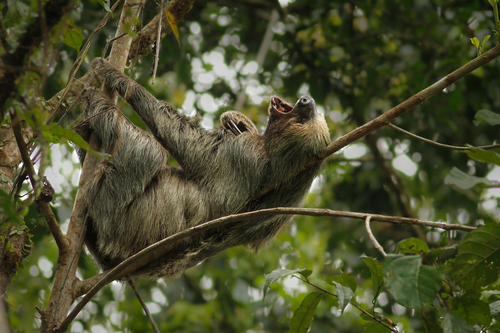
Closest Relatives at Manaus




Before you go
What are the chances of seeing a Pale-throated Sloth in Manaus?
Likely
About 40% of wildlife watchers report a Pale-throated Sloth sighting in Manaus on a given day, based on 25 verified sightings from GBIF citizen-science data. It is the 3rd most-seen of the 8 mammals we can rate there. Over three days the chance rises to about 80%, and over a week to over 90%, if each day is a fresh chance.
When is the best time to see a Pale-throated Sloth in Manaus?
August
In that month about 60% of wildlife watchers report a Pale-throated Sloth in Manaus on a given day, against under 5% in March and November, the lowest months. That is one of Manaus's driest months, with about 50 mm of rain against 270 mm in March.
What time of day is best to see a Pale-throated Sloth?
Between 7 and 10 pm
Across all the parks we cover, that three-hour window holds the most Pale-throated Sloth sightings with a recorded time, and about 6 in 10 of them come between 6 am and 6 pm: it is seen both by day and at night.
Where else can you see a Pale-throated Sloth?
Only Manaus, in our data
Manaus is the only city on Wallace's Line with enough records to rate Pale-throated Sloth sightings: about 40% of wildlife watchers there report one on a given day.
Where does the Pale-throated Sloth sighting chance come from?
GBIF citizen-science records
It is estimated from how often the Pale-throated Sloth is recorded against all the mammals logged in Manaus (25 verified sightings), calibrated against known sighting rates. Figures are rounded to the nearest 10% because citizen-science data supports honest approximations, not decimals, and months with records from fewer than five people show "—". How it works.
