



Completed
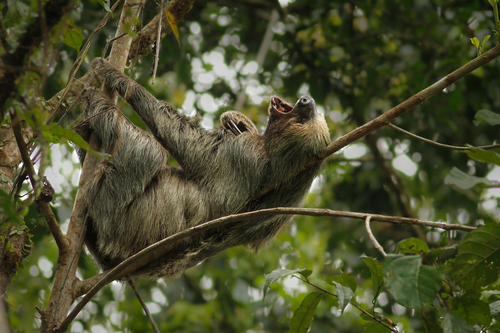
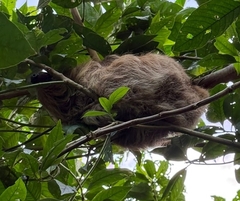

Linnaeus's Two-toed Sloth
Choloepus didactylus
Silhouette: Kai Caspar · PhyloPic
- KingdomAnimalia (Animals)
- PhylumChordata (Chordates)
- ClassMammalia (Mammals)
- OrderPilosa (Sloths and Anteaters)
- FamilyMegalonychidae (Two-toed Ground Sloths)
- GenusCholoepus (Two-Toed Sloths)
- SpeciesCholoepus didactylus (Linnaeus's Two-toed Sloth)
In 3 days ~50% in a week ~80%
7 Verified sightings at Manaus
58 In all 2 parks From 2019 to 2026
September Best month
☀️🌙 Day & Night When it's spotted
About the Linnaeus's Two-toed Sloth
Linnaeus's two-toed sloth (Choloepus didactylus), also known as the southern two-toed sloth, unau, or Linne's two-toed sloth is a species of sloth from South America, found in Venezuela, Suriname, Guyana, French Guiana, Colombia, Ecuador, Peru, and Brazil north of the Amazon River. There is now evidence suggesting the species' range expands into Bolivia. It's the largest extant sloth species.
Males and females are the same size, growing to lengths of approximately 53 to 89 cm (21 to 35 in), not including the length of the tail, and weigh approximately 4 to 11 kg (9 to 24 lb). Their fur color ranges from a brownish yellow to a pale tone of brown, however, in the wild their fur sometimes has a green hue from algae that grows on their fur during the rainy season. Their belly fur is slightly lighter in color than the body and they have no undercoat. The belly hair is parted along the midline and flows towards the animals back (spine), the opposite direction that fur flows on most other mammals. Young sloths tend to have softer and darker fur than adults.
Sloths belong to the order Pilosa, which also includes anteaters. They belong to the super order Xenarthra... Wikipedia →
Recent sightings of Linnaeus's Two-toed Sloth in Manaus
LIVEiNaturalistGlobal Distribution
Parks Where Found
| # | Park | Country | Daily sighting probability |
|---|---|---|---|
| 1 | Cuyabeno Wildlife Reserve | 🇪🇨 Ecuador | |
| 2 | Yasuní National Park | 🇪🇨 Ecuador |
Cities Where Found
| # | City | Country | Daily sighting probability |
|---|---|---|---|
| 1 | Manaus | 🇧🇷 Brazil |
Zoos & Centres Where Found
Closest Relatives at Manaus


Before you go
What are the chances of seeing a Linnaeus's Two-toed Sloth in Manaus?
Possible
About 20% of wildlife watchers report a Linnaeus's Two-toed Sloth sighting in Manaus on a given day, based on 7 verified sightings from GBIF citizen-science data. It is the 6th most-seen of the 8 mammals we can rate there. Over three days the chance rises to about 50%, and over a week to about 80%, if each day is a fresh chance.
When is the best time to see a Linnaeus's Two-toed Sloth in Manaus?
September
In that month about 40% of wildlife watchers report a Linnaeus's Two-toed Sloth in Manaus on a given day, against under 5% in March–July and December, the lowest months. That is one of Manaus's driest months, with about 70 mm of rain against 270 mm in March.
What time of day is best to see a Linnaeus's Two-toed Sloth?
Between 7 and 10 pm
Across all the parks we cover, that three-hour window holds the most Linnaeus's Two-toed Sloth sightings with a recorded time, and about half of them come between 6 am and 6 pm: it is seen both by day and at night.
Where else can you see a Linnaeus's Two-toed Sloth?
Only Manaus, in our data
Manaus is the only city on Wallace's Line with enough records to rate Linnaeus's Two-toed Sloth sightings: about 20% of wildlife watchers there report one on a given day.
Which relatives of the Linnaeus's Two-toed Sloth live in Manaus?
Same order: Pilosa
The closest relatives of the Linnaeus's Two-toed Sloth that you can see in Manaus (order Pilosa, Sloths and Anteaters) are Pale-throated Sloth (about 40%) and Brown-throated Sloth (about 20%), with each one's daily chance of a sighting.
Where does the Linnaeus's Two-toed Sloth sighting chance come from?
GBIF citizen-science records
It is estimated from how often the Linnaeus's Two-toed Sloth is recorded against all the mammals logged in Manaus (7 verified sightings), calibrated against known sighting rates. Figures are rounded to the nearest 10% because citizen-science data supports honest approximations, not decimals, and months with records from fewer than five people show "—". How it works.
