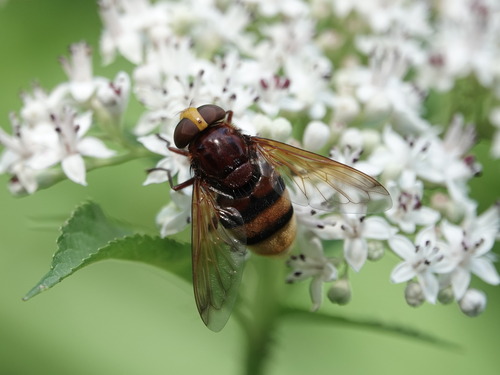
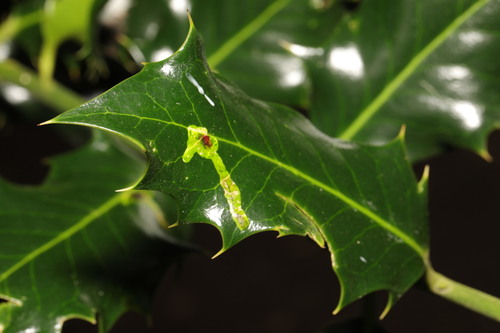
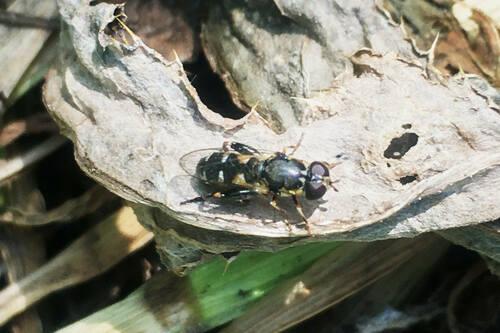
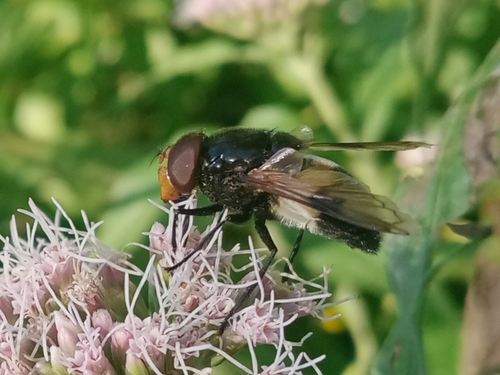
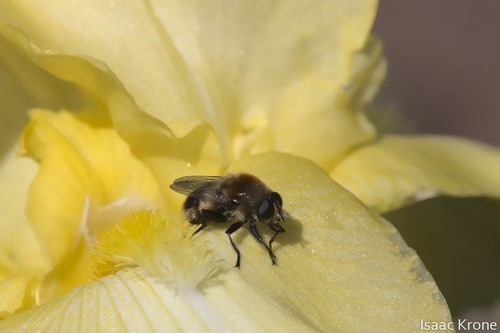
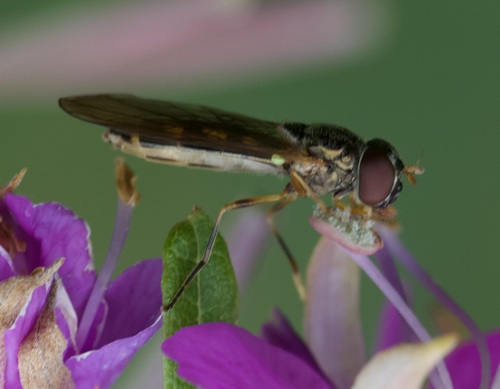
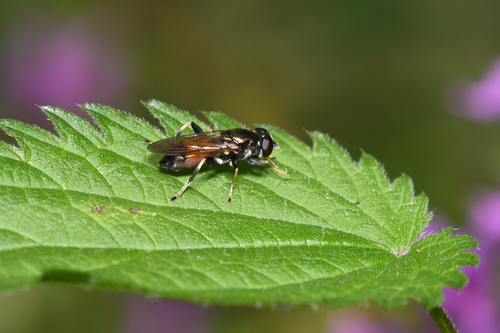
Toxonevra muliebris

Toxonevra muliebris

Toxonevra muliebris

Daily sighting probability <5% · Rare
at Manchester

In 3 days ~10% in a week ~20%

5 Verified sightings at Manchester
August Best month

About the Toxonevra muliebris

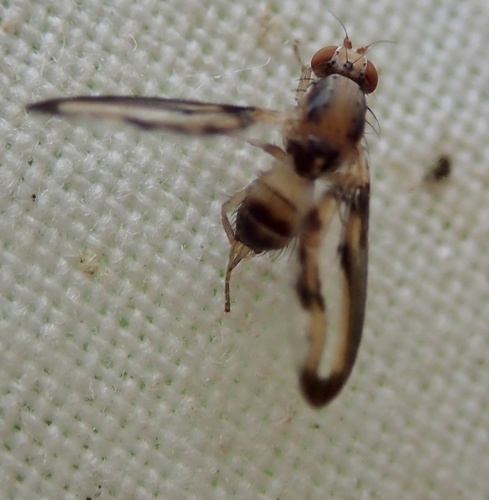
Toxonevra muliebris is a species of flutter fly in the family Pallopteridae. It has been found in Europe and North America. The pattern on the wings of this species is distinctive. This species was first described by Moses Harris under the name Musca muliebris. Subsequently, this species has been included within the genus Palloptera. It has also been known under the name Toxoneura muliebris. However this name is regarded as being a misspelling of the genus Toxonevra. It is currently known as Toxonevra muliebris.

Morris described this species as follows: Measures two lines. The head, thorax, abdomen and legs, are of a pleasant pale brown. The wings are clear, having two broadish brown stripes from the apex to the shoulder, one of which lies along the sector edge, the other through the middle. This pretty fly is very scarce: it shakes its wings as it walks, like the Vibrans, and is not soon frightened away.The pattern on the wings of adults is distinctive and is a diagnostic feature when identifying this species.

This species is native to Europe, and has been observed in countries such as Spain, Italy, Austria, France, Belgium, Great... Wikipedia →

Global Distribution

Parks Where Found

# Park Country Daily sighting probability

More parks will be added in future updates.

Cities Where Found

# City Country Daily sighting probability
1 London 🇬🇧 United Kingdom
<5%
2 Paris 🇫🇷 France
<5%
3 Manchester 🇬🇧 United Kingdom
<5%
4 Porto 🇵🇹 Portugal
<5%
5 Berlin 🇩🇪 Germany
<5%
6 Vancouver 🇨🇦 Canada
<5%
7 Seattle 🇺🇸 United States
<5%

Before you go

What are the chances of seeing a Toxonevra muliebris in Manchester?

Rare

Under 5% of wildlife watchers report a Toxonevra muliebris sighting in Manchester on a given day, based on 5 verified sightings from GBIF citizen-science data. It is the 421st most-seen of the 458 insects we can rate there. Over three days the chance rises to about 10%, and over a week to about 20%, if each day is a fresh chance.

When is the best time to see a Toxonevra muliebris in Manchester?

June and August–September

In those months about 10% of wildlife watchers report a Toxonevra muliebris in Manchester on a given day, against under 5% in July and October–May, the lowest months.

Is Manchester the best place to see a Toxonevra muliebris?

Among the best

Of the 7 cities where we can rate Toxonevra muliebris sightings, Manchester ranks 3rd at under 5%, level with the leaders once rounded. The best odds are in London (United Kingdom, under 5%) and Paris (France, under 5%).

Which relatives of the Toxonevra muliebris live in Manchester?

Same order: Diptera

The closest relatives of the Toxonevra muliebris that you can see in Manchester (order Diptera, Flies) are Tapered Drone Fly (about 30%), Marmalade Hover Fly (about 30%) and Common Drone Fly (about 30%), with each one's daily chance of a sighting.

Where does the Toxonevra muliebris sighting chance come from?

GBIF citizen-science records

It is estimated from how often the Toxonevra muliebris is recorded against all the insects logged in Manchester (5 verified sightings), calibrated against known sighting rates. Figures are rounded to the nearest 10% because citizen-science data supports honest approximations, not decimals, and months with records from fewer than five people show "—". How it works.

← Back to Manchester