Copper-Bellied Ant

Copper-Bellied Ant

Ochetellus glaber

Daily sighting probability <5% · Rare
at Melbourne

In 3 days ~10% in a week ~20%

30 Verified sightings at Melbourne
September Best month

About the Copper-Bellied Ant

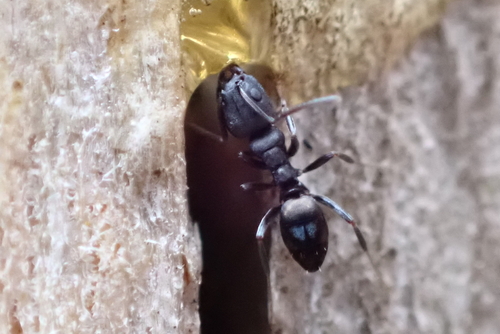
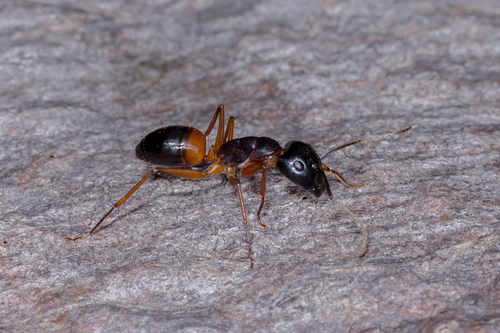
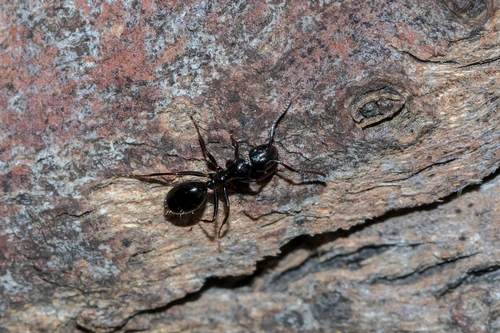
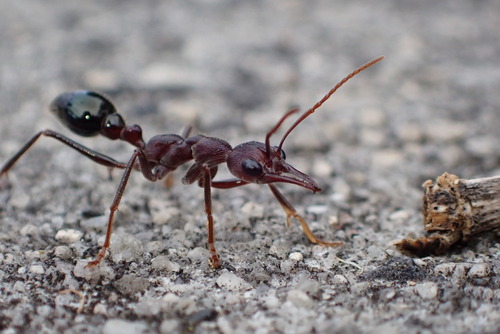
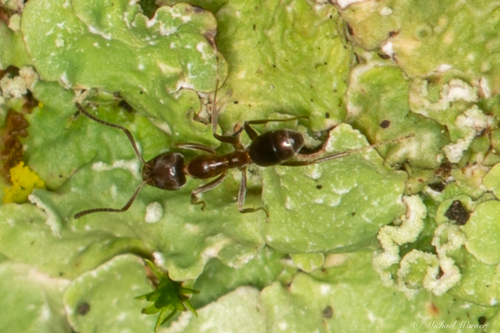
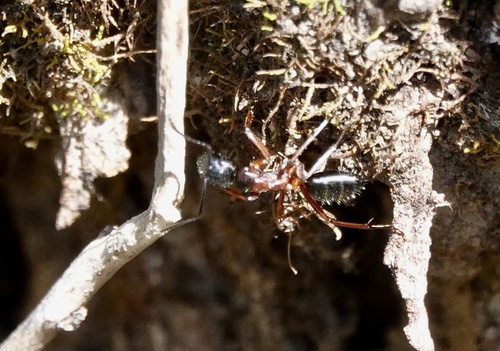
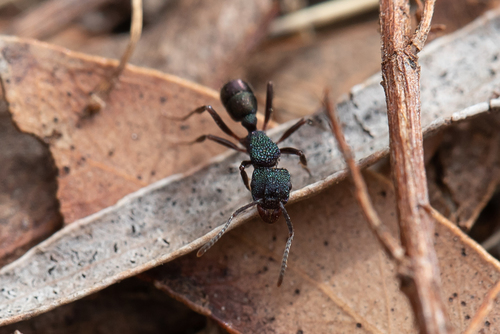
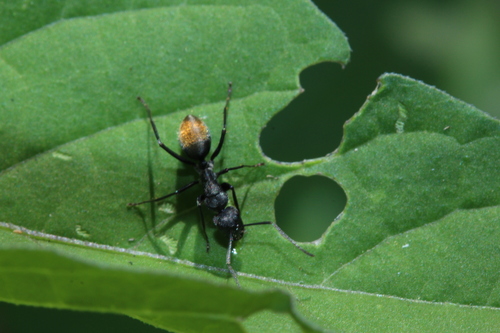
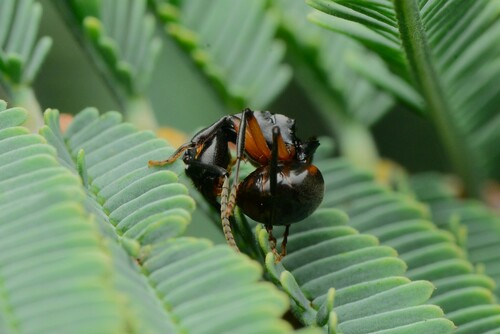
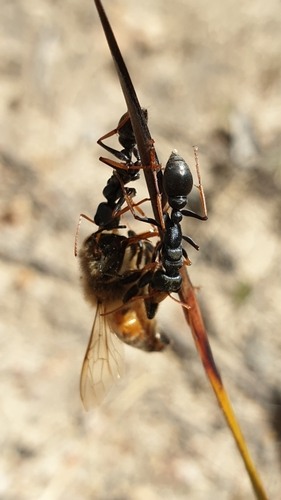
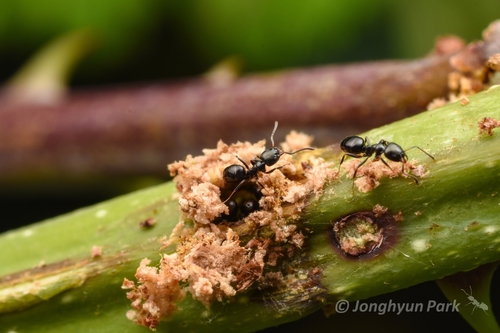
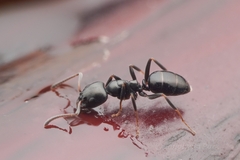
Ochetellus glaber, also known as the black household ant, is a species of ant native to Australia. A member of the genus Ochetellus in the subfamily Dolichoderinae, it was described by Austrian entomologist Gustav Mayr in 1862. O. glaber has been introduced to a number of countries, including China, India, Japan, New Zealand, the Philippines and the United States, where it has established itself in Hawaii and Florida. It has been found on Lord Howe Island, New Caledonia, Norfolk Island, Réunion, and the Solomon Islands. Compared with other ants, O. glaber is a small species, with workers measuring 2–3 mm (0.079–0.118 in). Males are the smallest at 1.6 mm (0.063 in), while the queens measure 5.2–5.5 mm (0.20–0.22 in). The ant's colour ranges from brown to black.

Described as an arboreal nesting species, O. glaber lives in open or savannah woodland areas, nesting under stones, old dry logs, rotten wood, and in hollow trees and plant stems. Nests can also be constructed in buildings and structures, specifically in pavings, ceilings and walls. It is both diurnal and nocturnal, forming long trails from trees in search of food such as honeydew and insects. It has developed some associations with certain flowers and also tends to associate with some insects, such as mealybugs and aphids. During the nuptial flight, queens mate with either one or multiple males; males only mate with a single queen. Sometimes, a subset of a colony may leave the main colony for an alternative nest site as an act of dispersal. O. glaber often invades human homes to feed on household foods, and is considered a household pest. It has been intercepted numerous times in the United States, where it has the potential to disrupt the biological control of certain pests and cause long-term ecological impacts in areas where it is not native. Wikipedia →
Global Distribution

Parks Where Found

# Park Country Daily sighting probability

More parks will be added in future updates.

Cities Where Found

# City Country Daily sighting probability
1 Brisbane 🇦🇺 Australia
~10%
2 Auckland 🇳🇿 New Zealand
~10%
3 Shanghai 🇨🇳 China
~10%
4 Sydney 🇦🇺 Australia
<5%
5 Melbourne 🇦🇺 Australia
<5%

Before you go

What are the chances of seeing a Copper-Bellied Ant in Melbourne?

Rare

Under 5% of wildlife watchers report a Copper-Bellied Ant sighting in Melbourne on a given day, based on 30 verified sightings from GBIF citizen-science data. It is the 331st most-seen of the 875 insects we can rate there. Over three days the chance rises to about 10%, and over a week to about 20%, if each day is a fresh chance.

When is the best time to see a Copper-Bellied Ant in Melbourne?

Any time of year

In every month with enough records, under 5% of wildlife watchers report a Copper-Bellied Ant in Melbourne on a given day, so our monthly data shows no clear season.

Is Melbourne the best place to see a Copper-Bellied Ant?

5th of 5

Of the 5 cities where we can rate Copper-Bellied Ant sightings, Melbourne ranks 5th at under 5%. The best odds are in Brisbane (Australia, about 10%), Auckland (New Zealand, about 10%) and Shanghai (China, about 10%).

Where does the Copper-Bellied Ant sighting chance come from?

GBIF citizen-science records

It is estimated from how often the Copper-Bellied Ant is recorded against all the insects logged in Melbourne (30 verified sightings), calibrated against known sighting rates. Figures are rounded to the nearest 10% because citizen-science data supports honest approximations, not decimals, and months with records from fewer than five people show "—". How it works.

← Back to Melbourne