Palo Verde Root Borer

Palo Verde Root Borer

Derobrachus hovorei

Daily sighting probability ~10% · With luck
at Mesa

In 3 days ~30% in a week ~50%

35 Verified sightings at Mesa
15 In all 2 parks From 2019 to 2026
July Best month
🌙 Nocturnal When it's spotted

About the Palo Verde Root Borer

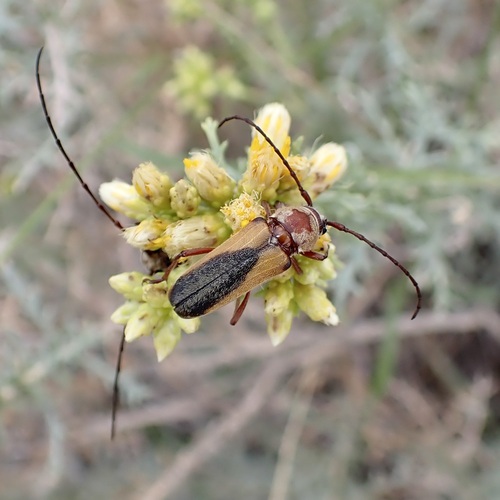
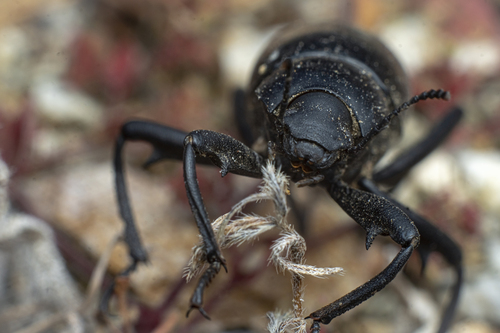
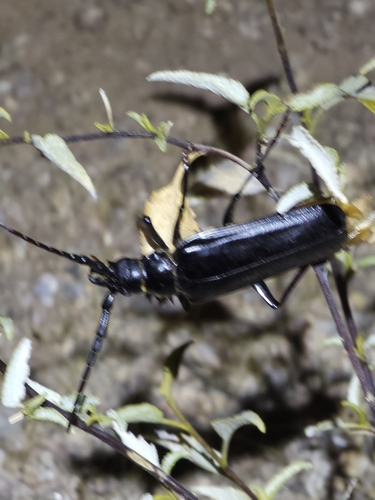
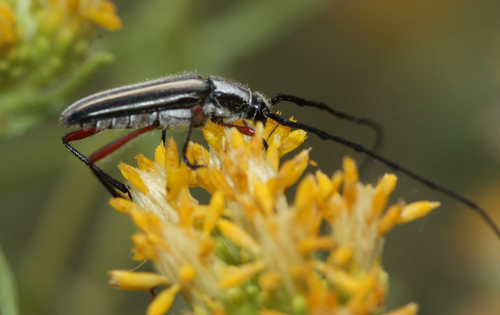
Derobrachus hovorei is a species of beetle in the family Cerambycidae, known variously as the palo verde beetle, palo verde root borer, or palo verde borer beetle. For over 100 years, this species was confused with the related species Derobrachus geminatus, and only recognized and given its own name by Santos-Silva in 2007; essentially all literature prior to 2007 therefore incorrectly uses the name geminatus for this species. It is a longhorn beetle native to the southwestern United States and northern Mexico which derives its common name from the palo verde tree, and it is one of the largest beetles in North America, reaching up to 3-1/2 inches in length. Adults are black or brown in color, have long antennae, and spines on the thorax. They have wings and can fly, albeit awkwardly at times. Mature beetles emerge in the summer to mate. While not harmful to humans, they can bite in self-defense.

Derobrachus hovorei hatches from eggs into grubs, which live underground for as long as three years; as a result, the huge grubs can be uncovered by gardeners doing routine yard maintenance, especially in flower beds surrounding lawns that contain susceptible trees. The larvae are cream colored to pale green, typically with a brown head, and feed on the roots of trees, causing branches to die back. In the wild, the most commonly affected tree is the palo verde, although wild specimens of other Parkinsonia species (P. florida, P. microphylla, and P. sonorae among the most common) are attacked, as well. In urban areas (such as parks, college campuses, cemeteries and the like) where species of Parkinsonia are not often found, D. hovorei can feed on the roots of a variety of trees, including the Siberian elm, white and fruitless mulberry, various cottonwoods, and in the warmest desert areas, citrus. Wikipedia →
Global Distribution

Parks Where Found

# Park Country Daily sighting probability
1 Joshua Tree National Park 🇺🇸 United States
~10%
2 Saguaro National Park 🇺🇸 United States
<5%

Cities Where Found

# City Country Daily sighting probability
1 Mesa 🇺🇸 United States
~10%
2 Phoenix 🇺🇸 United States
~10%
3 Las Vegas 🇺🇸 United States
~10%

Before you go

What are the chances of seeing a Palo Verde Root Borer in Mesa?

With luck

About 10% of wildlife watchers report a Palo Verde Root Borer sighting in Mesa on a given day, based on 35 verified sightings from GBIF citizen-science data. It is the 55th most-seen of the 232 insects we can rate there. Over three days the chance rises to about 30%, and over a week to about 50%, if each day is a fresh chance.

When is the best time to see a Palo Verde Root Borer in Mesa?

July

In that month about 40% of wildlife watchers report a Palo Verde Root Borer in Mesa on a given day, against under 5% in August to May, the lowest months. That is one of Mesa's wettest months, with about 35 mm of rain against almost none in June.

What time of day is best to see a Palo Verde Root Borer?

Between 6 and 9 pm

Across all the parks we cover, that three-hour window holds the most Palo Verde Root Borer sightings with a recorded time, and about 7 in 10 of them come between 6 pm and 6 am: it is mostly seen at night.

Is Mesa the best place to see a Palo Verde Root Borer?

Yes

Of the 3 cities where we can rate Palo Verde Root Borer sightings, Mesa has the highest daily chance: about 10%. Next come Phoenix (United States, about 10%) and Las Vegas (United States, about 10%).

Where does the Palo Verde Root Borer sighting chance come from?

GBIF citizen-science records

It is estimated from how often the Palo Verde Root Borer is recorded against all the insects logged in Mesa (35 verified sightings), calibrated against known sighting rates. Figures are rounded to the nearest 10% because citizen-science data supports honest approximations, not decimals, and months with records from fewer than five people show "—". How it works.

← Back to Mesa