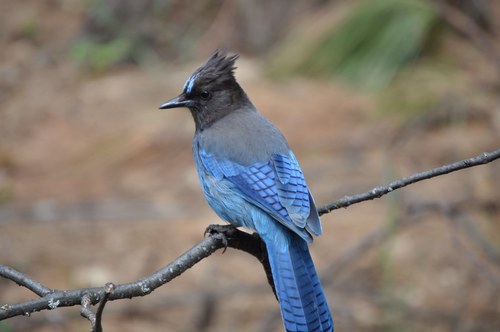
Transvolcanic Jay

Transvolcanic Jay

Aphelocoma ultramarina

LCLeast ConcernNTVUENCR
Daily sighting probability <5% · Rare
at Mexico City

In 3 days <5%

20 Verified sightings at Mexico City
March Best month

About the Transvolcanic Jay

The Transvolcanic jay (Aphelocoma ultramarina), is a species of bird in the family Corvidae, the crows and jays. It is endemic to Mexico. What is now the species Aphelocoma ultramarina was originally described in 1825 as Corvus ultramarinus. It was long called the Mexican jay and included what are now the several subspecies of Aphelocoma wollweberi. Taxonomic systems began separating them in 2011 based on differences in plumage and morphology, millions of years of genetic divergence, and no evidence of interbreeding. Aphelocoma ultramarina was then named the Transvolcanic jay and confusingly Aphelocoma wollweberi retained the name Mexican jay.

The Transvolcanic jay is 28 to 32 cm (11 to 13 in) long and weighs 120 to 150 g (4.2 to 5.3 oz). The sexes have the same plumage though males are slightly larger than females. Adults of the nominate subspecies have a mostly dark bluish head with black lores and a pale grayish throat. Their upperparts are bluish purple and their underparts dingy grayish white that is lightest... Wikipedia →

Sounds

Alarm call1:09

Mexico · 2021

© Alán Palacios · XC680021 · CC BY-NC-SA 4.0

Call0:32

Mexico · 2015

© Frank Lambert · XC351620 · CC BY-NC-ND 4.0

Call0:59

Mexico · 2015

© Andrew Spencer · XC265509 · CC BY-NC-SA 4.0

Global Distribution

Parks Where Found

# Park Country Daily sighting probability

More parks will be added in future updates.

Cities Where Found

# City Country Daily sighting probability
1 Mexico City 🇲🇽 México
<5%

Before you go

What are the chances of seeing a Transvolcanic Jay in Mexico City?

Rare

Under 5% of wildlife watchers report a Transvolcanic Jay sighting in Mexico City on a given day, based on 20 verified sightings from GBIF citizen-science data. It is the 313th most-seen of the 332 birds we can rate there. Over three days the chance rises to under 5%, if each day is a fresh chance.

When is the best time to see a Transvolcanic Jay in Mexico City?

Any time of year

In every month with enough records, under 5% of wildlife watchers report a Transvolcanic Jay in Mexico City on a given day, so our monthly data shows no clear season.

Where else can you see a Transvolcanic Jay?

Only Mexico City, in our data

Mexico City is the only city on Wallace's Line with enough records to rate Transvolcanic Jay sightings: under 5% of wildlife watchers there report one on a given day.

Where does the Transvolcanic Jay sighting chance come from?

GBIF citizen-science records

It is estimated from how often the Transvolcanic Jay is recorded against all the birds logged in Mexico City (20 verified sightings), calibrated against known sighting rates. Figures are rounded to the nearest 10% because citizen-science data supports honest approximations, not decimals, and months with records from fewer than five people show "—". How it works.

← Back to Mexico City