Larra bicolor

Larra bicolor

Larra bicolor

Daily sighting probability <5% · Rare
at Miami

In 3 days ~10% in a week ~20%

23 Verified sightings at Miami
June Best month

About the Larra bicolor

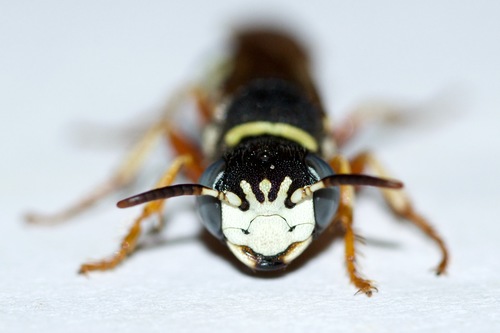
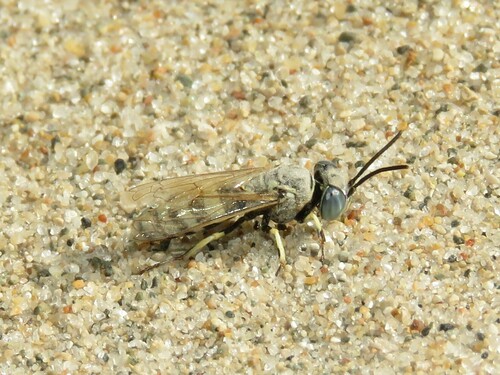
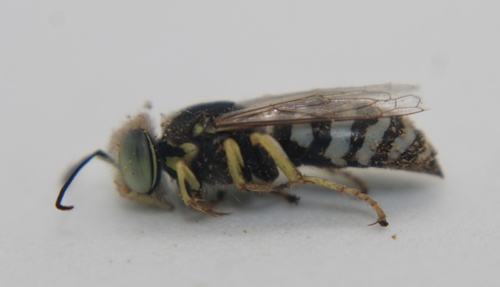
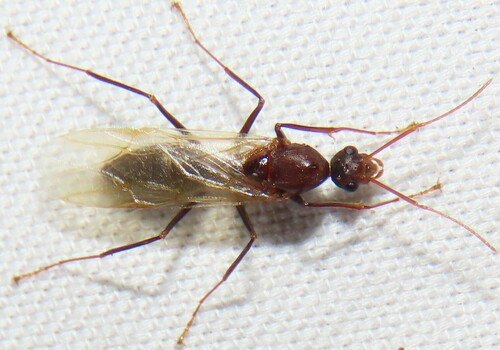
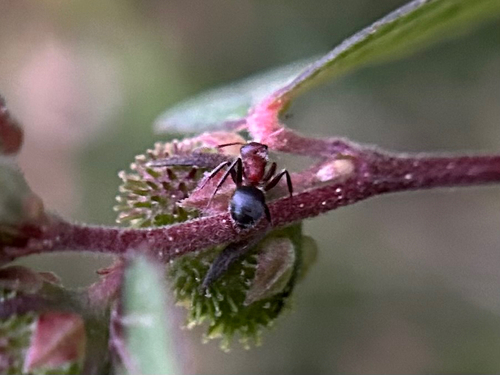
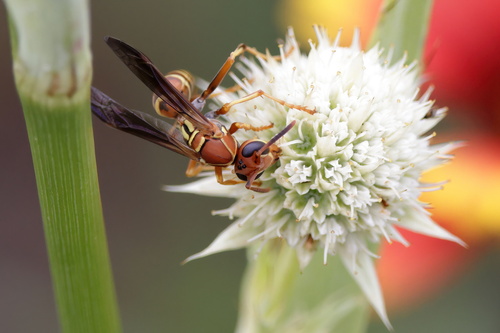
Larra bicolor is a parasitoid wasp native to South America. It was introduced into Florida as a biological pest control of invasive mole crickets. Adult females of this species are about 22 mm long, with the males somewhat smaller. The head and thorax are black, with silver markings on the head; the abdomen is red. The wings are variable in color, of a dusky hue.

These wasps feed on nectar as adults, with the shrubby false buttonweed (Spermacoce verticillata) preferred. Females hunt mole crickets in the genus Scapteriscus, stinging them on the underside to paralyze them for several minutes. A single egg is deposited between the first and second pairs of legs. The wasp then flies off, and the cricket returns to its burrow. Nymphs and adult crickets are attacked, as long as they are large enough.

Upon hatching, the larva feeds upon its host, eventually killing it. It pupates within 12 to 30 days (depending on temperature), forming a cocoon in the remains of the cricket by gluing sand grains together. The pupal phase may be as short as 50 days, but the pupa may enter diapause in the winter, delaying emergence for months. Adults are solitary and do not... Wikipedia →

Global Distribution

Parks Where Found

# Park Country Daily sighting probability

More parks will be added in future updates.

Cities Where Found

# City Country Daily sighting probability
1 Orlando 🇺🇸 United States
<5%
2 Miami 🇺🇸 United States
<5%
3 Houston 🇺🇸 United States
<5%

Before you go

What are the chances of seeing a Larra bicolor in Miami?

Rare

Under 5% of wildlife watchers report a Larra bicolor sighting in Miami on a given day, based on 23 verified sightings from GBIF citizen-science data. It is the 331st most-seen of the 826 insects we can rate there. Over three days the chance rises to about 10%, and over a week to about 20%, if each day is a fresh chance.

When is the best time to see a Larra bicolor in Miami?

Any time of year

In every month with enough records, under 5% of wildlife watchers report a Larra bicolor in Miami on a given day, so our monthly data shows no clear season.

Is Miami the best place to see a Larra bicolor?

Among the best

Of the 3 cities where we can rate Larra bicolor sightings, Miami ranks 2nd at under 5%, level with the leaders once rounded. The best odds are in Orlando (United States, under 5%).

Where does the Larra bicolor sighting chance come from?

GBIF citizen-science records

It is estimated from how often the Larra bicolor is recorded against all the insects logged in Miami (23 verified sightings), calibrated against known sighting rates. Figures are rounded to the nearest 10% because citizen-science data supports honest approximations, not decimals, and months with records from fewer than five people show "—". How it works.

← Back to Miami