Common Vole

Common Vole

Microtus arvalis

Silhouette: Titouan Montessuit · PhyloPic

LCLeast ConcernNTVUENCR
Daily sighting probability <5% · Rare
at Moscow

In 3 days ~10% in a week ~20%

7 Verified sightings at Moscow
March Best month
☀️ Diurnal When it's spotted

About the Common Vole

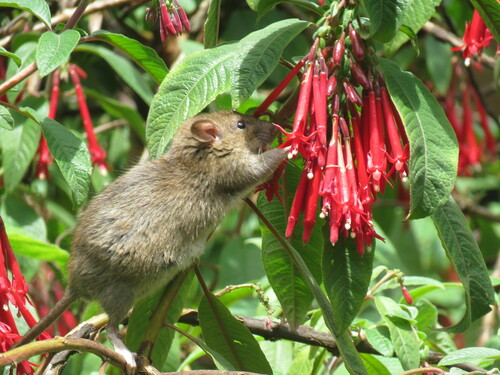
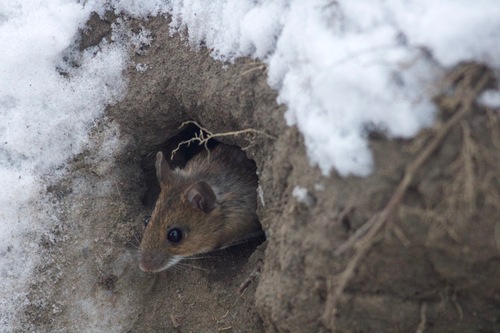
The common vole (Microtus arvalis) is a European rodent. The common vole is hardly restricted in means of distribution and habitat and inhabits large areas of Eurasia. However, apart from the Orkney vole, in Ireland and Britain it is replaced by the related field vole, M. agrestis. As M. arvalis followed human civilization, primary and secondary habitats can be distinguished.

The primary habitats are everything but dense forests, such as meadows, heath lands, and fallow land. The secondary habitats are mainly agricultural fields, where shallow-sloped areas are preferred. The natural food of the common vole is grass, but it also feeds on many agricultural crops (within secondary habitats) and here its reproduction is faster than in primary habitats.

After pregnancy of 16 to 24 days, females give birth to 3 to 8 juveniles, weighing between 1.0 and 3.1 g. Weaning is around the 20th day. Female juveniles can be impregnated from the 13th day after birth. Hence, first birth can be given from the 33rd day. During annual reproduction, which starts in March and ends in October, females usually have three reproductive... Wikipedia →

Global Distribution

Parks Where Found

# Park Country Daily sighting probability

More parks will be added in future updates.

Cities Where Found

# City Country Daily sighting probability
1 Moscow 🇷🇺 Russia
<5%

Zoos & Centres Where Found

# Zoo / Centre Country
1 Ostrava Zoo 🇨🇿 Czechia In captivity

Before you go

What are the chances of seeing a Common Vole in Moscow?

Rare

Under 5% of wildlife watchers report a Common Vole sighting in Moscow on a given day, based on 7 verified sightings from GBIF citizen-science data. It is the 21st most-seen of the 25 mammals we can rate there. Over three days the chance rises to about 10%, and over a week to about 20%, if each day is a fresh chance.

When is the best time to see a Common Vole in Moscow?

Any time of year

In every month with enough records, under 5% of wildlife watchers report a Common Vole in Moscow on a given day, so our monthly data shows no clear season.

What time of day is best to see a Common Vole?

Between noon and 3 pm

Across all the parks we cover, that three-hour window holds the most Common Vole sightings with a recorded time, and about 8 in 10 of them come between 6 am and 6 pm: it is a daytime animal.

Where else can you see a Common Vole?

Only Moscow, in our data

Moscow is the only city on Wallace's Line with enough records to rate Common Vole sightings: under 5% of wildlife watchers there report one on a given day.

Which relatives of the Common Vole live in Moscow?

Same family: Cricetidae

The closest relatives of the Common Vole that you can see in Moscow (family Cricetidae, Hamsters, Voles, Lemmings, and Allies) are Muskrat (about 10%) and Bank Vole (about 10%), with each one's daily chance of a sighting.

Where does the Common Vole sighting chance come from?

GBIF citizen-science records

It is estimated from how often the Common Vole is recorded against all the mammals logged in Moscow (7 verified sightings), calibrated against known sighting rates. Figures are rounded to the nearest 10% because citizen-science data supports honest approximations, not decimals, and months with records from fewer than five people show "—". How it works.

← Back to Moscow