Field Cuckoo Bumble Bee

Field Cuckoo Bumble Bee

Bombus campestris

Daily sighting probability <5% · Rare
at Moscow

In 3 days ~10% in a week ~20%

57 Verified sightings at Moscow
36 In all 2 parks From 2019 to 2026
August Best month
☀️ Diurnal When it's spotted

About the Field Cuckoo Bumble Bee

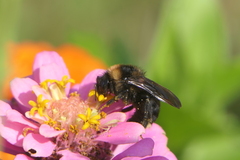
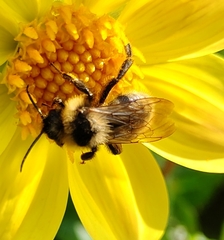
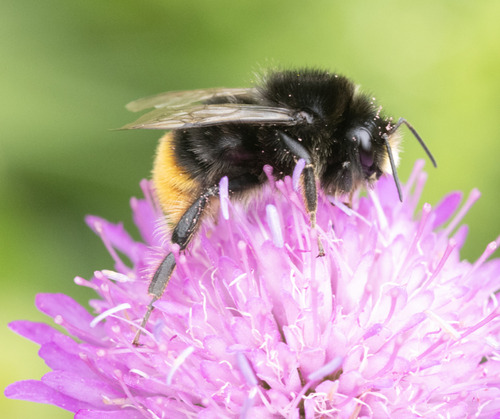
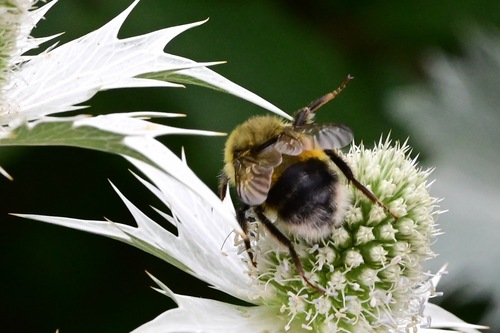
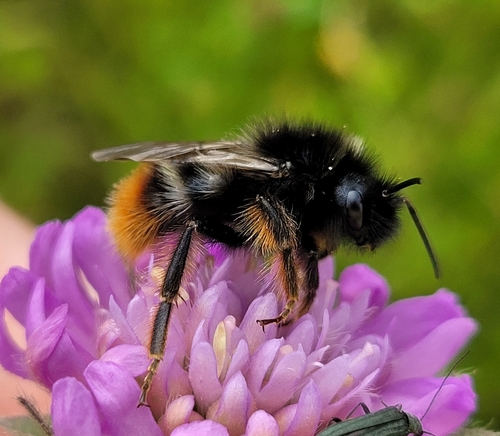
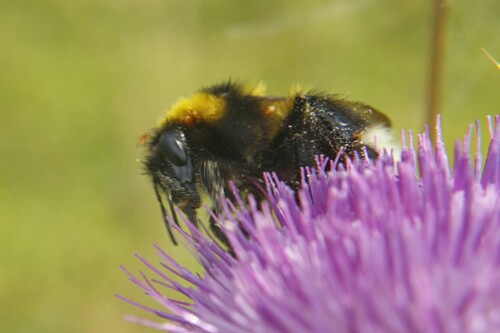
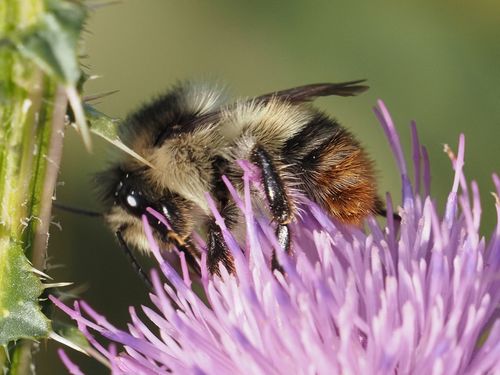
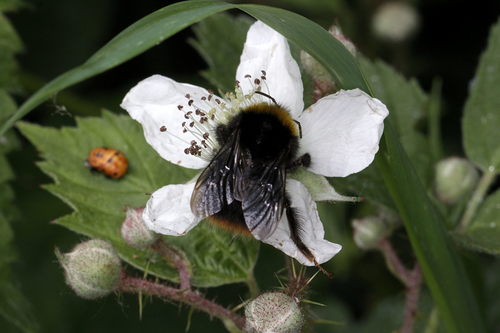
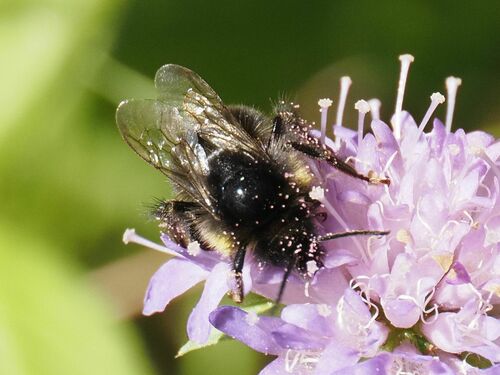
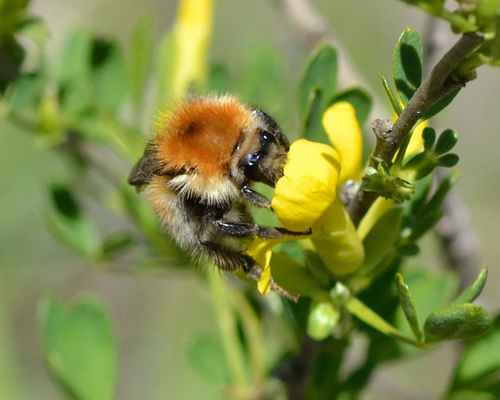
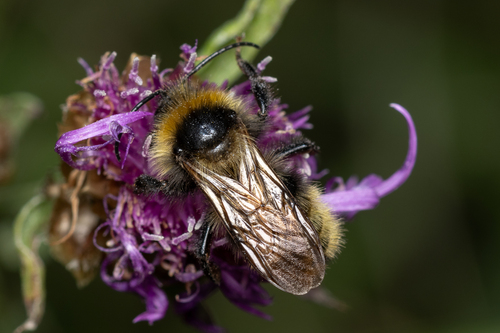
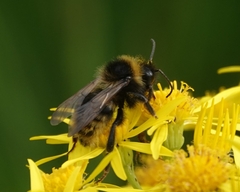
Bombus campestris is a very common cuckoo bumblebee found in most of Europe. The bumblebee is of medium length, the queen having an average length of 18 mm (0.7 in), and the male 15 mm (0.6 in). The fur of the queen is quite thin on the dorsal (upper) side. The collar, and in some cases the top of the head, is orange-yellow, while the terga (abdominal segments) 3–5 have yellow sides with a black centre; the rest of the body is black. The fur of the male is more variable: A pale form exists, with a broad, pale yellow collar, yellow hairs on top of the head, pale hairs on the sides of the otherwise black first tergite, a yellow line along the posterior rim, terga 3–6 pale yellow, usually with a black, thin, centre line. As for the queen, the rest of the body is black. The dark form is entirely black except for a thin, diffuse band on the collar and yellow hairs on the sides of terga 4–6. Intermediate forms exist. Both queens and males can be melanistic. In western Scotland, the subspecies B. c. swynnertoni is found, with a queen with an almost entirely pale yellow thorax, yellow hairs on terga 1 and 2, and a yellow tail. The male has more black on the thorax, but a lot... Wikipedia →
Global Distribution

Parks Where Found

# Park Country Daily sighting probability
1 Bavarian Forest National Park 🇩🇪 Germany
~10%
2 Wadden Sea National Park 🇩🇪 Germany
<5%

Cities Where Found

# City Country Daily sighting probability
1 Warsaw 🇵🇱 Poland
~10%
2 Novosibirsk 🇷🇺 Russia
~10%
3 Nizhny Novgorod 🇷🇺 Russia
<5%
4 Moscow 🇷🇺 Russia
<5%
5 Saint Petersburg 🇷🇺 Russia
<5%

Before you go

What are the chances of seeing a Field Cuckoo Bumble Bee in Moscow?

Rare

Under 5% of wildlife watchers report a Field Cuckoo Bumble Bee sighting in Moscow on a given day, based on 57 verified sightings from GBIF citizen-science data. It is the 190th most-seen of the 1111 insects we can rate there. Over three days the chance rises to about 10%, and over a week to about 20%, if each day is a fresh chance.

When is the best time to see a Field Cuckoo Bumble Bee in Moscow?

July and August

In those months about 10% of wildlife watchers report a Field Cuckoo Bumble Bee in Moscow on a given day, against under 5% in September to June, the lowest months.

What time of day is best to see a Field Cuckoo Bumble Bee?

Between 3 and 6 pm

Across all the parks we cover, that three-hour window holds the most Field Cuckoo Bumble Bee sightings with a recorded time, and nearly all of them come between 6 am and 6 pm: it is a daytime animal.

Is Moscow the best place to see a Field Cuckoo Bumble Bee?

4th of 5

Of the 5 cities where we can rate Field Cuckoo Bumble Bee sightings, Moscow ranks 4th at under 5%. The best odds are in Warsaw (Poland, about 10%), Novosibirsk (Russia, about 10%) and Nizhny Novgorod (Russia, under 5%).

Which relatives of the Field Cuckoo Bumble Bee live in Moscow?

Same genus: Bombus

The closest relatives of the Field Cuckoo Bumble Bee that you can see in Moscow (genus Bombus, Bumble Bees) are Common Carder Bumble Bee (about 10%), Tree Bumble Bee (about 10%) and Red-Tailed Bumble Bee (about 10%), with each one's daily chance of a sighting.

Where does the Field Cuckoo Bumble Bee sighting chance come from?

GBIF citizen-science records

It is estimated from how often the Field Cuckoo Bumble Bee is recorded against all the insects logged in Moscow (57 verified sightings), calibrated against known sighting rates. Figures are rounded to the nearest 10% because citizen-science data supports honest approximations, not decimals, and months with records from fewer than five people show "—". How it works.

← Back to Moscow