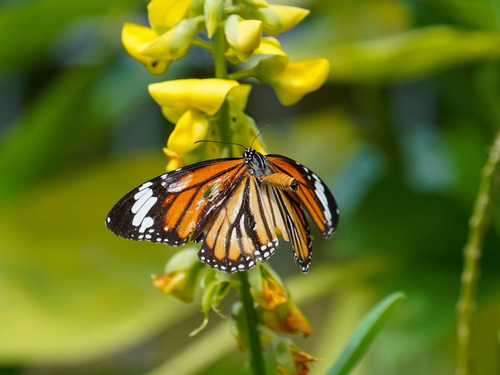
About the Brown King Crow Butterfly
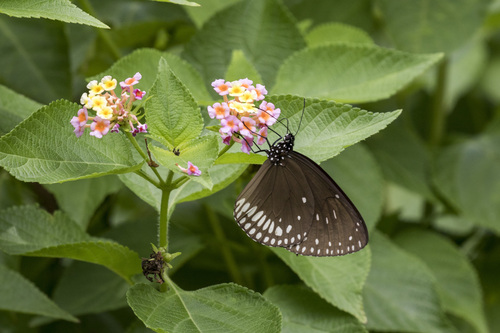
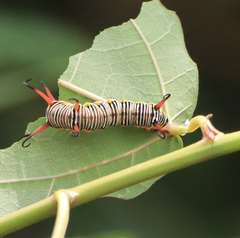
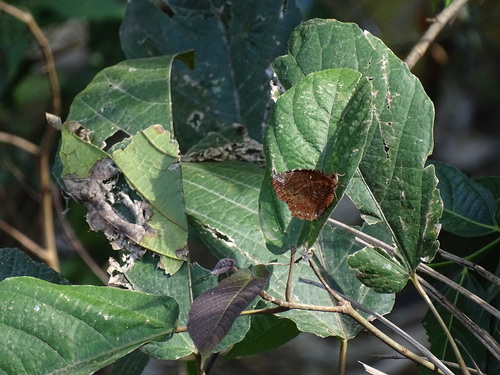
Euploea klugii, the brown king crow or king crow, is a butterfly from the family Nymphalidae found in India and Southeast Asia. The species was first described by the entomologist Frederic Moore in 1858. The male forewing is variable in shape, especially in the outline of the termen and dorsum. It is comparatively long in proportion to its width, owing to the lower convexity of the dorsal margin. Its termen is oblique, slightly convex. In the 'novarae' variety, it is broad, with the great convexity of the dorsal margin making it almost subquadrate, while the termen is more convex than in the typical form. In the female, the difference is less marked.
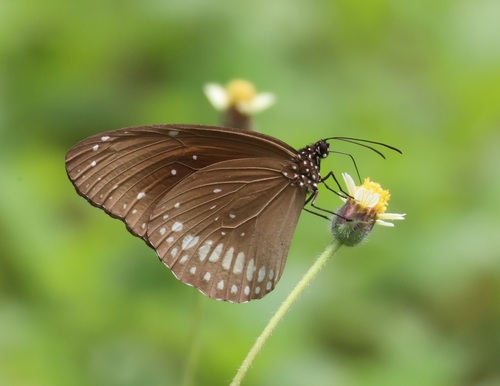
The typical form on the upper side is a dark brown forewing suffused up to the termen with a blue gloss, a spot at the apex of the cell, a small coastal spot, and two short streaks beyond the apex of the cell. In the female there are two discal spots and in the six subterminal and terminal series of spots, a second series is absent. In both sexes, the subterminal spots are produced inwards. All the spots are bluish white. Hindwing umber brown, the centre glossed with blue; subterminal rows of spots incomplete or obsolescent... Wikipedia →