Blue-Spotted Arab

Blue-Spotted Arab

Colotis phisadia

Daily sighting probability ~10% · With luck
at New Delhi

In 3 days ~20% in a week ~30%

9 Verified sightings at New Delhi
23 In 1 park From 2019 to 2026
September Best month
☀️ Diurnal When it's spotted

About the Blue-Spotted Arab

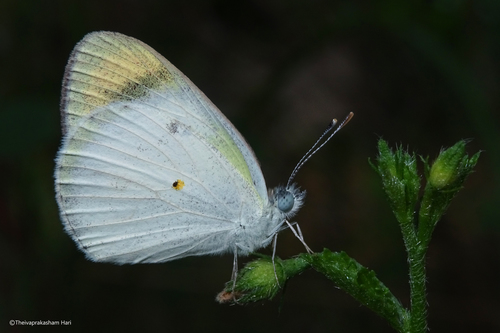
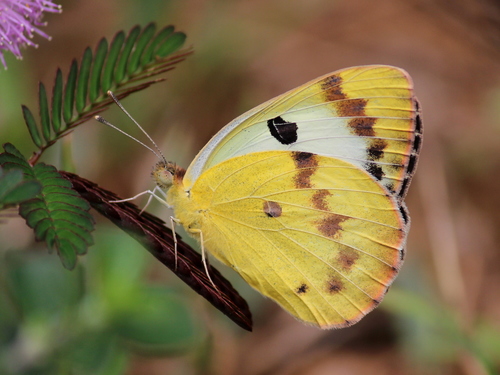
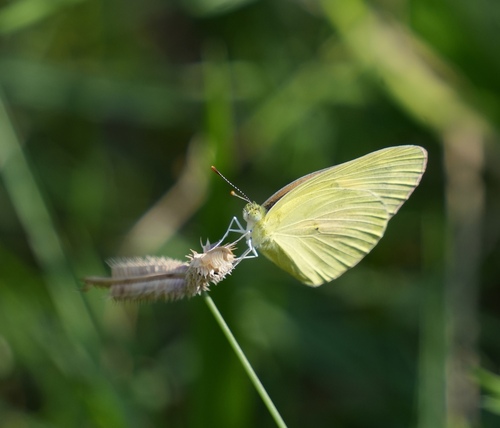
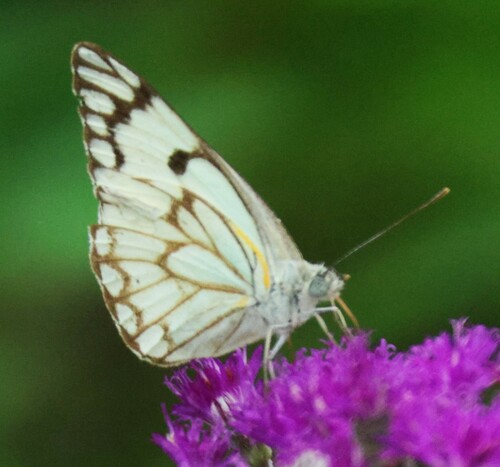
Colotis phisadia, the blue-spotted Arab, is a small butterfly of the family Pieridae, that is, the yellows and whites, which is found in Mauritania, Senegal, Mali, Nigeria, Niger, Chad, Sudan, Ethiopia, Kenya, Kuwait, Uganda, Arabia, the Near East and India.

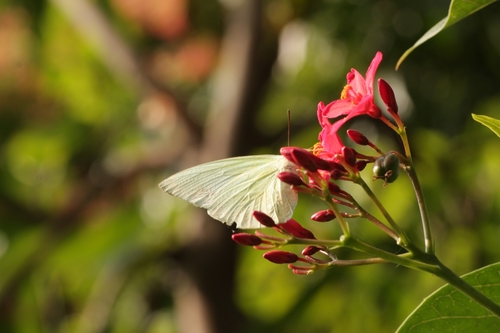
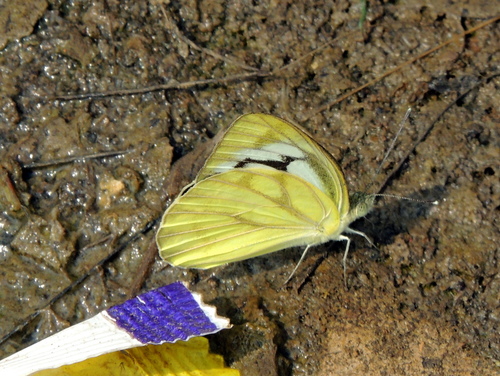
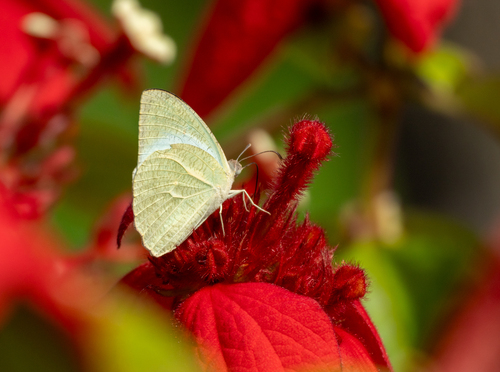
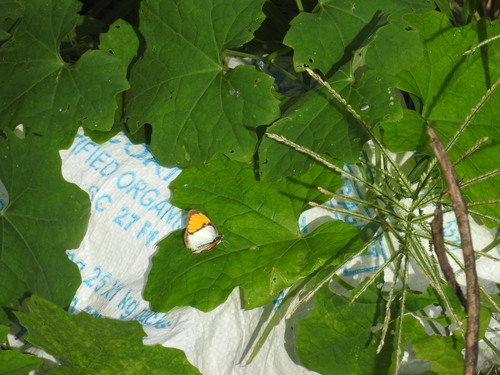
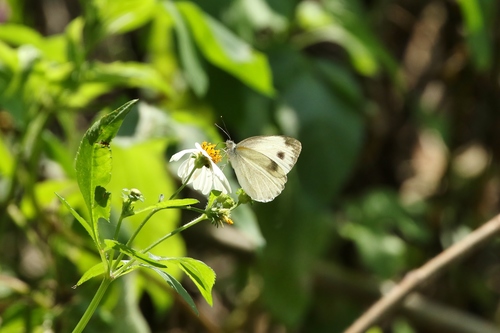
Upperside of male forewing has a pale salmon-pink ground colour, this colour paler outwardly; base heavily irrorated (sprinkled) with bluish-grey scales that extend outwards and are merged with a black patch that occupies the apex of the cell and spreads along the discocellulars; terminal third of wing black with enclosed spots of the ground colour in interspaces 3, 4, 5 and 9, the spot in 4 sometimes absent, the inner edge of the black area emarginate at interspaces 2 and 4; the outer margin with a series of minute terminal specks of ground colour in the interspaces. Hindwing: white, base heavily irrorated with bluish-grey scales that are extended downwards in a diffuse band parallel to the dorsum; terminal half of wing jet black. Underside: precisely like the underside of C. protractus male. Antennae, head, thorax and abdomen as in C. protractus.

Female is very variable, but resembles the male in markings. On... Wikipedia →

Global Distribution

Parks Where Found

# Park Country Daily sighting probability
1 Keoladeo National Park 🇮🇳 India
~30%

More parks will be added in future updates.

Cities Where Found

# City Country Daily sighting probability
1 Kuwait City 🇰🇼 Kuwait
~40%
2 Abu Dhabi 🇦🇪 United Arab Emirates
~40%
3 Dubai 🇦🇪 United Arab Emirates
~20%
4 Ahmedabad 🇮🇳 India
~10%
5 New Delhi 🇮🇳 India
~10%

Before you go

What are the chances of seeing a Blue-Spotted Arab in New Delhi?

With luck

About 10% of wildlife watchers report a Blue-Spotted Arab sighting in New Delhi on a given day, based on 9 verified sightings from GBIF citizen-science data. It is the 115th most-seen of the 174 insects we can rate there. Over three days the chance rises to about 20%, and over a week to about 30%, if each day is a fresh chance.

When is the best time to see a Blue-Spotted Arab in New Delhi?

April, June and September–October

In those months about 10% of wildlife watchers report a Blue-Spotted Arab in New Delhi on a given day, against under 5% in May, July–August and November–March, the lowest months.

What time of day is best to see a Blue-Spotted Arab?

Between 9 am and noon

Across all the parks we cover, that three-hour window holds the most Blue-Spotted Arab sightings with a recorded time, and about 9 in 10 of them come between 6 am and 6 pm: it is a daytime animal.

Is New Delhi the best place to see a Blue-Spotted Arab?

5th of 5

Of the 5 cities where we can rate Blue-Spotted Arab sightings, New Delhi ranks 5th at about 10%. The best odds are in Kuwait City (Kuwait, about 40%), Abu Dhabi (United Arab Emirates, about 40%) and Dubai (United Arab Emirates, about 20%).

Which relatives of the Blue-Spotted Arab live in New Delhi?

Same genus: Colotis

The closest relatives of the Blue-Spotted Arab that you can see in New Delhi (genus Colotis, Tips) are Little Orange-Tip (about 10%), Large Salmon Arab Tip (about 10%) and Small Salmon Arab (about 10%), with each one's daily chance of a sighting.

Where does the Blue-Spotted Arab sighting chance come from?

GBIF citizen-science records

It is estimated from how often the Blue-Spotted Arab is recorded against all the insects logged in New Delhi (9 verified sightings), calibrated against known sighting rates. Figures are rounded to the nearest 10% because citizen-science data supports honest approximations, not decimals, and months with records from fewer than five people show "—". How it works.

← Back to New Delhi