Common Grass Skimmer

Common Grass Skimmer

Paragus haemorrhous

Daily sighting probability <5% · Rare
at New York City

In 3 days ~10% in a week ~20%

17 Verified sightings at New York City
42 In all 4 parks From 2019 to 2026
August Best month
☀️ Diurnal When it's spotted

About the Common Grass Skimmer

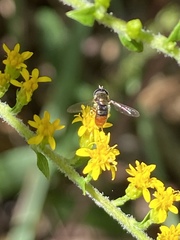
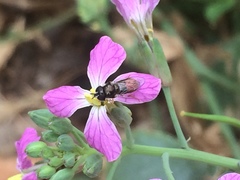
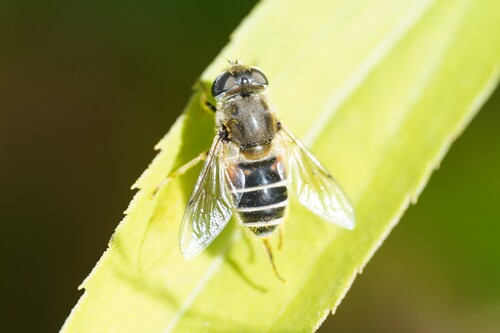
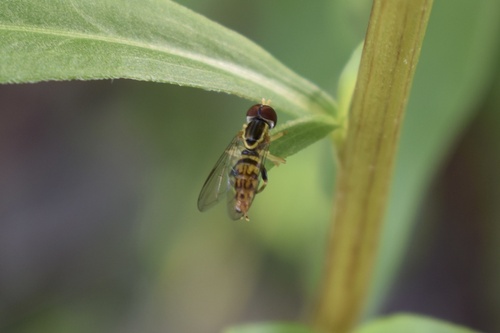
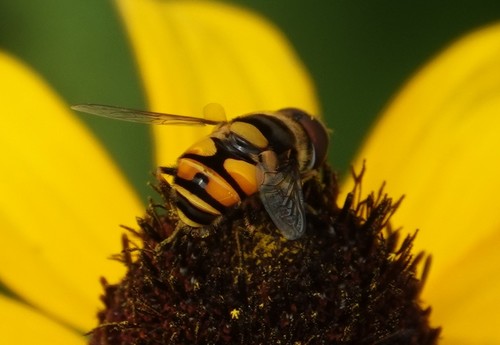
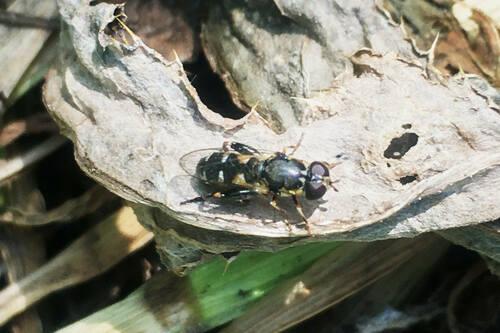
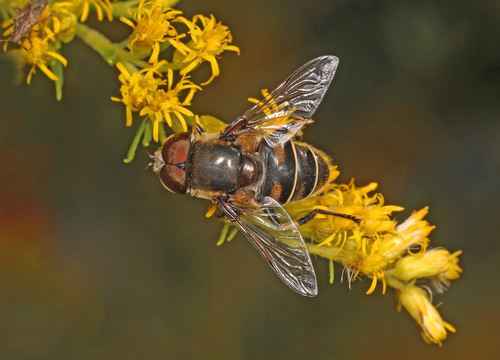
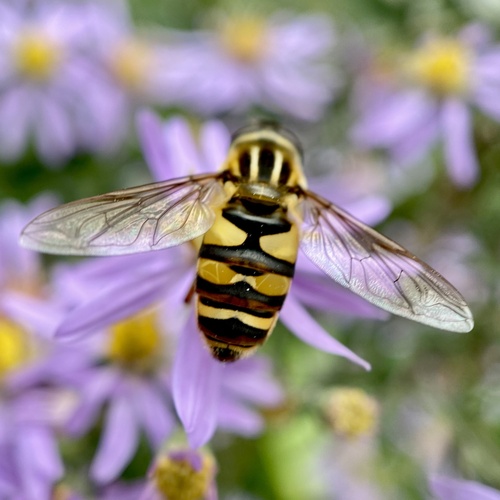
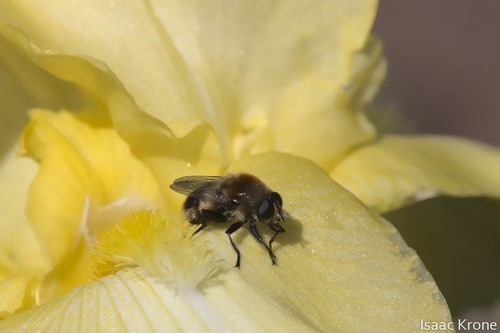
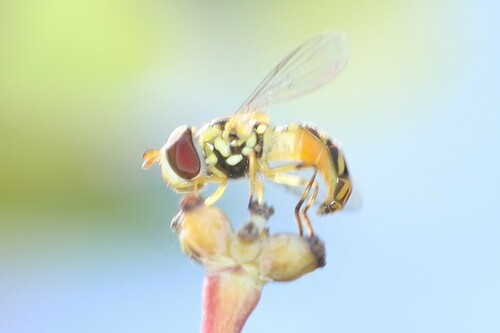
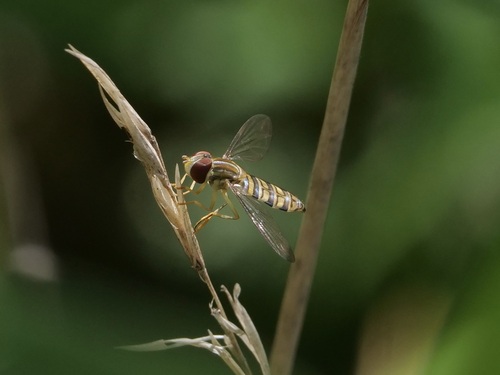
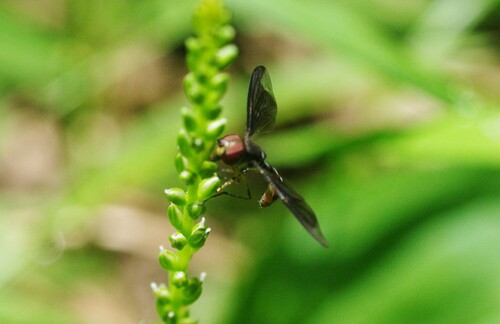
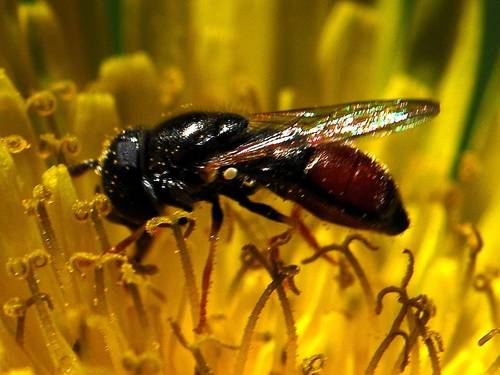
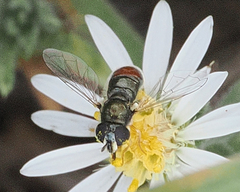
Paragus haemorrhous, the black-backed grass skimmer is a common widespread species of hoverfly found in many parts of Europe, Africa and the Nearctic. Hoverflies can remain nearly motionless in flight. The adults are also known as flower flies for they are commonly found on flowers from which they get both energy-giving nectar and protein-rich pollen. The larvae are predators on aphids.

For terminology Speight key to genera and glossary external link to inaturalist images Size 4.3–5.9 mm (0.17–0.23 in) Head The face is yellow, moderately projecting, with a black median stripe in both sexes. The third antennal joint is sordid reddish below. The eyes are uniformly pilose."

Thorax The scutellum entirely black. Abdomen Segment 1 is black and well-developed. Segment 2 is black or has a posterior margin that is red. Segments 3 through 5 are usually entirely red-orange to dark red in males. The superior lobe varies in shape and size, with an apex that is nearly truncate to strongly oblique, and with a length from one to two times that of the surstylus.

Wings The wings are hyaline with a brownish grey stigma. Legs The legs are yellow and light brownish yellow. The basal... Wikipedia →
Global Distribution

Parks Where Found

# Park Country Daily sighting probability
1 Addo Elephant National Park 🇿🇦 South Africa
~10%
2 Shenandoah National Park 🇺🇸 United States
~10%
3 Great Smoky Mountains National Park 🇺🇸 United States
<5%
4 Table Mountain National Park 🇿🇦 South Africa
<5%

Cities Where Found

# City Country Daily sighting probability
1 Sacramento 🇺🇸 United States
~10%
2 San Diego 🇺🇸 United States
~10%
3 San Francisco 🇺🇸 United States
~10%
4 Los Angeles 🇺🇸 United States
~10%
5 Salt Lake City 🇺🇸 United States
<5%
6 Baltimore 🇺🇸 United States
<5%
7 Cape Town 🇿🇦 South Africa
<5%
8 Portland 🇺🇸 United States
<5%
9 Washington 🇺🇸 United States
<5%
10 Seattle 🇺🇸 United States
<5%

Before you go

What are the chances of seeing a Common Grass Skimmer in New York City?

Rare

Under 5% of wildlife watchers report a Common Grass Skimmer sighting in New York City on a given day, based on 17 verified sightings from GBIF citizen-science data. It is the 740th most-seen of the 1623 insects we can rate there. Over three days the chance rises to about 10%, and over a week to about 20%, if each day is a fresh chance.

When is the best time to see a Common Grass Skimmer in New York City?

Any time of year

In every month with enough records, under 5% of wildlife watchers report a Common Grass Skimmer in New York City on a given day, so our monthly data shows no clear season.

What time of day is best to see a Common Grass Skimmer?

Between noon and 3 pm

Across all the parks we cover, that three-hour window holds the most Common Grass Skimmer sightings with a recorded time, and about 8 in 10 of them come between 6 am and 6 pm: it is a daytime animal.

Is New York City the best place to see a Common Grass Skimmer?

11th of 12

Of the 12 cities where we can rate Common Grass Skimmer sightings, New York City ranks 11th at under 5%. The best odds are in Sacramento (United States, about 10%), San Diego (United States, about 10%) and San Francisco (United States, about 10%).

Which relatives of the Common Grass Skimmer live in New York City?

Same family: Syrphidae

The closest relatives of the Common Grass Skimmer that you can see in New York City (family Syrphidae, Hover Flies) are Eurasian Drone Fly (about 20%), Margined Calligrapher (about 10%) and Eastern Calligrapher (about 10%), with each one's daily chance of a sighting.

Where does the Common Grass Skimmer sighting chance come from?

GBIF citizen-science records

It is estimated from how often the Common Grass Skimmer is recorded against all the insects logged in New York City (17 verified sightings), calibrated against known sighting rates. Figures are rounded to the nearest 10% because citizen-science data supports honest approximations, not decimals, and months with records from fewer than five people show "—". How it works.

← Back to New York City