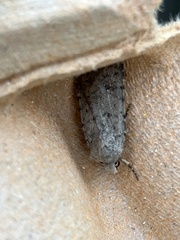
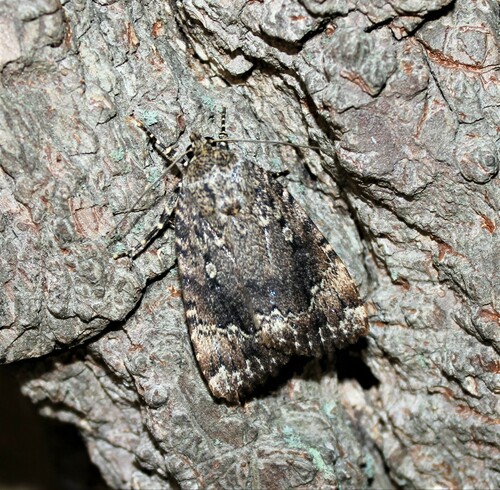
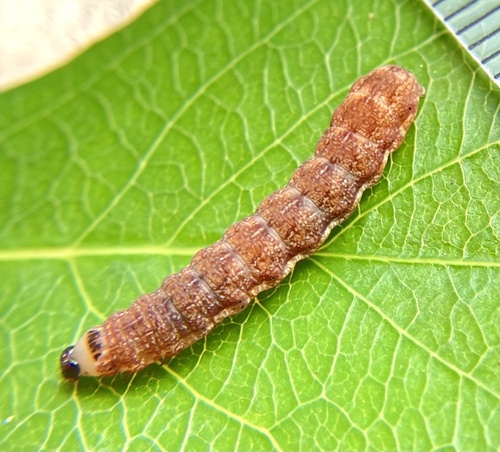
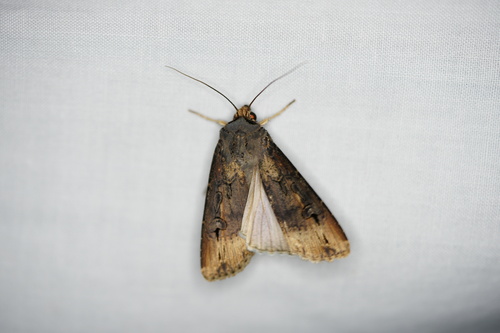
Pale Mottled Willow Moth

Pale Mottled Willow Moth

Caradrina clavipalpis

Daily sighting probability <5% · Rare
at New York City

In 3 days ~10%

14 Verified sightings at New York City
10 In 1 park From 2019 to 2026
June Best month
🌙 Nocturnal When it's spotted

About the Pale Mottled Willow Moth

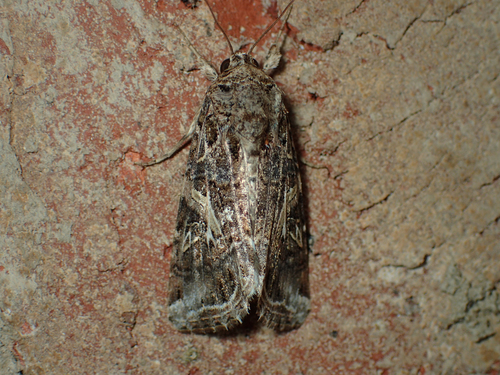
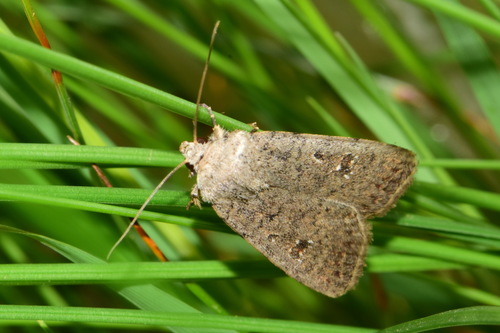
Caradrina clavipalpis, the pale mottled willow is a moth of the family Noctuidae. The species was first described by Giovanni Antonio Scopoli in his 1763 Entomologia Carniolica. It is found in the Palearctic realm (Europe, Algeria, Morocco, Tunisia, Libya, Egypt, Kuwait, Russia, Central Asia, Mongolia, Iraq, Iran, Afghanistan, Pakistan, north-west India, and Sri Lanka). It is an introduced species in North America, where it was first reported from Queens in New York City in 1993. In 2009 it was found in Rochester, New York, so it appears to be established and spreading.

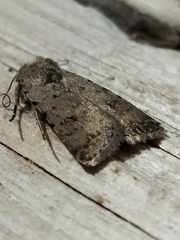
The wingspan is 26–35 mm. The length of the forewings is 12–15 mm. Forewing pale to dark grey with darker dusting and sometimes tinged with ochreous; the terminal area generally fuscous; the lines starting from black costal spots; the inner and outer double, blackish, the inner minutely waved, the outer dentate; subterminal line pale, waved, preceded by a grey shade with dentate rufous marks in it; stigmata small, fuscous, the orbicular rounded, the reniform a narrow lunule, with two white dots on its inner edge and three on outer; hindwing white, the veins and termen dark grey; — in laciniosa Donz... Wikipedia →
Global Distribution

Parks Where Found

# Park Country Daily sighting probability
1 Sierra Nevada National Park 🇪🇸 Spain
~10%

More parks will be added in future updates.

Cities Where Found

# City Country Daily sighting probability
1 London 🇬🇧 United Kingdom
~20%
2 Sofia 🇧🇬 Bulgaria
~10%
3 Essen 🇩🇪 Germany
~10%
4 Liverpool 🇬🇧 United Kingdom
~10%
5 Budapest 🇭🇺 Hungary
~10%
6 Madrid 🇪🇸 Spain
~10%
7 Birmingham 🇬🇧 United Kingdom
~10%
8 Rome 🇮🇹 Italy
~10%
9 Helsinki 🇫🇮 Finland
~10%
10 Istanbul 🇹🇷 Turkey
~10%

Before you go

What are the chances of seeing a Pale Mottled Willow Moth in New York City?

Rare

Under 5% of wildlife watchers report a Pale Mottled Willow Moth sighting in New York City on a given day, based on 14 verified sightings from GBIF citizen-science data. It is the 841st most-seen of the 1623 insects we can rate there. Over three days the chance rises to about 10%, if each day is a fresh chance.

When is the best time to see a Pale Mottled Willow Moth in New York City?

Any time of year

In every month with enough records, under 5% of wildlife watchers report a Pale Mottled Willow Moth in New York City on a given day, so our monthly data shows no clear season.

What time of day is best to see a Pale Mottled Willow Moth?

Between 9 pm and midnight

Across all the parks we cover, that three-hour window holds the most Pale Mottled Willow Moth sightings with a recorded time, and nearly all of them come between 6 pm and 6 am: it is mostly seen at night.

Is New York City the best place to see a Pale Mottled Willow Moth?

24th of 24

Of the 24 cities where we can rate Pale Mottled Willow Moth sightings, New York City ranks 24th at under 5%. The best odds are in London (United Kingdom, about 20%), Sofia (Bulgaria, about 10%) and Essen (Germany, about 10%).

Which relatives of the Pale Mottled Willow Moth live in New York City?

Same family: Noctuidae

The closest relatives of the Pale Mottled Willow Moth that you can see in New York City (family Noctuidae, Cutworm Moths and Allies) are Large Yellow Underwing (about 10%) and American Dagger (about 10%), with each one's daily chance of a sighting.

Where does the Pale Mottled Willow Moth sighting chance come from?

GBIF citizen-science records

It is estimated from how often the Pale Mottled Willow Moth is recorded against all the insects logged in New York City (14 verified sightings), calibrated against known sighting rates. Figures are rounded to the nearest 10% because citizen-science data supports honest approximations, not decimals, and months with records from fewer than five people show "—". How it works.

← Back to New York City