Water Veneer

Water Veneer

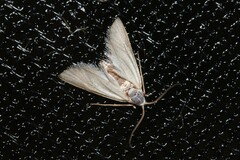
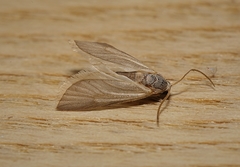
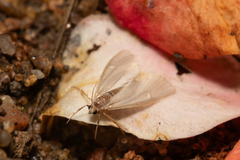
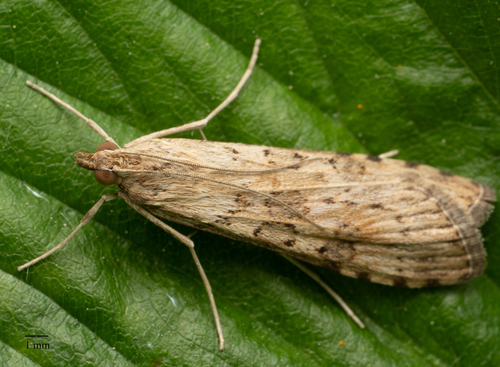
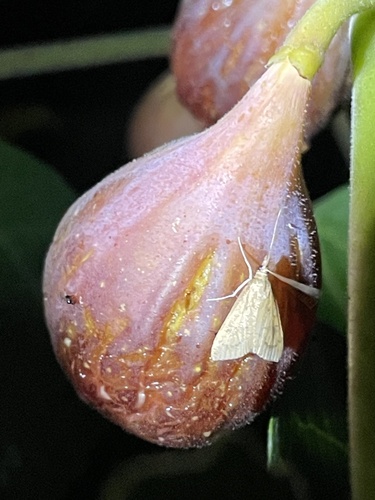
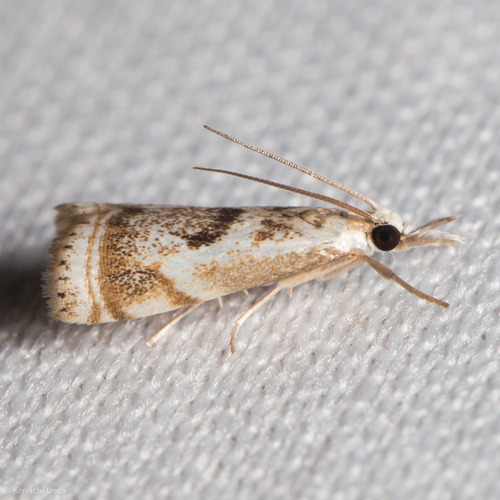
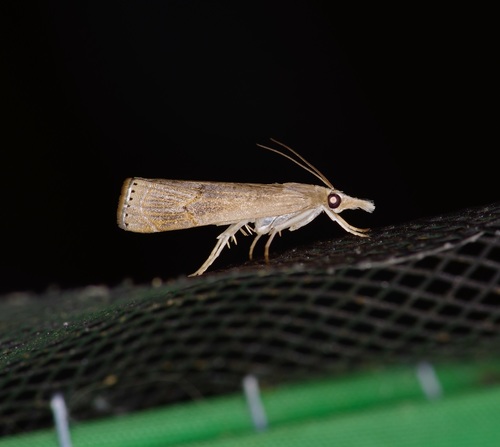
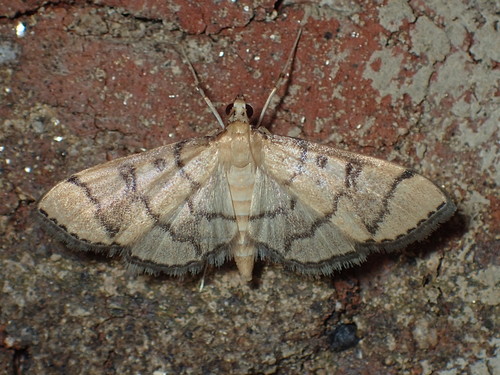
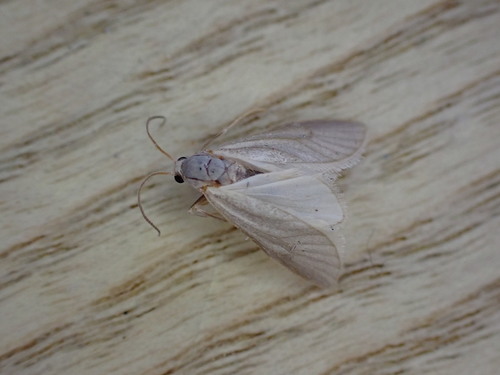
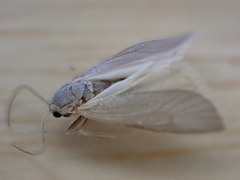
Acentria ephemerella

Daily sighting probability <5% · Rare
at New York City

In 3 days ~10%

6 Verified sightings at New York City
6 In 1 park From 2019 to 2026
July Best month
☀️🌙 Day & Night When it's spotted

About the Water Veneer

Acentria is a monotypic genus of moth of the family Crambidae that was described by James Francis Stephens in 1829. Its only species, Acentria ephemerella, the watermilfoil moth or water veneer, was described by Michael Denis and Ignaz Schiffermüller in 1775. It is used as an agent of biological pest control against the noxious aquatic plant known as Eurasian watermilfoil (Myriophyllum spicatum).

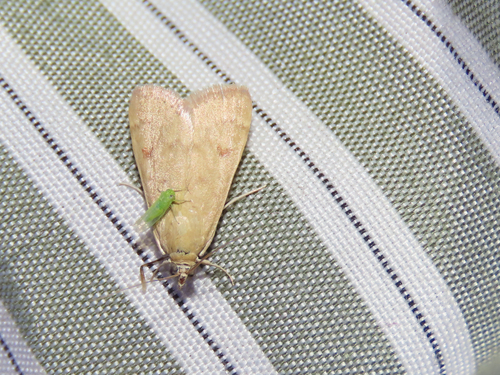
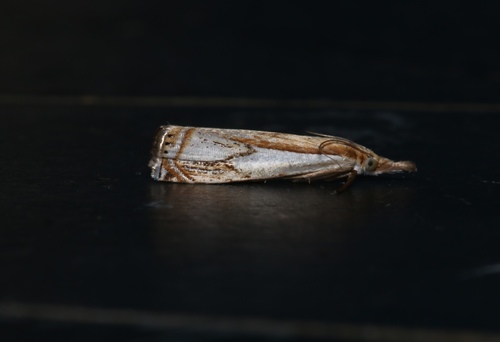
The adult male is a white moth with a wingspan of about 12 millimeters. Forewings whitish, veins and costa obscurely brownish. Hindwings whitish. Wings in female often rudimentary, but sometimes larger than in male, up to 23 mm. Larva light olive-green; head light brown.

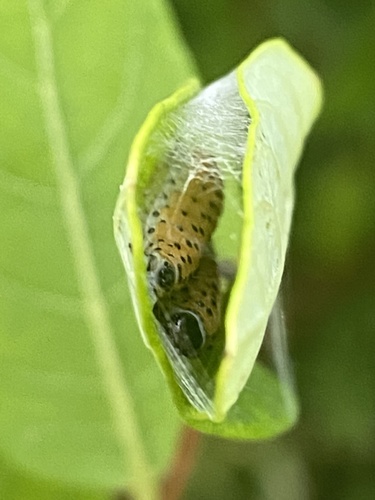
The development of the wings of the female appears to vary considerably, but under what circumstances is still uncertain. There are two female morphologies. Most females are flightless and live on the surface of the water or just submersed. A few females have longer wings and fly. This is an aquatic insect; most of its life cycle takes place in the water. The female is fertilized at the surface and dives to lay egg masses on aquatic plants, such as Potamogeton spp., Canadian waterweed Elodea canadensis and watermilfoil. The larva emerges and bores into the stem of the plant, gluing together plant material to create a shelter. It girdles stems as it feeds, which causes significant damage to the plant as stems and leaves die or break off. The larva pupates inside an underwater cocoon filled with air. Upon emergence, males and flighted females swim to the water surface and fly away.

This moth is used as a biocontrol agent on watermilfoil, but carefully, because it lacks host specificity and will attack other plant species, including natives. It tends to prefer M. spicatum over other plants. This is a European moth, but it was found in Canada in the 1920s, having been probably introduced accidentally. It is established in much of the northeastern United States, where it appears to have the ability to reduce watermilfoil infestations. Wikipedia →
Global Distribution

Parks Where Found

# Park Country Daily sighting probability
1 Wadden Sea National Park 🇩🇪 Germany
<5%

More parks will be added in future updates.

Cities Where Found

# City Country Daily sighting probability
1 Liverpool 🇬🇧 United Kingdom
~10%
2 London 🇬🇧 United Kingdom
~10%
3 Birmingham 🇬🇧 United Kingdom
~10%
4 New York City 🇺🇸 United States
<5%

Before you go

What are the chances of seeing a Water Veneer in New York City?

Rare

Under 5% of wildlife watchers report a Water Veneer sighting in New York City on a given day, based on 6 verified sightings from GBIF citizen-science data. It is the 1492nd most-seen of the 1623 insects we can rate there. Over three days the chance rises to about 10%, if each day is a fresh chance.

When is the best time to see a Water Veneer in New York City?

Any time of year

In every month with enough records, under 5% of wildlife watchers report a Water Veneer in New York City on a given day, so our monthly data shows no clear season.

What time of day is best to see a Water Veneer?

Between 10 pm and 1 am

Across all the parks we cover, that three-hour window holds the most Water Veneer sightings with a recorded time, and about 7 in 10 of them come between 6 pm and 6 am: it is seen both by day and at night.

Is New York City the best place to see a Water Veneer?

4th of 4

Of the 4 cities where we can rate Water Veneer sightings, New York City ranks 4th at under 5%. The best odds are in Liverpool (United Kingdom, about 10%), London (United Kingdom, about 10%) and Birmingham (United Kingdom, about 10%).

Which relatives of the Water Veneer live in New York City?

Same family: Crambidae

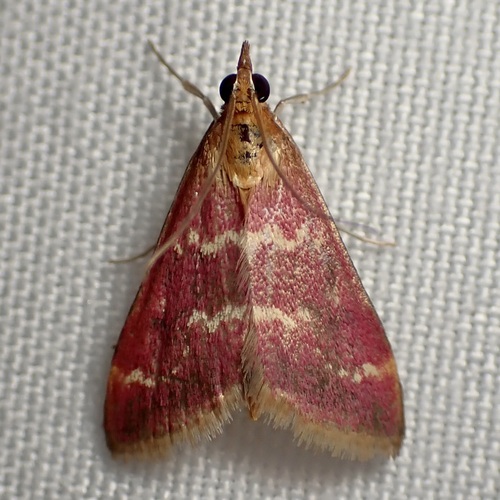
The closest relatives of the Water Veneer that you can see in New York City (family Crambidae, Crambid Snout Moths) are Lucerne Moth (about 10%) and Celery Leaftier Moth (about 10%), with each one's daily chance of a sighting.

Where does the Water Veneer sighting chance come from?

GBIF citizen-science records

It is estimated from how often the Water Veneer is recorded against all the insects logged in New York City (6 verified sightings), calibrated against known sighting rates. Figures are rounded to the nearest 10% because citizen-science data supports honest approximations, not decimals, and months with records from fewer than five people show "—". How it works.

← Back to New York City