Ramie Moth
Daily sighting probability ~10% · With luck
at Osaka

In 3 days ~20% in a week ~50%

27 Verified sightings at Osaka
5 In 1 park From 2019 to 2026
September Best month
☀️ Diurnal When it's spotted

About the Ramie Moth

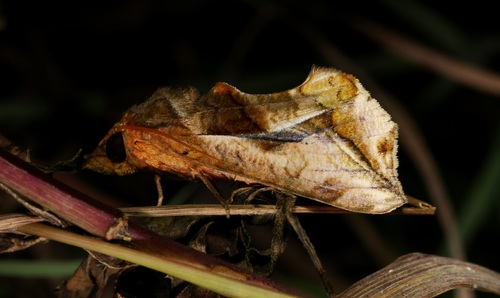
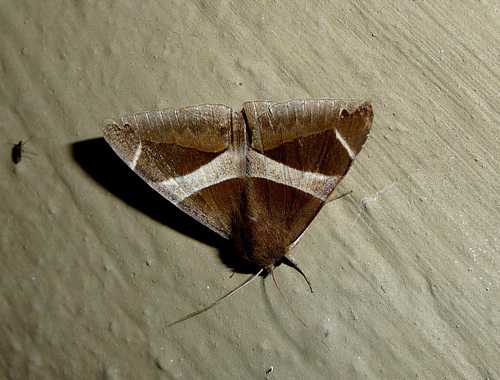
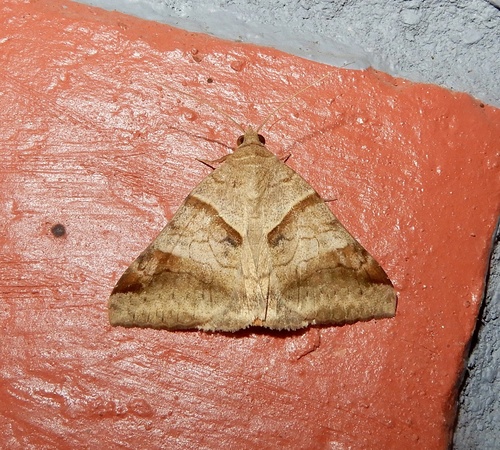
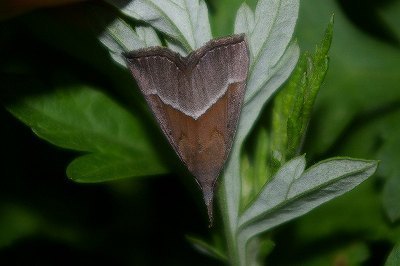
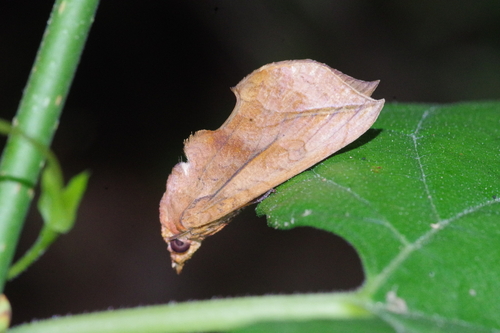
Arcte coerula, the ramie moth, is a moth of the family Noctuidae. The species was first described by Achille Guenée in 1852. It is found from in south-east Asia, including Fiji, India, Sri Lanka, Myanmar, Japan, New Guinea, Taiwan and Norfolk Island. It has been recently observed in Hawaii, on the island of Maui.

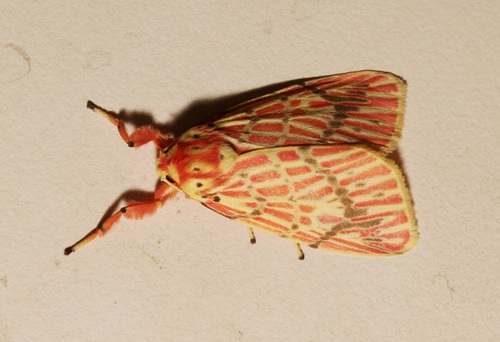
Its wingspan is about 84 mm. The mid and hind tibia are spiny. Hindwings of male with long hairy inner margin. Head black and thorax vinous reddish brown. Pectus white. Abdomen bluish fuscous with a white tuft in male below claspers. Forewings with brown suffused with black, except costal area as far as postmedial line and the apical area, and sprinkled with a few bluish-white scales. A short almost basal line, two black sub-basal patches, an oblique waved antemedial line present. A black spot in cell and two lunules at end of cell. Traces of a pale waved sub-marginal line can be seen. Hindwings are black with a bright blue patch on disk and a maculate post-medial band and patch near anal angle.

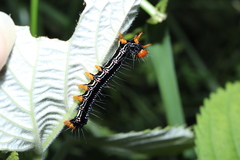
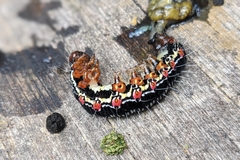
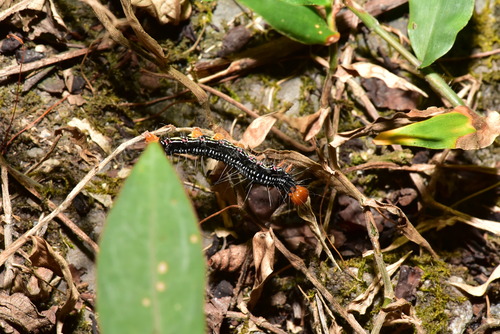
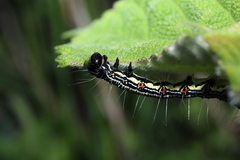
Larva black. Somites with transverse dorsal white bars each enclosing a black line. Stigmata ochreous, black ridges and with some red color around, situated on white... Wikipedia →
Global Distribution

Parks Where Found

# Park Country Daily sighting probability
1 Nikko National Park 🇯🇵 Japan
~20%

More parks will be added in future updates.

Cities Where Found

# City Country Daily sighting probability
1 Nagoya 🇯🇵 Japan
~10%
2 Osaka 🇯🇵 Japan
~10%
3 Tokyo 🇯🇵 Japan
~10%
4 Taipei 🇹🇼 Taiwan
<5%

Before you go

What are the chances of seeing a Ramie Moth in Osaka?

With luck

About 10% of wildlife watchers report a Ramie Moth sighting in Osaka on a given day, based on 27 verified sightings from GBIF citizen-science data. It is the 103rd most-seen of the 352 insects we can rate there. Over three days the chance rises to about 20%, and over a week to about 50%, if each day is a fresh chance.

When is the best time to see a Ramie Moth in Osaka?

March–June and August–January

In those months about 10% of wildlife watchers report a Ramie Moth in Osaka on a given day, against under 5% in February and July, the lowest months.

What time of day is best to see a Ramie Moth?

Between 8 and 11 am

Across all the parks we cover, that three-hour window holds the most Ramie Moth sightings with a recorded time, and nearly all of them come between 6 am and 6 pm: it is a daytime animal.

Is Osaka the best place to see a Ramie Moth?

Among the best

Of the 4 cities where we can rate Ramie Moth sightings, Osaka ranks 2nd at about 10%, level with the leaders once rounded. The best odds are in Nagoya (Japan, about 10%).

Which relatives of the Ramie Moth live in Osaka?

Same family: Erebidae

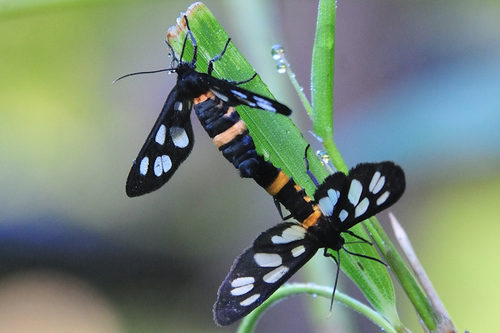
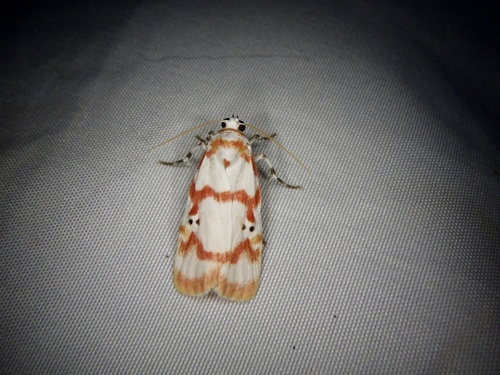
The closest relatives of the Ramie Moth that you can see in Osaka (family Erebidae, Underwing, Tiger, Tussock, and Allied Moths) are Japanese Nine-Spotted Moth (about 10%), Barsine striata (about 10%) and Oraesia emarginata (about 10%), with each one's daily chance of a sighting.

Where does the Ramie Moth sighting chance come from?

GBIF citizen-science records

It is estimated from how often the Ramie Moth is recorded against all the insects logged in Osaka (27 verified sightings), calibrated against known sighting rates. Figures are rounded to the nearest 10% because citizen-science data supports honest approximations, not decimals, and months with records from fewer than five people show "—". How it works.

← Back to Osaka