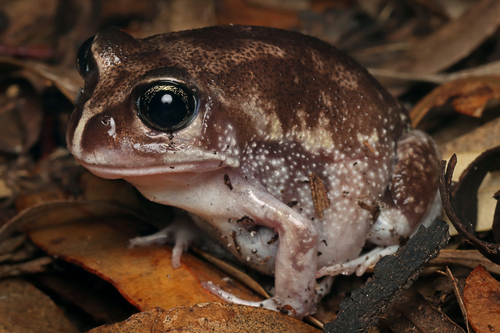
Glauert's Froglet

Glauert's Froglet

Crinia glauerti

LCLeast ConcernNTVUENCR
Daily sighting probability ~10% · With luck
at Perth

In 3 days ~20% in a week ~50%

35 Verified sightings at Perth
July Best month
☀️🌙 Day & Night When it's spotted

About the Glauert's Froglet

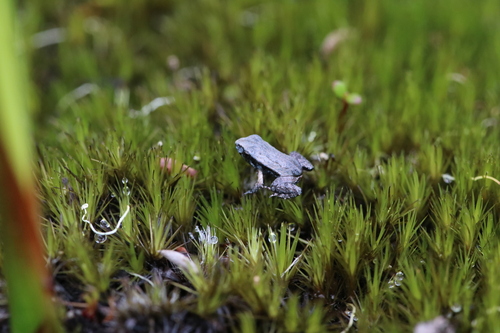
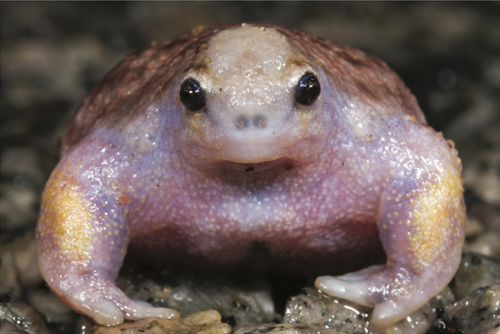
The rattling froglet (Crinia glauerti), also called the clicking froglet or Glauert's froglet, is a frog in the Myobatrachidae family that is endemic to Australia. The rattling froglet was first described by Arthur Loveridge, a curator of the Museum of Comparative Zoology at Harvard University. The species was described from a holotype female collected by Dr Philip Jackson Darlington Jr. at the Mundaring Weir near Perth in southwestern Australia, as part of the Harvard Australian Expedition (1931–1932). Loveridge named the species after Ludwig Glauert, a herpetologist and curator at the Western Australian Museum.

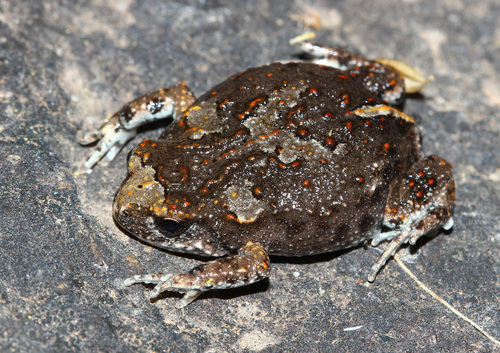
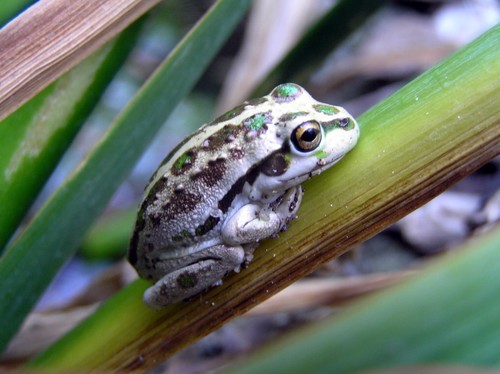
As with many other small (< 3 cm) Crinia species across Australia, rattling froglets show considerable variation in dorsal and ventral colouration and patterns. Colouration on dorsal surfaces can be sandy gold, light grey to fawn, brown, bright russet, dark grey, dark brown, or almost black, with patterns that vary from uniform colouration to blotched, marbled and striped. Skin can vary from smooth to rough, with or without raised longitudinal folds.

Ventral patterns are dimorphic between the sexes. Males typically have varying levels... Wikipedia →
Global Distribution

Parks Where Found

# Park Country Daily sighting probability

More parks will be added in future updates.

Cities Where Found

# City Country Daily sighting probability
1 Perth 🇦🇺 Australia
~10%

Before you go

What are the chances of seeing a Glauert's Froglet in Perth?

With luck

About 10% of wildlife watchers report a Glauert's Froglet sighting in Perth on a given day, based on 35 verified sightings from GBIF citizen-science data. It is the 5th most-seen of the 10 amphibians we can rate there. Over three days the chance rises to about 20%, and over a week to about 50%, if each day is a fresh chance.

When is the best time to see a Glauert's Froglet in Perth?

July

In that month about 20% of wildlife watchers report a Glauert's Froglet in Perth on a given day, against under 5% in May and December–March, the lowest months. That is one of Perth's wettest months, with about 130 mm of rain against 10 mm in December.

What time of day is best to see a Glauert's Froglet?

Between 7 and 10 pm

Across all the parks we cover, that three-hour window holds the most Glauert's Froglet sightings with a recorded time, and about half of them come between 6 am and 6 pm: it is seen both by day and at night.

Where else can you see a Glauert's Froglet?

Only Perth, in our data

Perth is the only city on Wallace's Line with enough records to rate Glauert's Froglet sightings: about 10% of wildlife watchers there report one on a given day.

Which relatives of the Glauert's Froglet live in Perth?

Same genus: Crinia

The closest relatives of the Glauert's Froglet that you can see in Perth (genus Crinia, Typical Froglets) are Squelching Froglet (about 10%) and Quacking Frog (about 10%), with each one's daily chance of a sighting.

Where does the Glauert's Froglet sighting chance come from?

GBIF citizen-science records

It is estimated from how often the Glauert's Froglet is recorded against all the amphibians logged in Perth (35 verified sightings), calibrated against known sighting rates. Figures are rounded to the nearest 10% because citizen-science data supports honest approximations, not decimals, and months with records from fewer than five people show "—". How it works.

← Back to Perth