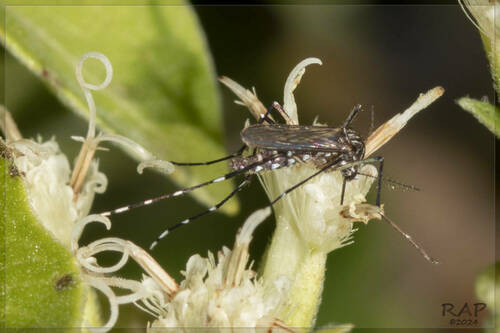
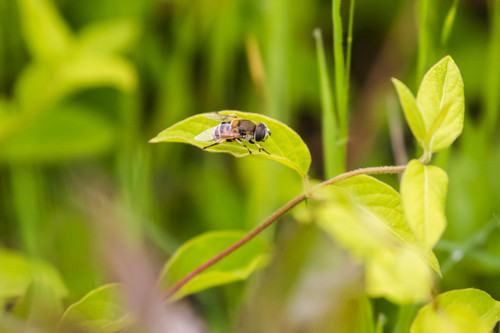
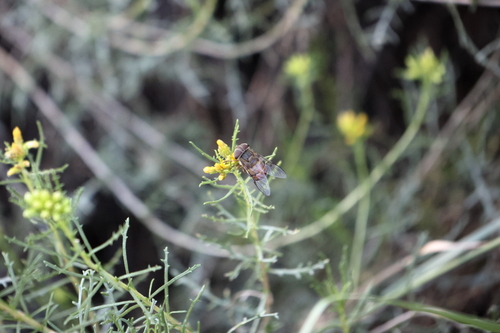
Bomber Fly

Bomber Fly

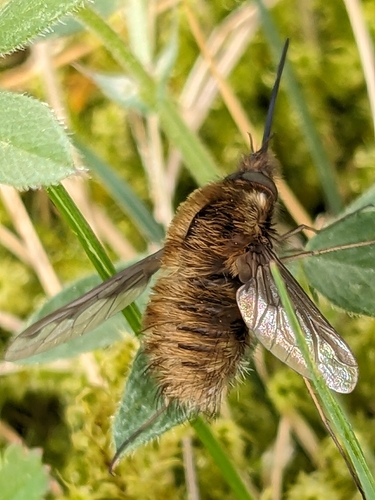
Heterostylum robustum

Daily sighting probability <5% · Rare
at Phoenix

In 3 days ~10% in a week ~30%

14 Verified sightings at Phoenix
April Best month

About the Bomber Fly

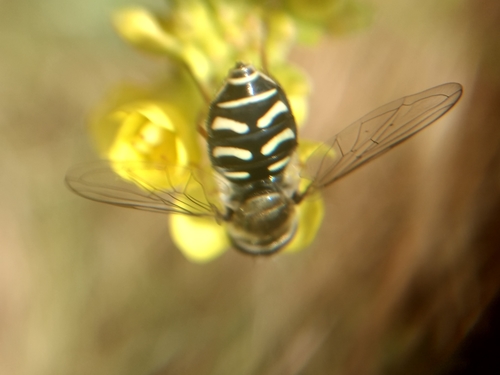
Heterostylum robustum, the bomber fly, s a species of bee fly belonging to the Bombyliidae family. It is found in southwestern Canada, most of the western United States, and Mexico. It is a bomber fly, parasitizing bees and wasps by launching its eggs into their nests. It is the principal parasite of the alkali bee Nomia melanderi, an important alfalfa pollinator across Washington, Oregon, Idaho, and Wyoming. Other hosts of the fly include solitary bees such as Nomia nevadensis bakeri, Dieunomia triangulifera, Calliopsis anthidia, Nomia scutellaris, and Halictus rubicundus.

The eggs of H. robustum are 1.2 mm long, 0.7 mm wide, oval-shaped, and tapered on each end. They have a coating of mucus to which soil particles adhere. In the laboratory, the eggs take between about 8 and 11 days to incubate. Like the eggs of ground-nesting bees, they are laid by adults emerging in spring before the beginning of winter.

The development of the larvae of H. robustum proceeds through four moults. First stage larvae are nearly-white planidia, very active and about 1.6 mm long. They have three pairs of thoracic bristles, one long pair of caudal... Wikipedia →
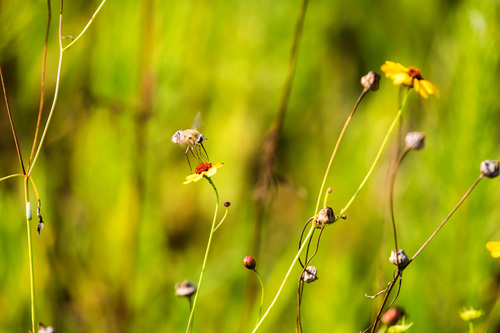
Global Distribution

Parks Where Found

# Park Country Daily sighting probability

More parks will be added in future updates.

Cities Where Found

# City Country Daily sighting probability
1 Phoenix 🇺🇸 United States
<5%
2 San Diego 🇺🇸 United States
<5%

Before you go

What are the chances of seeing a Bomber Fly in Phoenix?

Rare

Under 5% of wildlife watchers report a Bomber Fly sighting in Phoenix on a given day, based on 14 verified sightings from GBIF citizen-science data. It is the 126th most-seen of the 264 insects we can rate there. Over three days the chance rises to about 10%, and over a week to about 30%, if each day is a fresh chance.

When is the best time to see a Bomber Fly in Phoenix?

April and May

In those months about 10% of wildlife watchers report a Bomber Fly in Phoenix on a given day, against under 5% in June to March, the lowest months. Those are among Phoenix's driest months, with about 5 mm of rain a month against 35 mm in January.

Is Phoenix the best place to see a Bomber Fly?

Yes

Of the 2 cities where we can rate Bomber Fly sightings, Phoenix has the highest daily chance: under 5%. Next come San Diego (United States, under 5%).

Where does the Bomber Fly sighting chance come from?

GBIF citizen-science records

It is estimated from how often the Bomber Fly is recorded against all the insects logged in Phoenix (14 verified sightings), calibrated against known sighting rates. Figures are rounded to the nearest 10% because citizen-science data supports honest approximations, not decimals, and months with records from fewer than five people show "—". How it works.

← Back to Phoenix