

Large Creosote Gall Midge

Large Creosote Gall Midge

Asphondylia auripila

Daily sighting probability ~10% · With luck
at Phoenix

In 3 days ~30% in a week ~50%

78 Verified sightings at Phoenix
716 In all 4 parks From 2019 to 2026
November Best month
☀️ Diurnal When it's spotted

About the Large Creosote Gall Midge

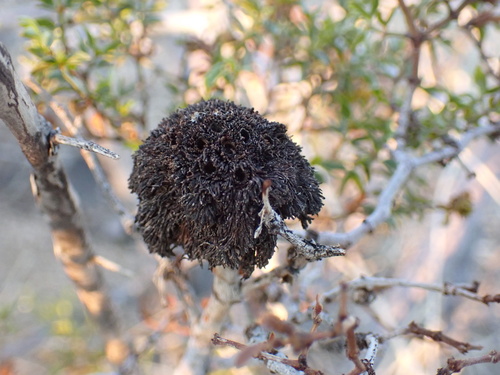
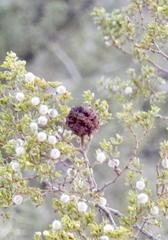
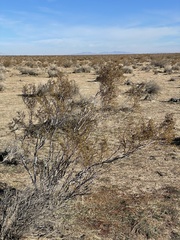
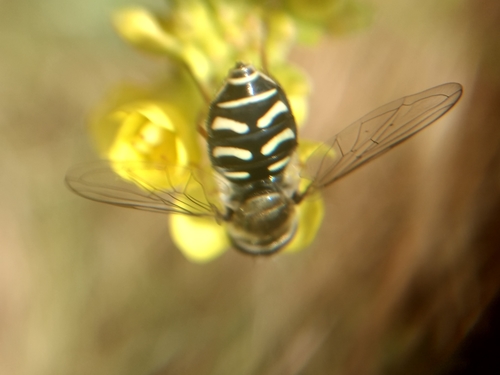
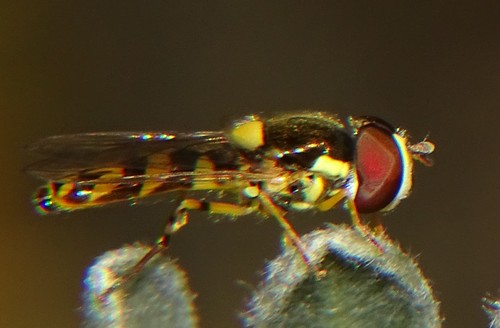
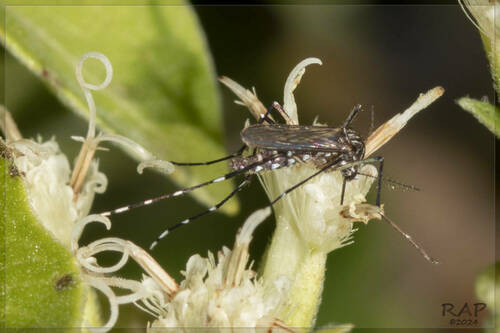
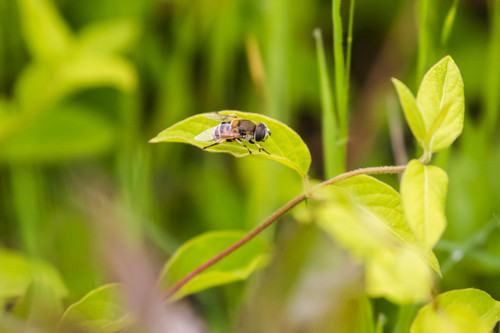
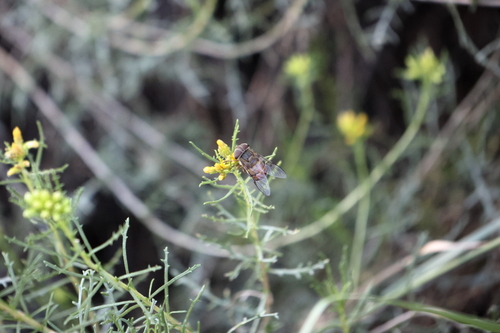
Asphondylia auripila, the large creosote gall midge, is a species of gall midge in the family Cecidomyiidae. This species utilizes creosote bushes as host plants for forming galls. This species of midge can be found in southwestern North America, spanning around U.S. and Mexico states such as California, Nevada, Arizona, Utah, New Mexico, Texas, Sonora, Chihuahua, Baja California, and Baja California Sur. The habitat of this species is based in deserts, spanning from the Mojave Desert to the Baja California Desert and Chihuahuan Desert of Mexico. Adults grow around 4 millimeters in length and appear brown-orange in coloration, but can be difficult to tell apart from other species due to looking morphologically similar. The galls of this midge can be identified by their spherical shape, bushy/leafy appearance, and green coloration for developing midges. Galls begin to turn brown after fully developed midges emerge. These midges create galls when females utilize their ovipositor to insert eggs into the host plant along with a fungal spore from the mycangia (A specialized body part used for transporting fungi). This fungi causes the plant to begin growing a gall while the fungal mycelium grows to line the inside of the gall. The eggs inside then hatch and the larvae feed on the mycelium before eventually developing into adults and emerge from the gall. The galls do not appear to cause the host plant any harm. The emergence of adults is timed with the host plants periods of growth associated with winter, spring, or summer rain fall. Wikipedia →

Global Distribution

Parks Where Found

# Park Country Daily sighting probability
1 Death Valley National Park 🇺🇸 United States
~60%
2 Joshua Tree National Park 🇺🇸 United States
~40%
3 Big Bend National Park 🇺🇸 United States
~20%
4 Saguaro National Park 🇺🇸 United States
~20%

Cities Where Found

# City Country Daily sighting probability
1 Phoenix 🇺🇸 United States
~10%
2 Las Vegas 🇺🇸 United States
~10%
3 Mesa 🇺🇸 United States
~10%

Before you go

What are the chances of seeing a Large Creosote Gall Midge in Phoenix?

With luck

About 10% of wildlife watchers report a Large Creosote Gall Midge sighting in Phoenix on a given day, based on 78 verified sightings from GBIF citizen-science data. It is the 30th most-seen of the 264 insects we can rate there. Over three days the chance rises to about 30%, and over a week to about 50%, if each day is a fresh chance.

When is the best time to see a Large Creosote Gall Midge in Phoenix?

November and December

In those months about 20% of wildlife watchers report a Large Creosote Gall Midge in Phoenix on a given day, against under 5% in May and June, the lowest months.

What time of day is best to see a Large Creosote Gall Midge?

Between 11 am and 2 pm

Across all the parks we cover, that three-hour window holds the most Large Creosote Gall Midge sightings with a recorded time, and about 9 in 10 of them come between 6 am and 6 pm: it is a daytime animal.

Is Phoenix the best place to see a Large Creosote Gall Midge?

Yes

Of the 3 cities where we can rate Large Creosote Gall Midge sightings, Phoenix has the highest daily chance: about 10%. Next come Las Vegas (United States, about 10%) and Mesa (United States, about 10%).

Which relatives of the Large Creosote Gall Midge live in Phoenix?

Same order: Diptera

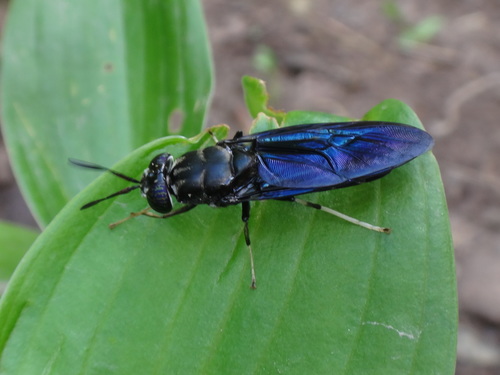
The closest relatives of the Large Creosote Gall Midge that you can see in Phoenix (order Diptera, Flies) are Black Soldier Fly (about 10%), Margined Calligrapher (about 10%) and Large-Tailed Aphideater (about 10%), with each one's daily chance of a sighting.

Where does the Large Creosote Gall Midge sighting chance come from?

GBIF citizen-science records

It is estimated from how often the Large Creosote Gall Midge is recorded against all the insects logged in Phoenix (78 verified sightings), calibrated against known sighting rates. Figures are rounded to the nearest 10% because citizen-science data supports honest approximations, not decimals, and months with records from fewer than five people show "—". How it works.

← Back to Phoenix