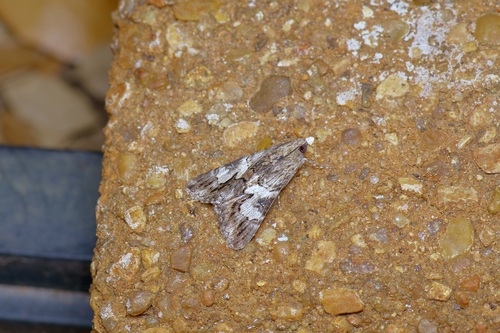
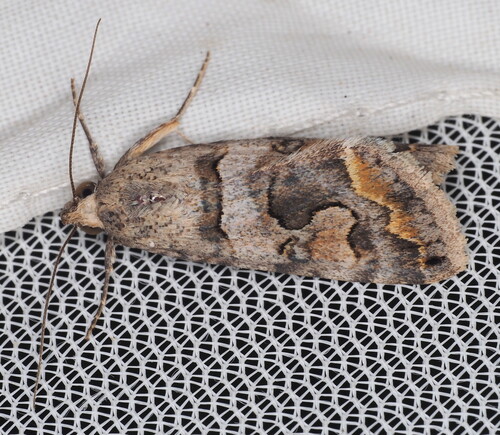
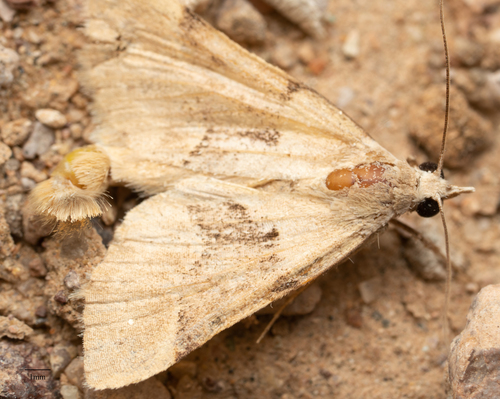
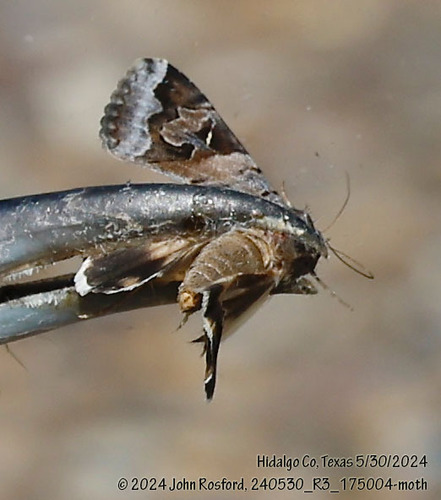
Elousa mima silhouette

Silhouette: Zyoute (modified) · PhyloPic

Daily sighting probability <5% · Rare
at Phoenix

In 3 days ~10% in a week ~20%

7 Verified sightings at Phoenix
29 In all 2 parks From 2019 to 2026
July Best month
🌙 Nocturnal When it's spotted

About the Elousa mima

Heteranassa is a monotypic genus of moths in the family Erebidae described by J. B. Smith in 1899. Its only species, Heteranassa mima, was first described by Leon F. Harvey in 1876. It is found in warm, arid habitats in North America from California to Texas, northward to Oklahoma, and south as far as Oaxaca in Mexico.

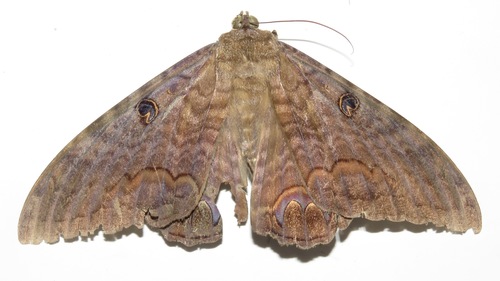
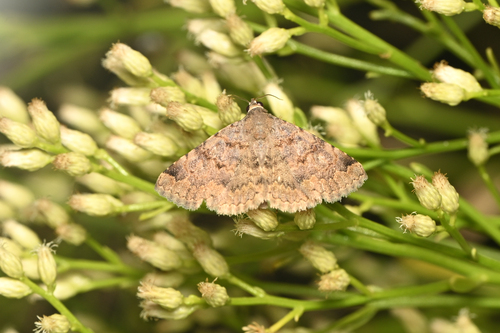
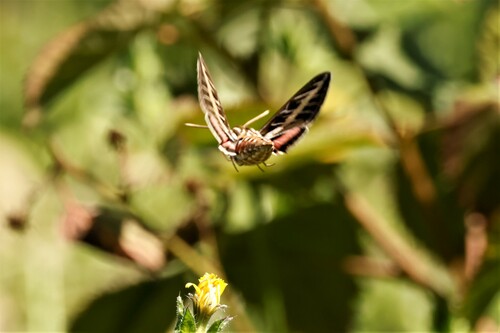
The length of the forewings is 9.7–14.9 mm for males and 11–16.7 mm for females. The antemedial line on the forewings is pointed apically on the anal vein and the medial line is black, pointed mesially on the radial, the cubital, and anal veins. The post medial line is black, outlining the apical half of the discal area and the subterminal line is brown, jagged, bordering the lighter colored terminal area. The terminal line is scalloped outwardly at the termini of the veins and the apical margin is traced in lighter coloration. The reniform spot markings range from a white spot, to a thin white vertical dash, to a barely visible dash, or black. The hindwing ground color is gray white, darker shading distally. The terminal line is black, scalloped apically at the termini of the veins. There are multiple generations per year, with adults on wing year round.

The larvae feed on Prosopis and Acacia species. Wikipedia →

Global Distribution

Parks Where Found

# Park Country Daily sighting probability
1 Big Bend National Park 🇺🇸 United States
~10%
2 Saguaro National Park 🇺🇸 United States
<5%

Cities Where Found

# City Country Daily sighting probability
1 Mesa 🇺🇸 United States
<5%
2 Austin 🇺🇸 United States
<5%
3 Phoenix 🇺🇸 United States
<5%

Before you go

What are the chances of seeing an Elousa mima in Phoenix?

Rare

Under 5% of wildlife watchers report an Elousa mima sighting in Phoenix on a given day, based on 7 verified sightings from GBIF citizen-science data. It is the 197th most-seen of the 264 insects we can rate there. Over three days the chance rises to about 10%, and over a week to about 20%, if each day is a fresh chance.

When is the best time to see an Elousa mima in Phoenix?

June and July

In those months about 10% of wildlife watchers report an Elousa mima in Phoenix on a given day, against under 5% in August to May, the lowest months.

What time of day is best to see an Elousa mima?

Between 8 and 11 pm

Across all the parks we cover, that three-hour window holds the most Elousa mima sightings with a recorded time, and about 8 in 10 of them come between 6 pm and 6 am: it is mostly seen at night.

Is Phoenix the best place to see an Elousa mima?

Among the best

Of the 3 cities where we can rate Elousa mima sightings, Phoenix ranks 3rd at under 5%, level with the leaders once rounded. The best odds are in Mesa (United States, under 5%) and Austin (United States, under 5%).

Which relatives of the Elousa mima live in Phoenix?

Same family: Erebidae

The closest relatives of the Elousa mima that you can see in Phoenix (family Erebidae, Underwing, Tiger, Tussock, and Allied Moths) are Merry Graphic Moth (about 10%) and Royal Poinciana Graphic (about 10%), with each one's daily chance of a sighting.

Where does the Elousa mima sighting chance come from?

GBIF citizen-science records

It is estimated from how often the Elousa mima is recorded against all the insects logged in Phoenix (7 verified sightings), calibrated against known sighting rates. Figures are rounded to the nearest 10% because citizen-science data supports honest approximations, not decimals, and months with records from fewer than five people show "—". How it works.

← Back to Phoenix