Lesser Triceratops Beetle

Lesser Triceratops Beetle

Hemiphileurus illatus

Daily sighting probability ~10% · With luck
at Phoenix

In 3 days ~20% in a week ~40%

51 Verified sightings at Phoenix
17 In 1 park From 2019 to 2026
August Best month
🌙 Nocturnal When it's spotted

About the Lesser Triceratops Beetle

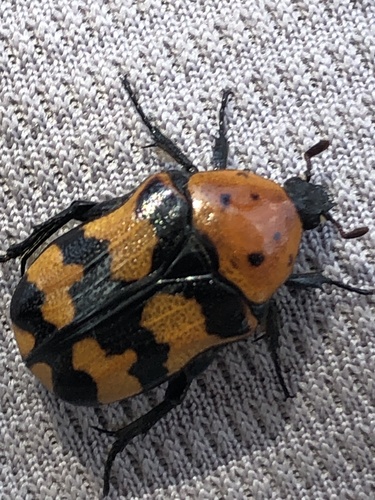
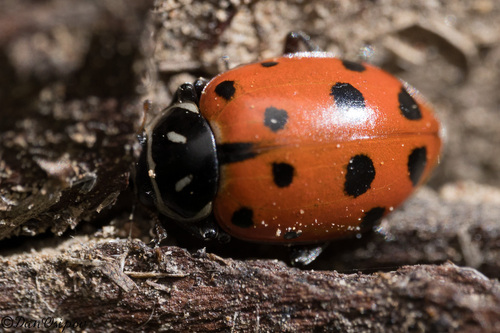
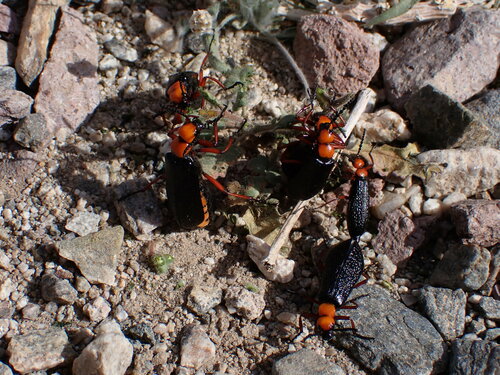
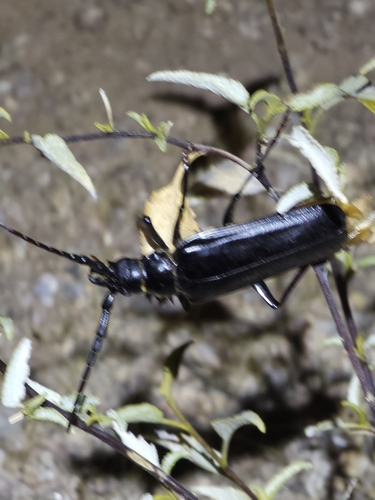
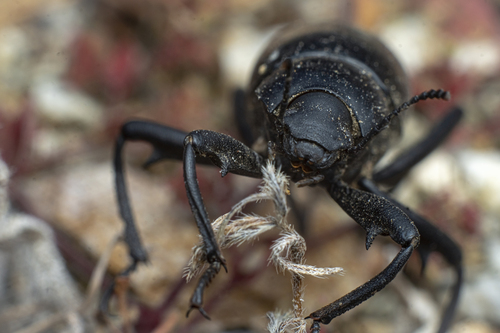
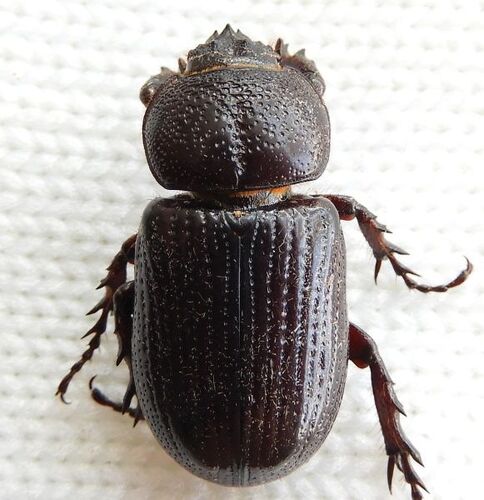
Hemiphileurus illatus is a species of rhinoceros beetle in the family Scarabaeidae. Its range is the Southwestern United States. Its common name is the lesser triceratops beetle. As adults, this species is black with a pitted thorax and elytra. All six legs have short spines. They are 19 - 25 mm long.

Both sexes have a pair of horns but the females' are much smaller, more like bumps or short nubs. Unlike their close cousins, Phileurus truncatus, neither sex has the notable third horn. As larvae, they have cream-colored bodies and reddish-brown heads. They have a C-shaped posture, and move on their sides when above ground.

As pupae, they are exarate with the ability to move their abdominal segments. As pupation progresses, their joints, faces, and tips of their legs change from tan to dark brown. H. illatus is found in the Southwestern United States, primarily Arizona, Nevada, New Mexico, and California. It is found in urban and rural areas.

Adults are detritivores and scavengers. They eat fresh or rotting plant matter and other dead insects. In captivity, they will eat freshly-killed mealworms, fruits, and vegetables.They are... Wikipedia →
Global Distribution

Parks Where Found

# Park Country Daily sighting probability
1 Saguaro National Park 🇺🇸 United States
~10%

More parks will be added in future updates.

Cities Where Found

# City Country Daily sighting probability
1 Mesa 🇺🇸 United States
~10%
2 Phoenix 🇺🇸 United States
~10%

Before you go

What are the chances of seeing a Lesser Triceratops Beetle in Phoenix?

With luck

About 10% of wildlife watchers report a Lesser Triceratops Beetle sighting in Phoenix on a given day, based on 51 verified sightings from GBIF citizen-science data. It is the 45th most-seen of the 264 insects we can rate there. Over three days the chance rises to about 20%, and over a week to about 40%, if each day is a fresh chance.

When is the best time to see a Lesser Triceratops Beetle in Phoenix?

July and August

In those months about 20% of wildlife watchers report a Lesser Triceratops Beetle in Phoenix on a given day, against under 5% in October to April, the lowest months. Those are among Phoenix's wettest months, with about 35 mm of rain a month against almost none in June.

What time of day is best to see a Lesser Triceratops Beetle?

Between 8 and 11 pm

Across all the parks we cover, that three-hour window holds the most Lesser Triceratops Beetle sightings with a recorded time, and about 7 in 10 of them come between 6 pm and 6 am: it is mostly seen at night.

Is Phoenix the best place to see a Lesser Triceratops Beetle?

Among the best

Of the 2 cities where we can rate Lesser Triceratops Beetle sightings, Phoenix ranks 2nd at about 10%, level with the leaders once rounded. The best odds are in Mesa (United States, about 10%).

Where does the Lesser Triceratops Beetle sighting chance come from?

GBIF citizen-science records

It is estimated from how often the Lesser Triceratops Beetle is recorded against all the insects logged in Phoenix (51 verified sightings), calibrated against known sighting rates. Figures are rounded to the nearest 10% because citizen-science data supports honest approximations, not decimals, and months with records from fewer than five people show "—". How it works.

← Back to Phoenix