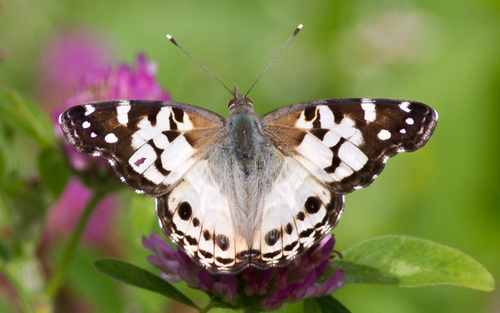
About the Satyr Comma
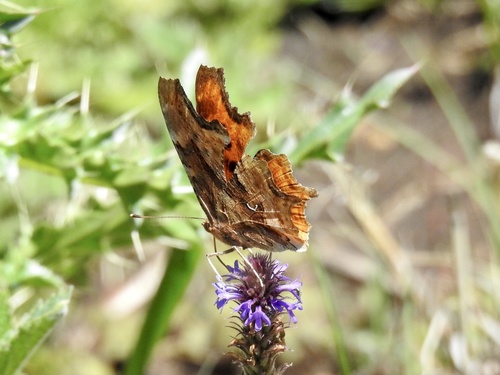
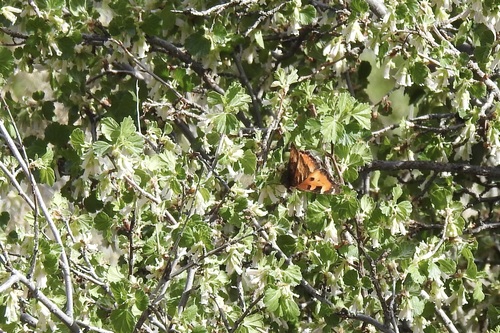
Polygonia satyrus, the satyr comma, is a North American butterfly of the nymphalid family. It is primarily found in western Canada, where it is locally common. It bears a resemblance to Polygonia comma, the eastern comma, with which it is frequently confused.
Polygonia satyrus was first described by William Henry Edwards in 1869 from specimens collected in Colorado. Several names that were historically treated as distinct taxa, including P. marsyas, P. chrysoptera, and P. hollandi, have subsequently been regarded as synonyms of P. satyrus. Some authors previously considered marsyas to represent a distinct Pacific Northwestern subspecies, but breeding experiments and distributional evidence suggested that it represents a dark form of P. satyrus rather than a separate taxon.
Morphological studies have suggested a close relationship between P. satyrus and the eastern comma (Polygonia comma). Similarities in genital morphology, larval biology, host plant use, and wing pattern have led some authors to regard P. satyrus as a western subspecies of P. comma.
Polygonia satyrus belongs to the tribe Nymphalini within the family Nymphalidae. Phylogenetic studies place the species... Wikipedia →