About the African Thief Ant
Carebara vidua is a species of ant in the subfamily Myrmicinae. The species is native to East Africa and is particularly associated with the Lake Victoria region of Kenya. It is traditionally consumed as food and used in ethnomedicine among some local communities. Due to habitat destruction and over-exploitation, it has been described as locally endangered.
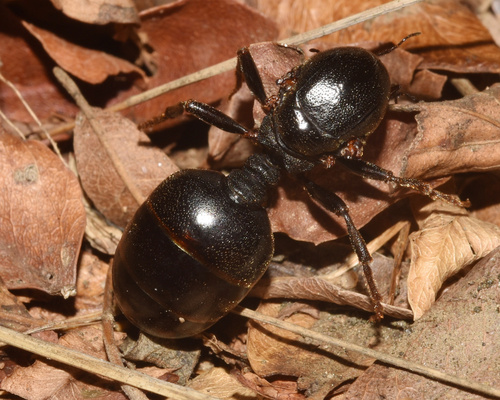
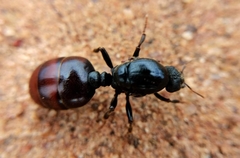
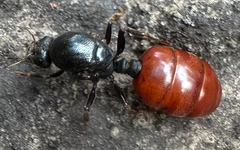
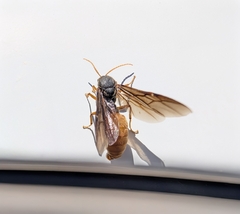
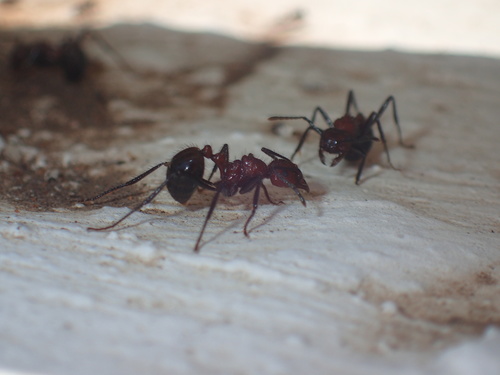
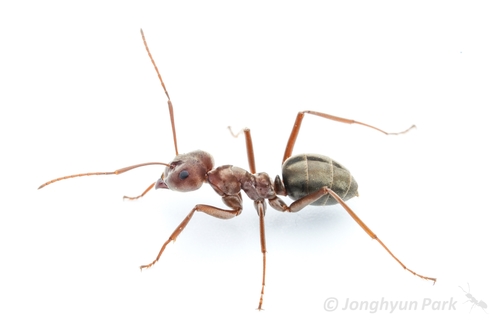
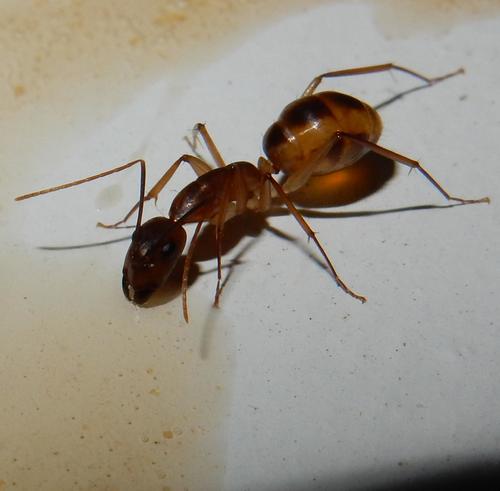
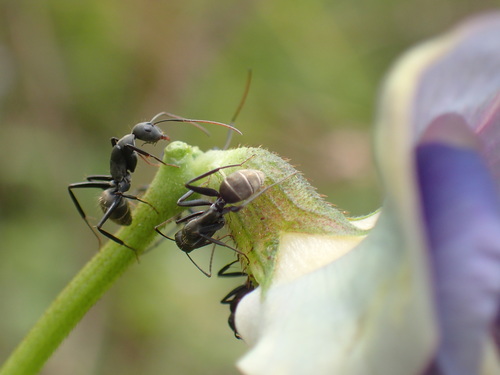
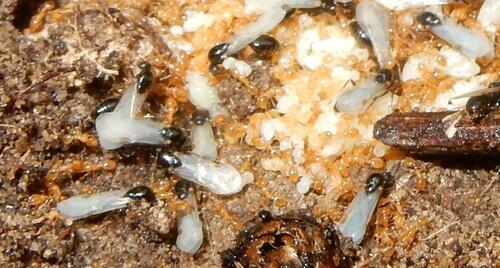
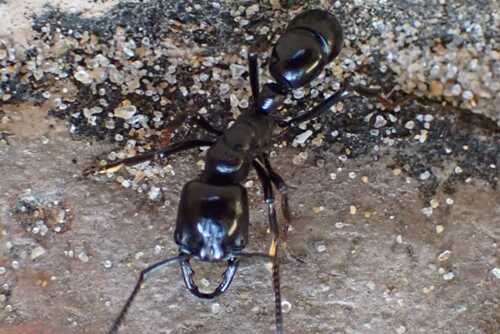
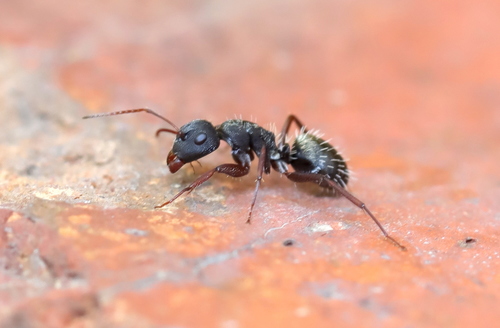
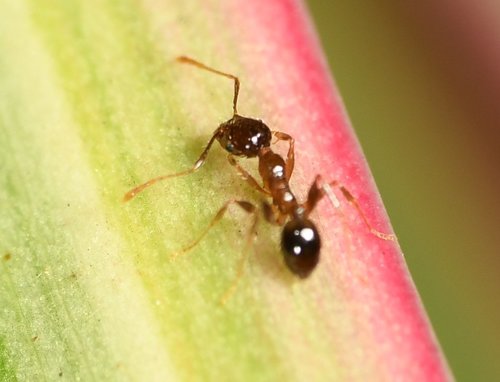
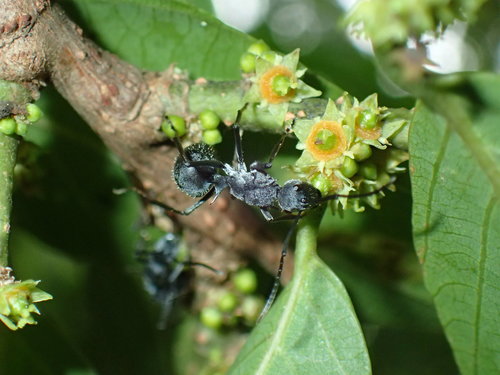
Adult female Carebara vidua are relatively large ants, measuring approximately 20–25 mm in length, with a shiny black body and a conspicuously enlarged, rounded abdomen. Females are winged during the reproductive phase. Males are smaller, approximately 10 mm long, winged, and have a paler abdomen. Worker ants are much smaller, typically 3–5 mm in length, wingless, and possess a functional sting. Like other hymenopterans, the species has chewing mouthparts, compound eyes, three ocelli, and segmented antennae.
Carebara vidua occurs in the Lake Victoria basin of western Kenya, including Kisumu and Siaya counties. The species constructs extensive subterranean colonies consisting of interconnected chambers and galleries, often located under soil, rocks, or human structures. Colonies are... Wikipedia →