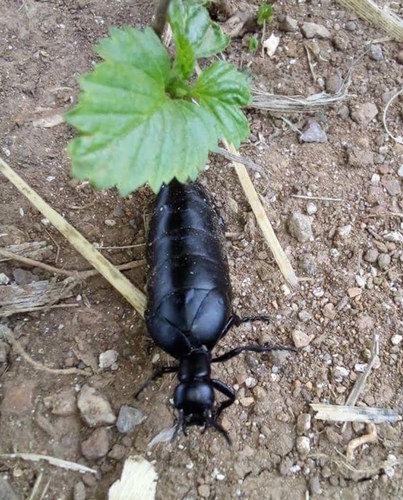
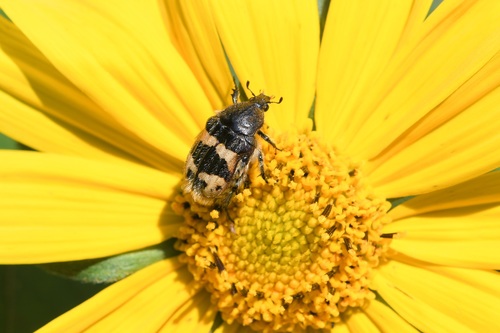

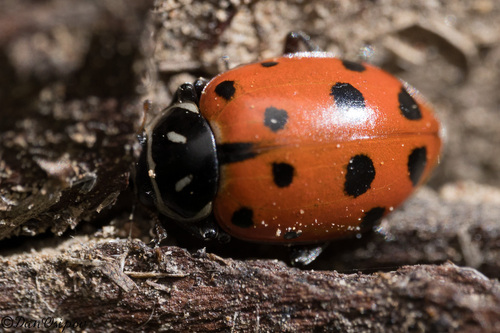
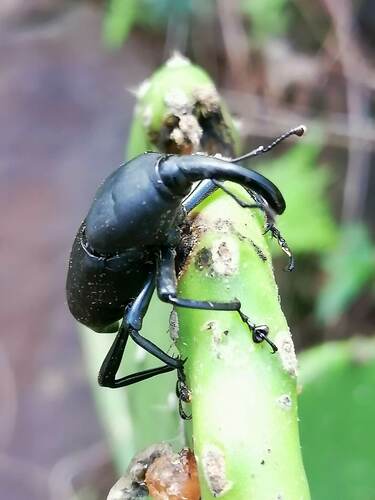
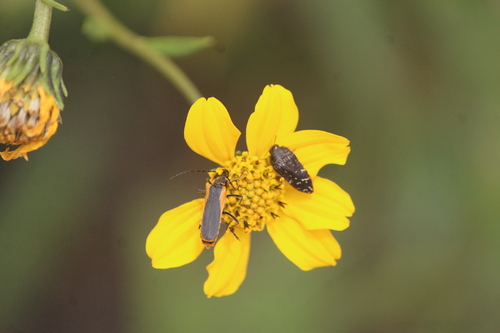
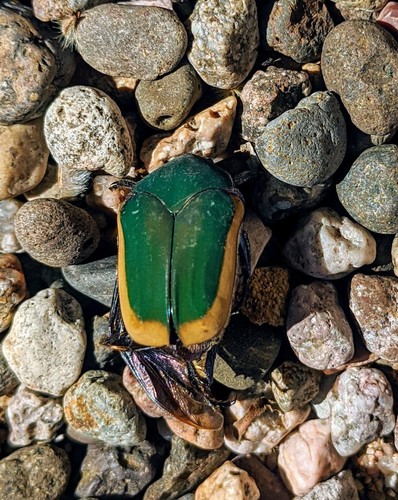
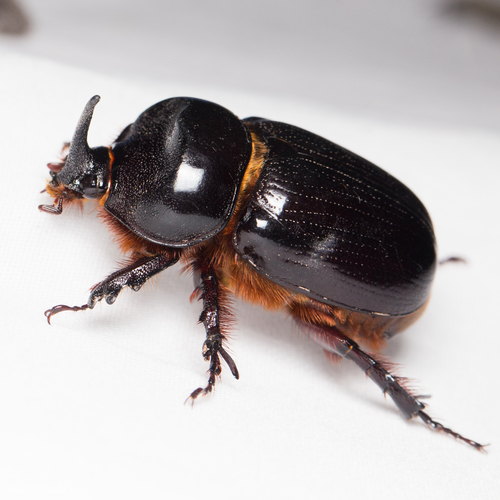
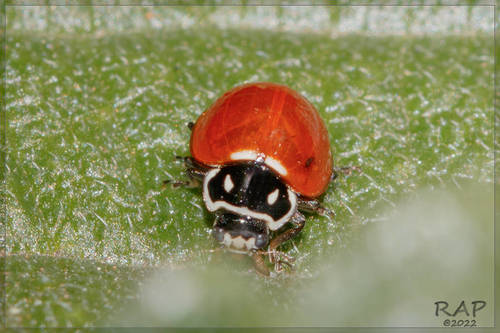
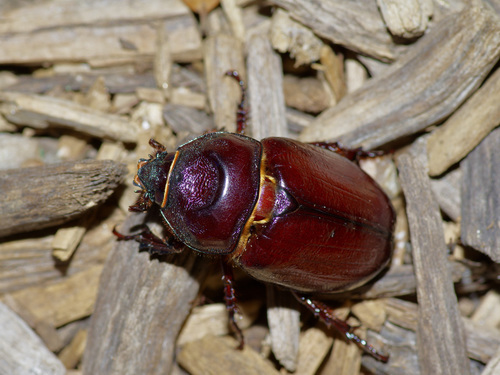
Meloe laevis
Daily sighting probability ~10% · With luck
at Puebla

In 3 days ~20% in a week ~50%

12 Verified sightings at Puebla
July Best month

About the Meloe laevis

Meloe laevis, the oil beetle, is a species of blister beetle in the family Meloidae. It is found in the Caribbean, Central America, and North America. Eggs normally hatch during the summer. What the larvae do upon hatching, as with all other Meloe species, is remarkable, in that they are hypermetamorphic. Tiny, freshly hatched larvae, bear the special name of "triungulin," or the more general term planidium. The triungulin emerges from the ground, climbs onto a flower, and waits for a bee. When a bee arrives the triungulin climbs aboard. If the bee is a male, the larva accompanies his bee until it mates, when the triungulin transfers onto the female. If the triungulin's transport bee was a female in the first place, however, unwittingly the female bee carries the larva to her underground nest. In the nest, the triungulin morphs into a grub-like "couch potato" and feeds on the bee's developing larvae as well as the food provided to the bee larvae. Eventually the developing larva metamorphoses into a pupa, which later metamorphoses into an adult. Each Meloe species may attack only a single bee species or genus, or various species.

Courtship... Wikipedia →

Global Distribution

Parks Where Found

# Park Country Daily sighting probability

More parks will be added in future updates.

Cities Where Found

# City Country Daily sighting probability
1 Puebla 🇲🇽 México
~10%
2 Mexico City 🇲🇽 México
<5%

Before you go

What are the chances of seeing a Meloe laevis in Puebla?

With luck

About 10% of wildlife watchers report a Meloe laevis sighting in Puebla on a given day, based on 12 verified sightings from GBIF citizen-science data. It is the 60th most-seen of the 118 insects we can rate there. Over three days the chance rises to about 20%, and over a week to about 50%, if each day is a fresh chance.

When is the best time to see a Meloe laevis in Puebla?

July

In that month about 30% of wildlife watchers report a Meloe laevis in Puebla on a given day, against under 5% in August to May, the lowest months. That is one of Puebla's wettest months, with about 140 mm of rain against 10 mm in December.

Is Puebla the best place to see a Meloe laevis?

Yes

Of the 2 cities where we can rate Meloe laevis sightings, Puebla has the highest daily chance: about 10%. Next come Mexico City (México, under 5%).

Where does the Meloe laevis sighting chance come from?

GBIF citizen-science records

It is estimated from how often the Meloe laevis is recorded against all the insects logged in Puebla (12 verified sightings), calibrated against known sighting rates. Figures are rounded to the nearest 10% because citizen-science data supports honest approximations, not decimals, and months with records from fewer than five people show "—". How it works.

← Back to Puebla