Daily sighting probability ~10% · With luck
at Quito

In 3 days ~30% in a week ~60%

17 Verified sightings at Quito
December Best month

About the Pepsis grossa

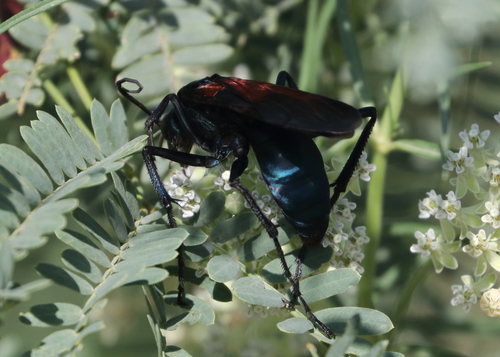
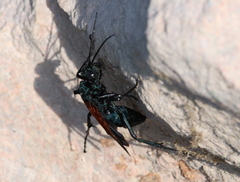
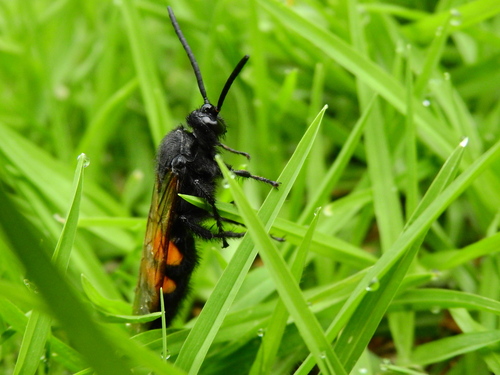
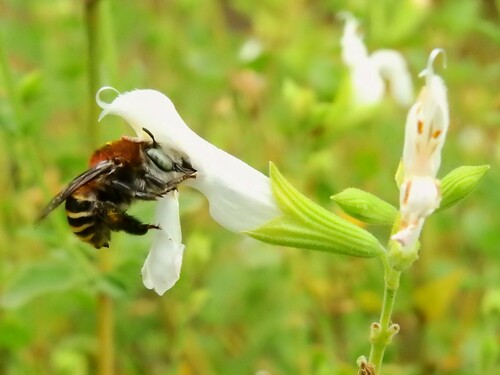
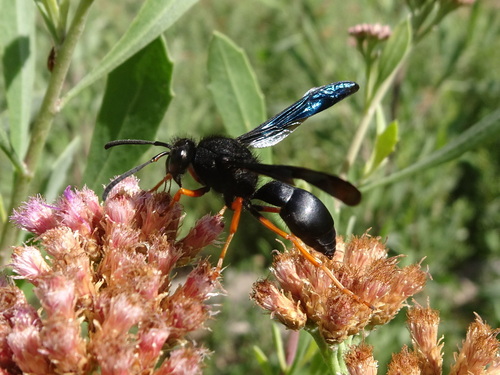
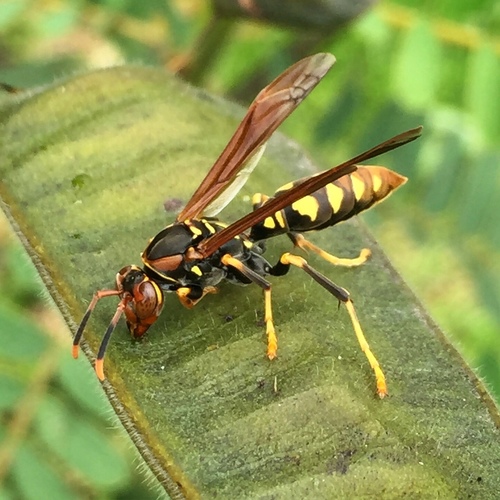
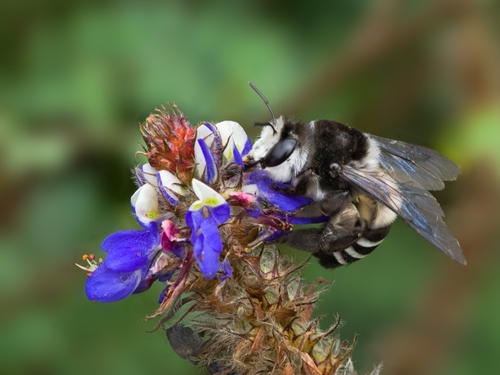
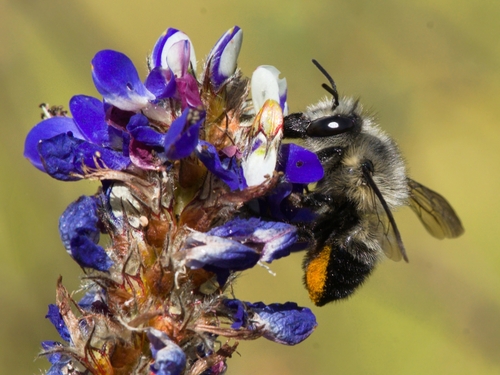
Pepsis grossa is a species of very large pepsine spider wasp from the southern part of North America, south to northern South America. They prey on tarantula spiders, giving rise to the name tarantula hawk for the wasps in the genus Pepsis and the related Hemipepsis. Only the females hunt, so only they are capable of delivering a sting, which is considered the second most painful of any insect sting, scoring 4.0 on the Schmidt sting pain index compared to the bullet ant's 4.0+. It is the state insect of New Mexico. The colour morphs are the xanthic orange-winged form and the melanic black winged form. In northern South America, a third form, known as "lygamorphic", has a dark base to the wings which have dark amber median patches and a pale tip.

Due in part to confusion over the distinctness of various colour forms, until 2002 this species was known by the name Pepsis formosa, including a subspecies P. formosa pattoni, but C.R. Vardy synonymized both forms of P. formosa into P. grossa.

The three colour forms are normally geographically separated; the melanic form occurs in the western part of the North American range, the xanthic form predominates over... Wikipedia →

Global Distribution

Parks Where Found

# Park Country Daily sighting probability

More parks will be added in future updates.

Cities Where Found

# City Country Daily sighting probability
1 Quito 🇪🇨 Ecuador
~10%

Before you go

What are the chances of seeing a Pepsis grossa in Quito?

With luck

About 10% of wildlife watchers report a Pepsis grossa sighting in Quito on a given day, based on 17 verified sightings from GBIF citizen-science data. It is the 40th most-seen of the 83 insects we can rate there. Over three days the chance rises to about 30%, and over a week to about 60%, if each day is a fresh chance.

When is the best time to see a Pepsis grossa in Quito?

March, June, September and December–January

In those months about 20% of wildlife watchers report a Pepsis grossa in Quito on a given day, against under 5% in April and July–August, the lowest months.

Where else can you see a Pepsis grossa?

Only Quito, in our data

Quito is the only city on Wallace's Line with enough records to rate Pepsis grossa sightings: about 10% of wildlife watchers there report one on a given day.

Which relatives of the Pepsis grossa live in Quito?

Same order: Hymenoptera

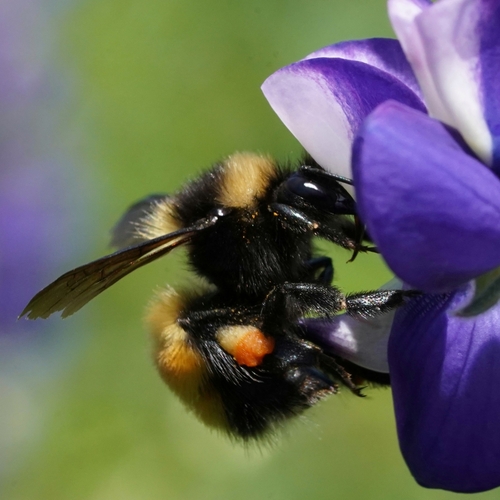
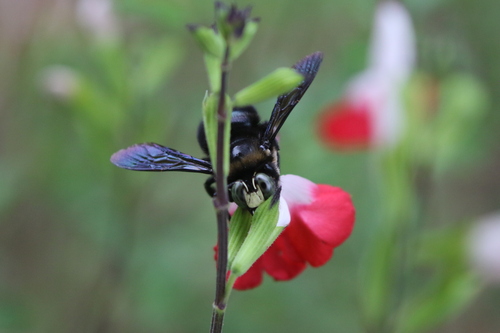
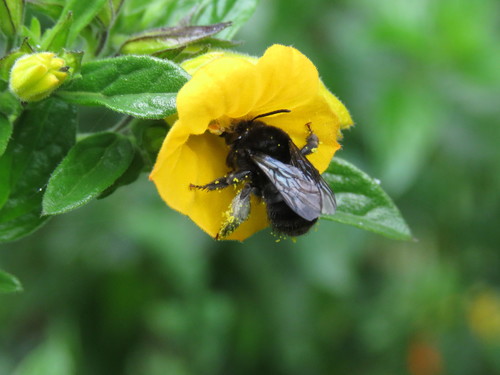
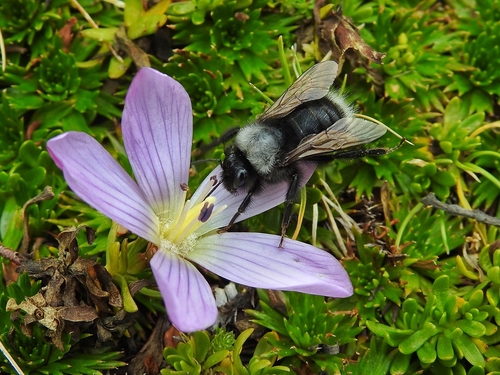
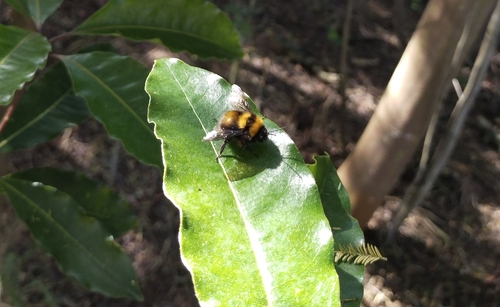
The closest relatives of the Pepsis grossa that you can see in Quito (order Hymenoptera, Ants, Bees, Wasps, and Sawflies) are Bombus robustus (about 40%), Green-Tailed Carpenter (about 30%) and Andean Black Longhorn (about 30%), with each one's daily chance of a sighting.

Where does the Pepsis grossa sighting chance come from?

GBIF citizen-science records

It is estimated from how often the Pepsis grossa is recorded against all the insects logged in Quito (17 verified sightings), calibrated against known sighting rates. Figures are rounded to the nearest 10% because citizen-science data supports honest approximations, not decimals, and months with records from fewer than five people show "—". How it works.

← Back to Quito