

Banded Ash Borer

Banded Ash Borer

Neoclytus caprea

Daily sighting probability <5% · Rare
at Salt Lake City

In 3 days ~10% in a week ~20%

5 Verified sightings at Salt Lake City
March Best month

About the Banded Ash Borer

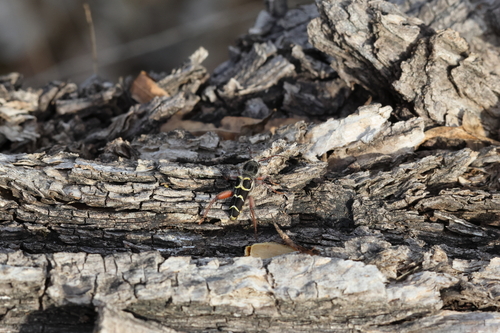
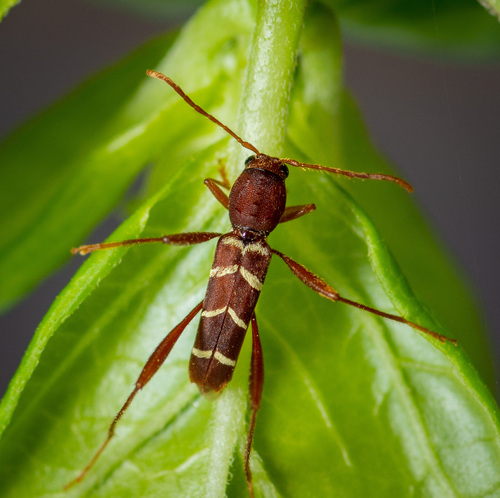
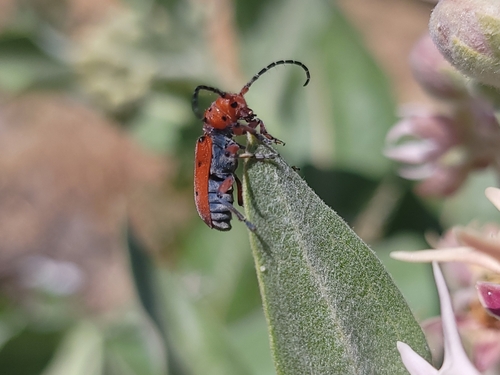
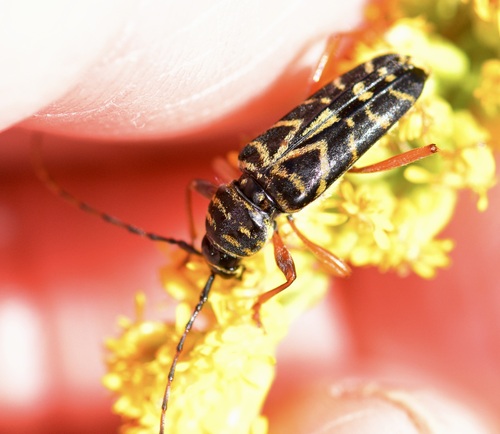
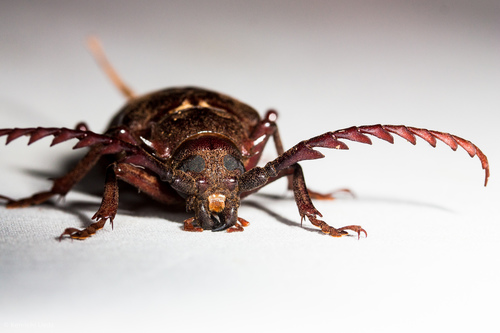
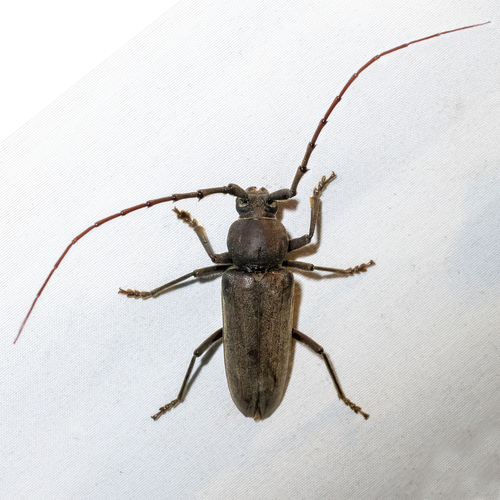
Neoclytus caprea, commonly known as the banded ash borer, is a species of beetle in the family Cerambycidae. It feeds on the sapwood of ash, oak, and hickory. It often emerges indoors from firewood; logs may become infested within 20 days of felling in summer. The banded ash borer exhibits sexual dimorphism, as the female is considerably larger than the male and has yellow and black elytra coloring rather than the male's white and black coloring. It produces one generation a year.

The flight period of the banded ash borer, which is triggered by seasonal phenological mechanisms, prevents the species from being cross-attracted to sympatric species with similar or identical pheromone chemical compositions. N. caprea emerges and flies from its host species in early spring, much earlier than species that possess 3R-ketol compounds in their chemical composition, resulting in negligible overlap between flight periods of sympatric species. This effectively isolates the banded ash borer, preventing the possibility of cross attraction.

Neoclytus caprea is identified colloquially by the name banded ash borer in reference to one of its common host plants, the ash tree, which... Wikipedia →

Global Distribution

Parks Where Found

# Park Country Daily sighting probability

More parks will be added in future updates.

Cities Where Found

# City Country Daily sighting probability
1 Salt Lake City 🇺🇸 United States
<5%

Before you go

What are the chances of seeing a Banded Ash Borer in Salt Lake City?

Rare

Under 5% of wildlife watchers report a Banded Ash Borer sighting in Salt Lake City on a given day, based on 5 verified sightings from GBIF citizen-science data. It is the 213th most-seen of the 242 insects we can rate there. Over three days the chance rises to about 10%, and over a week to about 20%, if each day is a fresh chance.

When is the best time to see a Banded Ash Borer in Salt Lake City?

March and April

In those months about 10% of wildlife watchers report a Banded Ash Borer in Salt Lake City on a given day, against under 5% in May to February, the lowest months.

Where else can you see a Banded Ash Borer?

Only Salt Lake City, in our data

Salt Lake City is the only city on Wallace's Line with enough records to rate Banded Ash Borer sightings: under 5% of wildlife watchers there report one on a given day.

Where does the Banded Ash Borer sighting chance come from?

GBIF citizen-science records

It is estimated from how often the Banded Ash Borer is recorded against all the insects logged in Salt Lake City (5 verified sightings), calibrated against known sighting rates. Figures are rounded to the nearest 10% because citizen-science data supports honest approximations, not decimals, and months with records from fewer than five people show "—". How it works.

← Back to Salt Lake City