Neotropical Deer Ked

Neotropical Deer Ked

Lipoptena mazamae

Daily sighting probability <5% · Rare
at San Antonio

In 3 days ~10% in a week ~20%

7 Verified sightings at San Antonio
January Best month

About the Neotropical Deer Ked

Lipoptena mazamae, the Neotropical deer ked, is a fly from the family Hippoboscidae. They are blood-feeding parasites of the white-tailed deer - Odocoileus virginianus in the southeastern United States and Central America, the red brocket deer - Mazama americana in Mexico to northern Argentina, and also an incidental parasite of domestic cattle, Cougars - Puma concolor, and man.

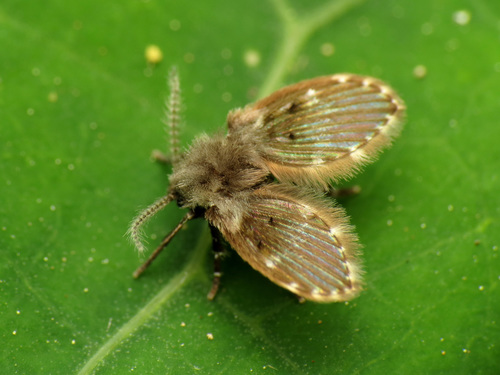
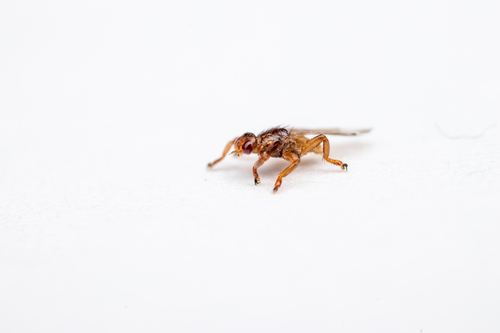
Deer keds are small brown, flattened flies. Females are slightly larger than males, with a body length of 3.5-4.5 mm for females 3 mm for males. They have a tough protective exoskeleton to prevent them from being crushed. They shed their wings upon finding a suitable host. As in all Hippoboscidae, both males and females are blood feeders.

They are often misidentified as ticks. The female fly will produce a single larva at a time, retaining the larva internally until it is ready to pupate. The larva feeds on the secretions of a milk gland in the uterus of the female. After three larval instars, a white pre-pupa which immediately forms a hard dark puparium. The pupa is usually deposited where the deer slept overnight. When the pupa has completed its pupation, a winged adult emerges and flies in search of a suitable host. On finding one, the fly sheds its wings and is permanently associated with the same host. This is typical of most members of the family Hippoboscidae.

L. mazamae are known to carry several species of the Bartonella bacterium, but it has not yet been positively proved whether they are active vectors of Bartonella infections, or just carry the bacterium as a by product of their blood feeding habits. Wikipedia →
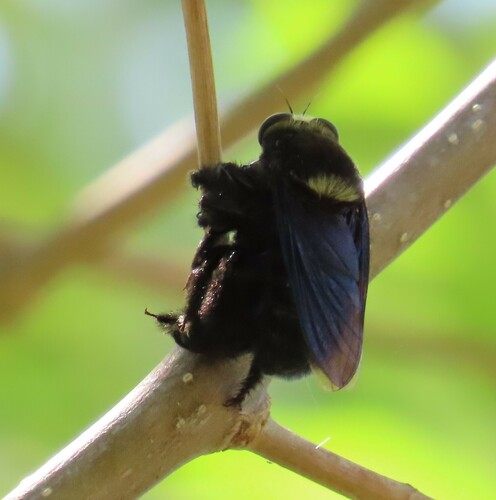
Global Distribution

Parks Where Found

# Park Country Daily sighting probability

More parks will be added in future updates.

Cities Where Found

# City Country Daily sighting probability
1 San Antonio 🇺🇸 United States
<5%
2 Austin 🇺🇸 United States
<5%

Before you go

What are the chances of seeing a Neotropical Deer Ked in San Antonio?

Rare

Under 5% of wildlife watchers report a Neotropical Deer Ked sighting in San Antonio on a given day, based on 7 verified sightings from GBIF citizen-science data. It is the 549th most-seen of the 697 insects we can rate there. Over three days the chance rises to about 10%, and over a week to about 20%, if each day is a fresh chance.

When is the best time to see a Neotropical Deer Ked in San Antonio?

January

In that month about 10% of wildlife watchers report a Neotropical Deer Ked in San Antonio on a given day, against under 5% in February to December, the lowest months.

Is San Antonio the best place to see a Neotropical Deer Ked?

Yes

Of the 2 cities where we can rate Neotropical Deer Ked sightings, San Antonio has the highest daily chance: under 5%. Next come Austin (United States, under 5%).

Which relatives of the Neotropical Deer Ked live in San Antonio?

Same order: Diptera

The closest relatives of the Neotropical Deer Ked that you can see in San Antonio (order Diptera, Flies) are Beelzebub Bee-Eater (about 10%), Oblique Streaktail (about 10%) and Margined Calligrapher (about 10%), with each one's daily chance of a sighting.

Where does the Neotropical Deer Ked sighting chance come from?

GBIF citizen-science records

It is estimated from how often the Neotropical Deer Ked is recorded against all the insects logged in San Antonio (7 verified sightings), calibrated against known sighting rates. Figures are rounded to the nearest 10% because citizen-science data supports honest approximations, not decimals, and months with records from fewer than five people show "—". How it works.

← Back to San Antonio