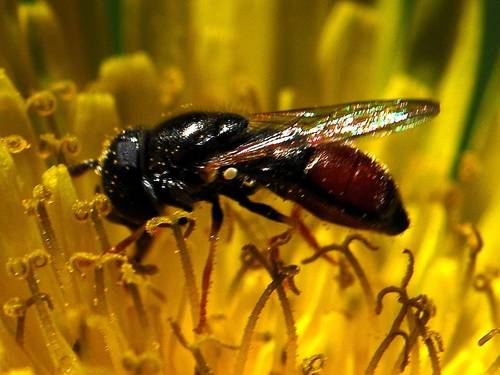
About the Bomber Fly
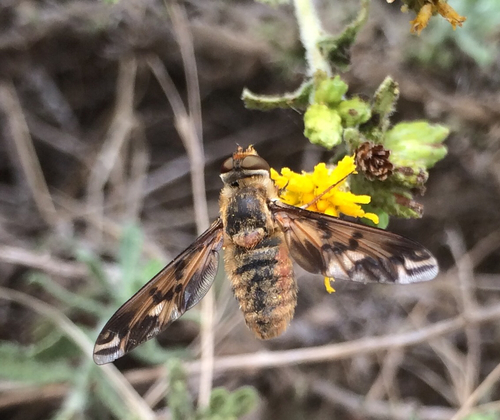
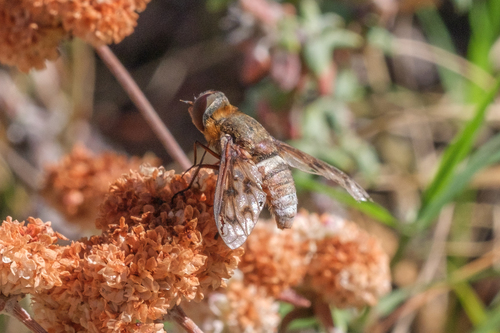
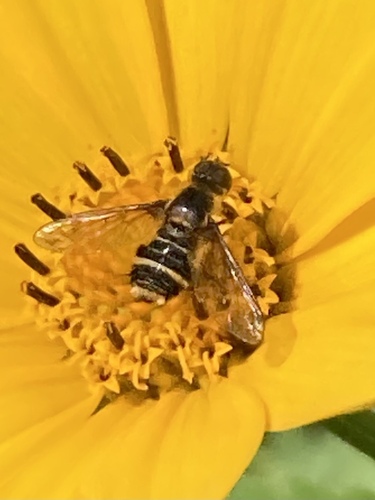
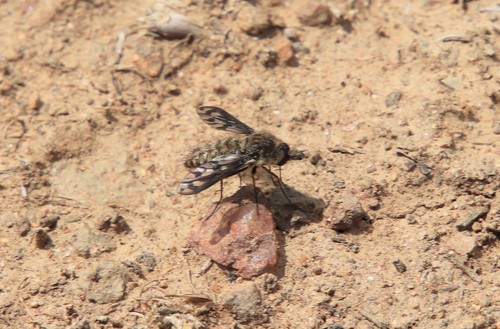
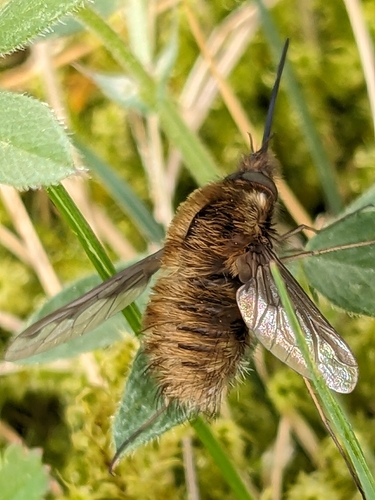
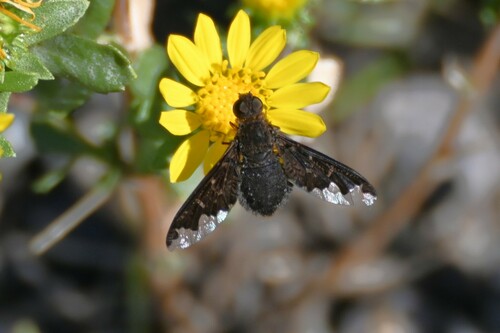
Heterostylum robustum, the bomber fly, s a species of bee fly belonging to the Bombyliidae family. It is found in southwestern Canada, most of the western United States, and Mexico. It is a bomber fly, parasitizing bees and wasps by launching its eggs into their nests. It is the principal parasite of the alkali bee Nomia melanderi, an important alfalfa pollinator across Washington, Oregon, Idaho, and Wyoming. Other hosts of the fly include solitary bees such as Nomia nevadensis bakeri, Dieunomia triangulifera, Calliopsis anthidia, Nomia scutellaris, and Halictus rubicundus.
The eggs of H. robustum are 1.2 mm long, 0.7 mm wide, oval-shaped, and tapered on each end. They have a coating of mucus to which soil particles adhere. In the laboratory, the eggs take between about 8 and 11 days to incubate. Like the eggs of ground-nesting bees, they are laid by adults emerging in spring before the beginning of winter.
The development of the larvae of H. robustum proceeds through four moults. First stage larvae are nearly-white planidia, very active and about 1.6 mm long. They have three pairs of thoracic bristles, one long pair of caudal... Wikipedia →