
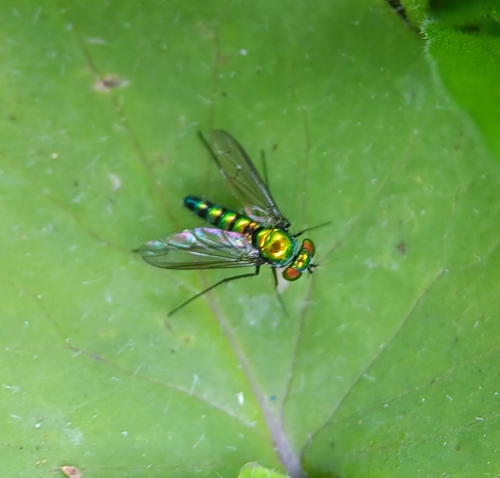
Golden-Tailed Beebandit

Golden-Tailed Beebandit

Mallophora fautrix

Daily sighting probability ~10% · With luck
at San Diego

In 3 days ~20% in a week ~40%

286 Verified sightings at San Diego
August Best month

About the Golden-Tailed Beebandit

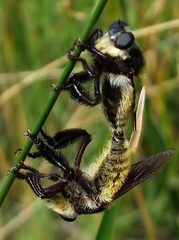
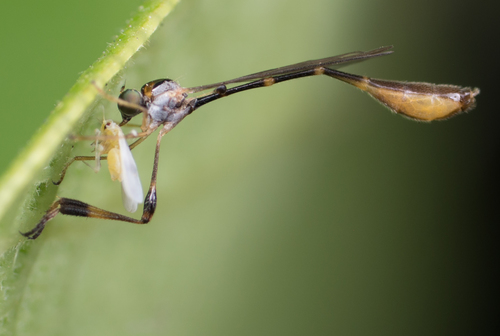
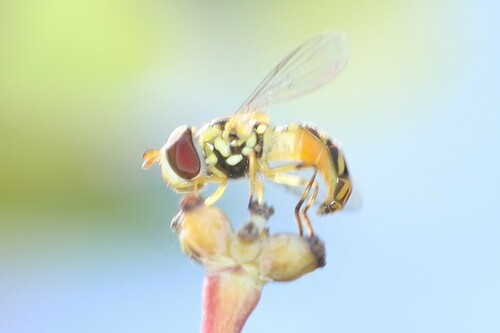
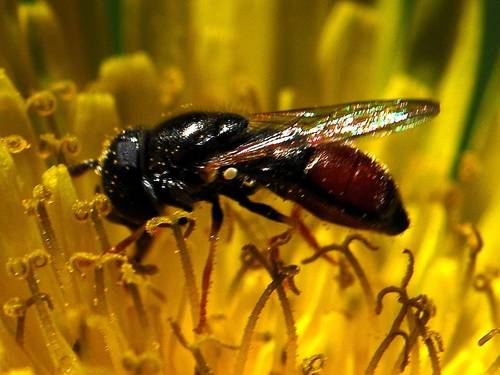
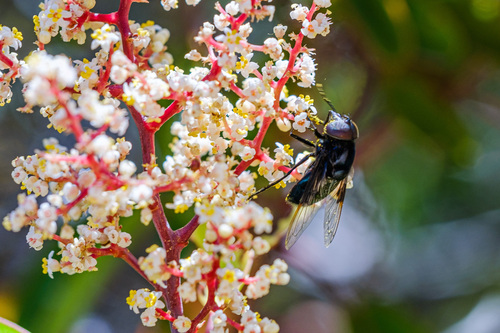
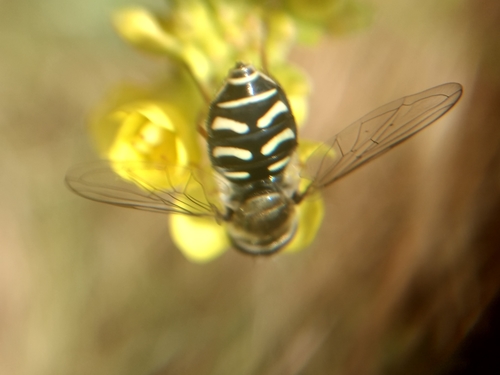
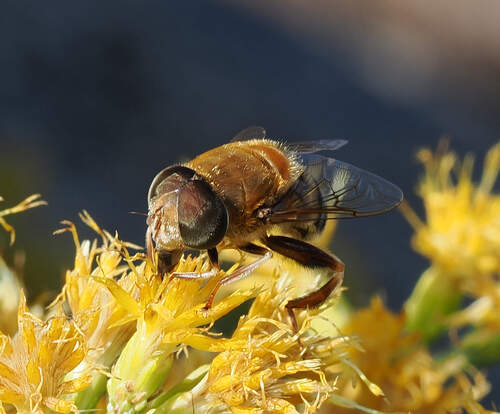
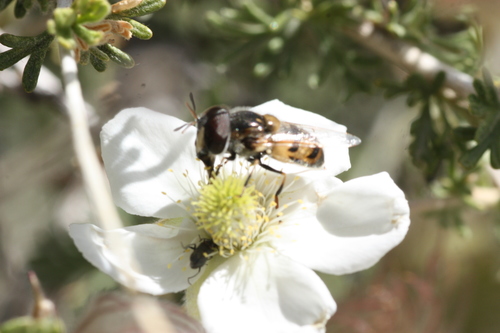
Mallophora fautrix is a species of robber fly in the family Asilidae, commonly known as the golden-tailed bee bandit or bee killer robber fly. An adult M. fautrix is typically in the range of 15–20 mm (0.59–0.79 in) long, with brown wings and a black thorax. The body is otherwise covered with hairs in a pattern of black, white, and yellow that resembles workers of the bumble bee species Bombus sonorus. Male and female adults are similar in appearance.

Carl Robert Osten-Sacken formally described M. fautrix in 1887, selecting for it a species epithet that is Latin for "patroness or protector." M. fautrix is found in Mexico and the southwestern United States. It is the only member of genus Mallophora found in California.

The bee killer robber fly perches in wait for the approach of a suitable prey insect. It eats honey bees, wasps, and other arthropods of similar size. Eggs of M. fautrix are laid in the ground. Wikipedia →

Global Distribution

Parks Where Found

# Park Country Daily sighting probability

More parks will be added in future updates.

Cities Where Found

# City Country Daily sighting probability
1 Sacramento 🇺🇸 United States
~20%
2 Los Angeles 🇺🇸 United States
~10%
3 Dallas 🇺🇸 United States
~10%
4 San Diego 🇺🇸 United States
~10%
5 Las Vegas 🇺🇸 United States
~10%
6 Austin 🇺🇸 United States
~10%
7 Houston 🇺🇸 United States
<5%
8 San Antonio 🇺🇸 United States
<5%

Before you go

What are the chances of seeing a Golden-Tailed Beebandit in San Diego?

With luck

About 10% of wildlife watchers report a Golden-Tailed Beebandit sighting in San Diego on a given day, based on 286 verified sightings from GBIF citizen-science data. It is the 41st most-seen of the 693 insects we can rate there. Over three days the chance rises to about 20%, and over a week to about 40%, if each day is a fresh chance.

When is the best time to see a Golden-Tailed Beebandit in San Diego?

July and August

In those months about 20% of wildlife watchers report a Golden-Tailed Beebandit in San Diego on a given day, against under 5% in October to June, the lowest months. Those are among San Diego's driest months, with almost no rain against 55 mm in February.

Is San Diego the best place to see a Golden-Tailed Beebandit?

4th of 8

Of the 8 cities where we can rate Golden-Tailed Beebandit sightings, San Diego ranks 4th at about 10%. The best odds are in Sacramento (United States, about 20%), Los Angeles (United States, about 10%) and Dallas (United States, about 10%).

Where does the Golden-Tailed Beebandit sighting chance come from?

GBIF citizen-science records

It is estimated from how often the Golden-Tailed Beebandit is recorded against all the insects logged in San Diego (286 verified sightings), calibrated against known sighting rates. Figures are rounded to the nearest 10% because citizen-science data supports honest approximations, not decimals, and months with records from fewer than five people show "—". How it works.

← Back to San Diego